
An important George II Rococo Tea Equipage contained in its original velvet lined shagreen case. Made in London circa 1740 by Francis Harrache.
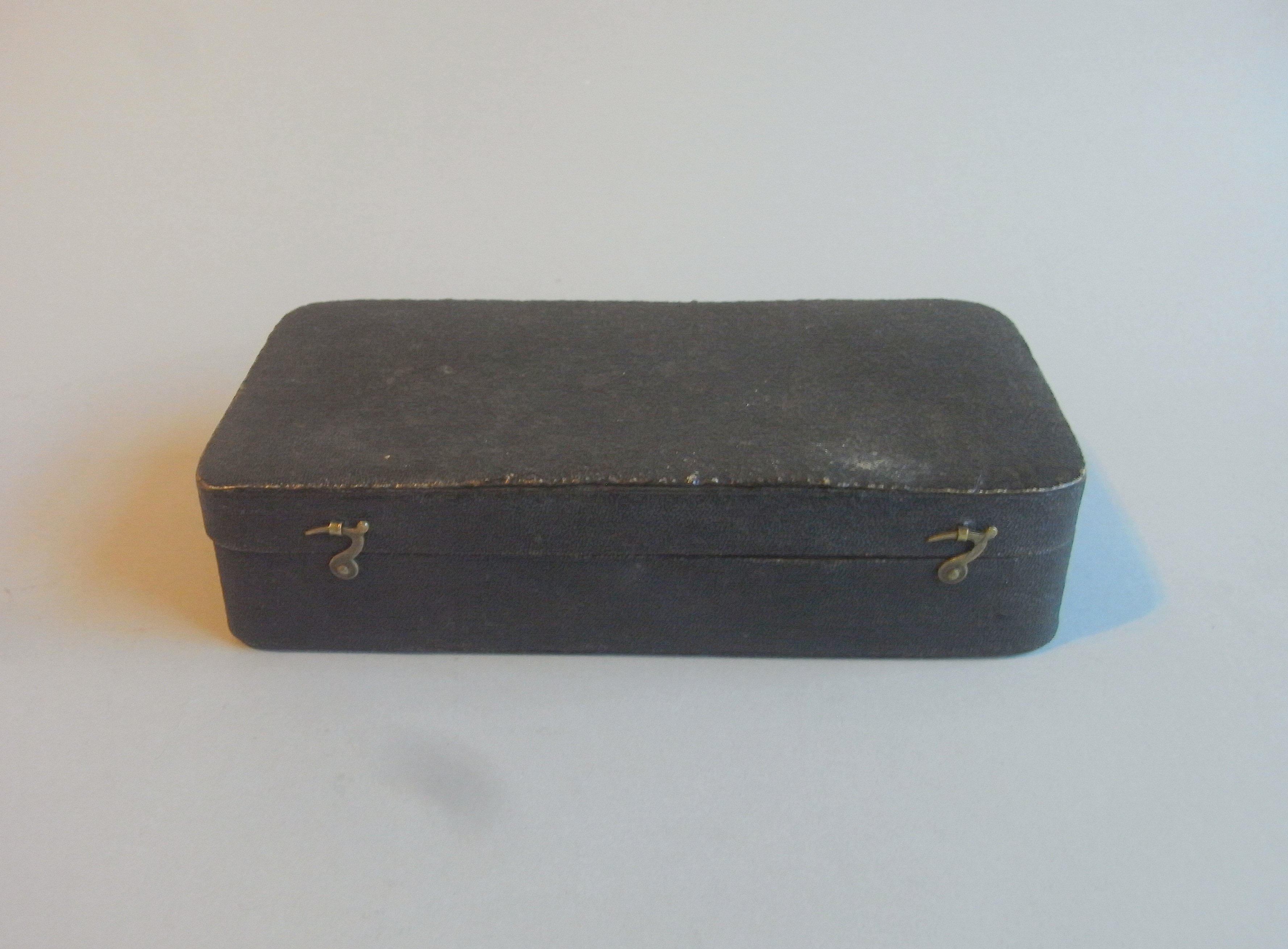
An important George II Rococo Tea Equipage contained in its original velvet lined shagreen case. Made in London circa 1740 by Francis Harrache.
375830
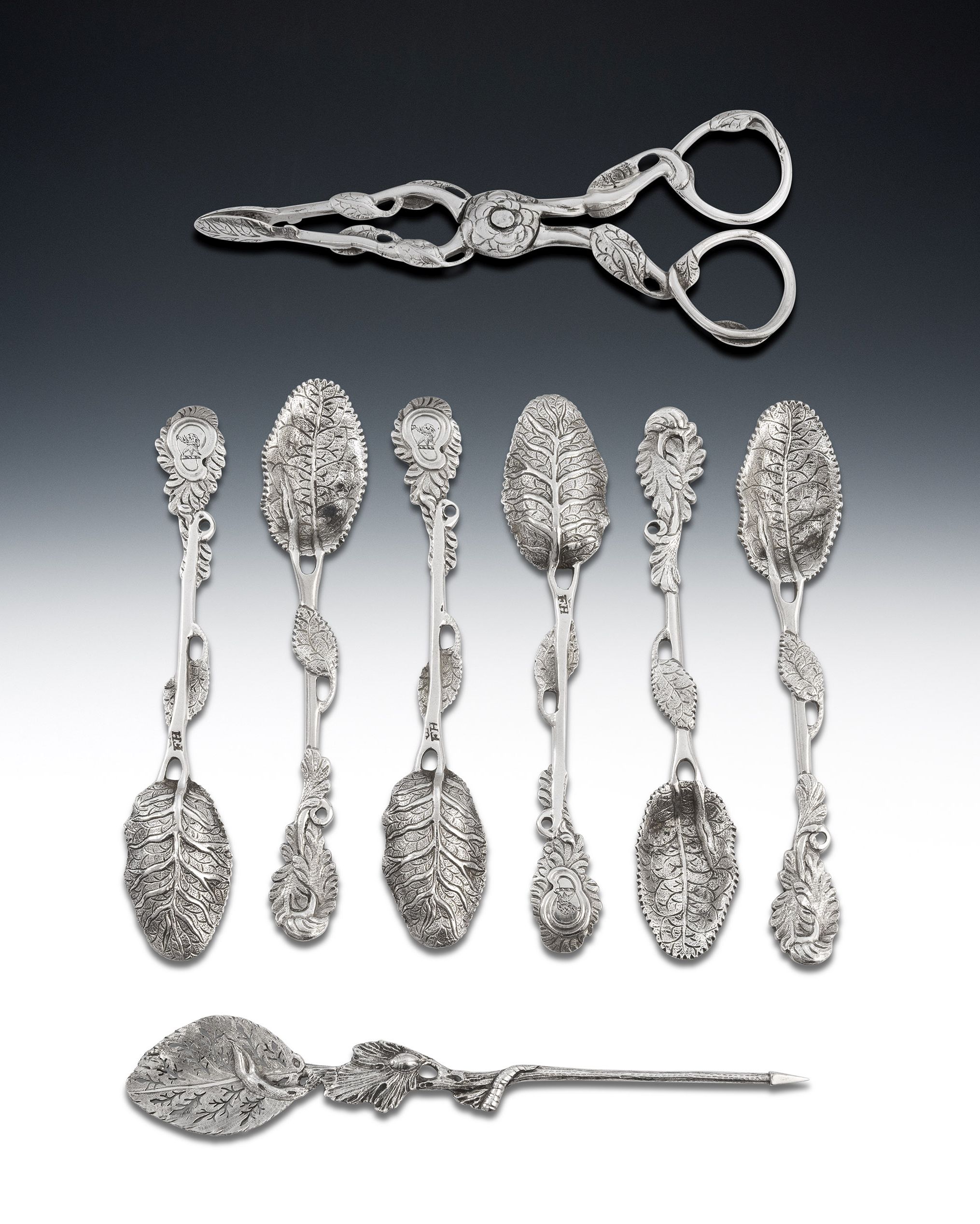
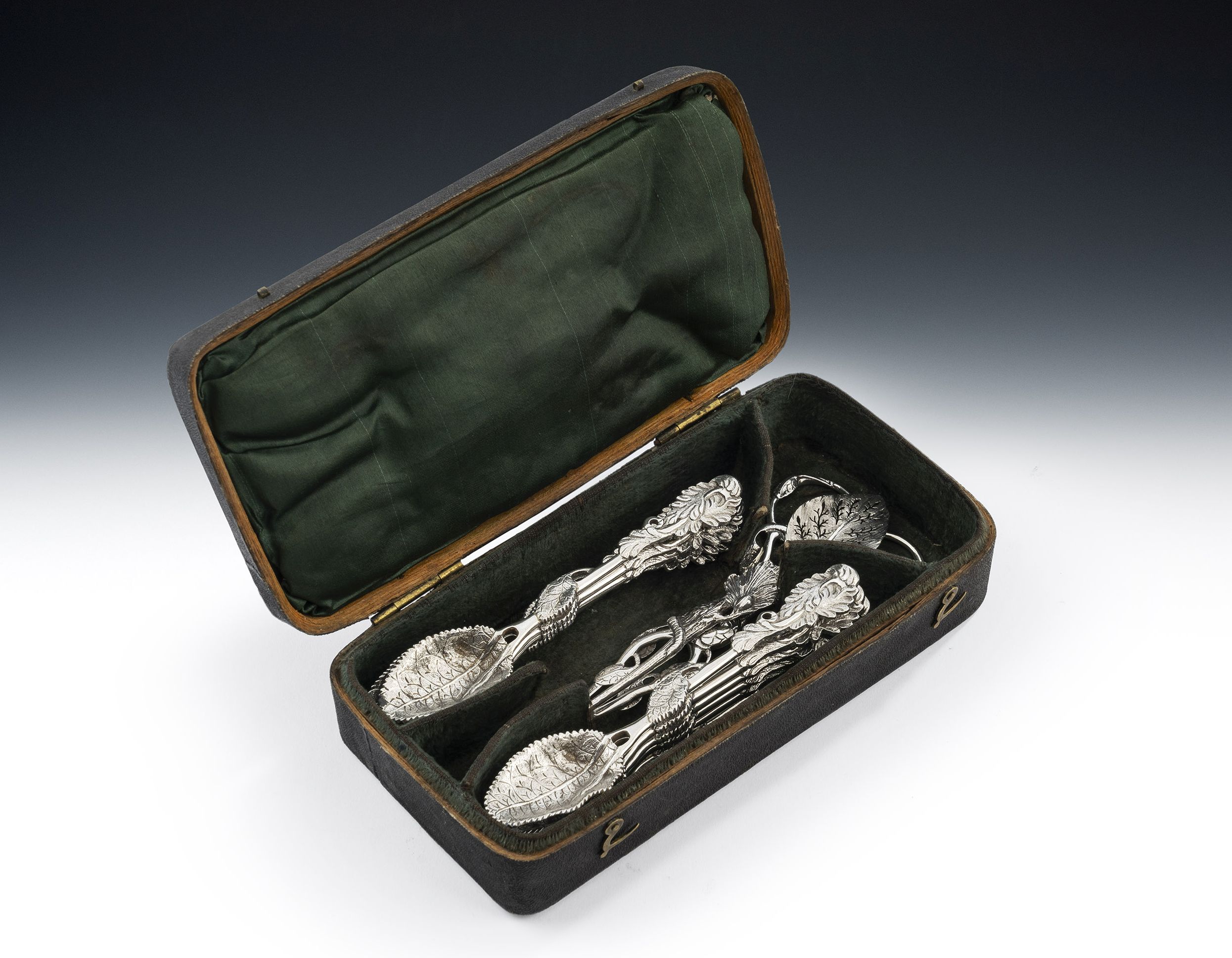
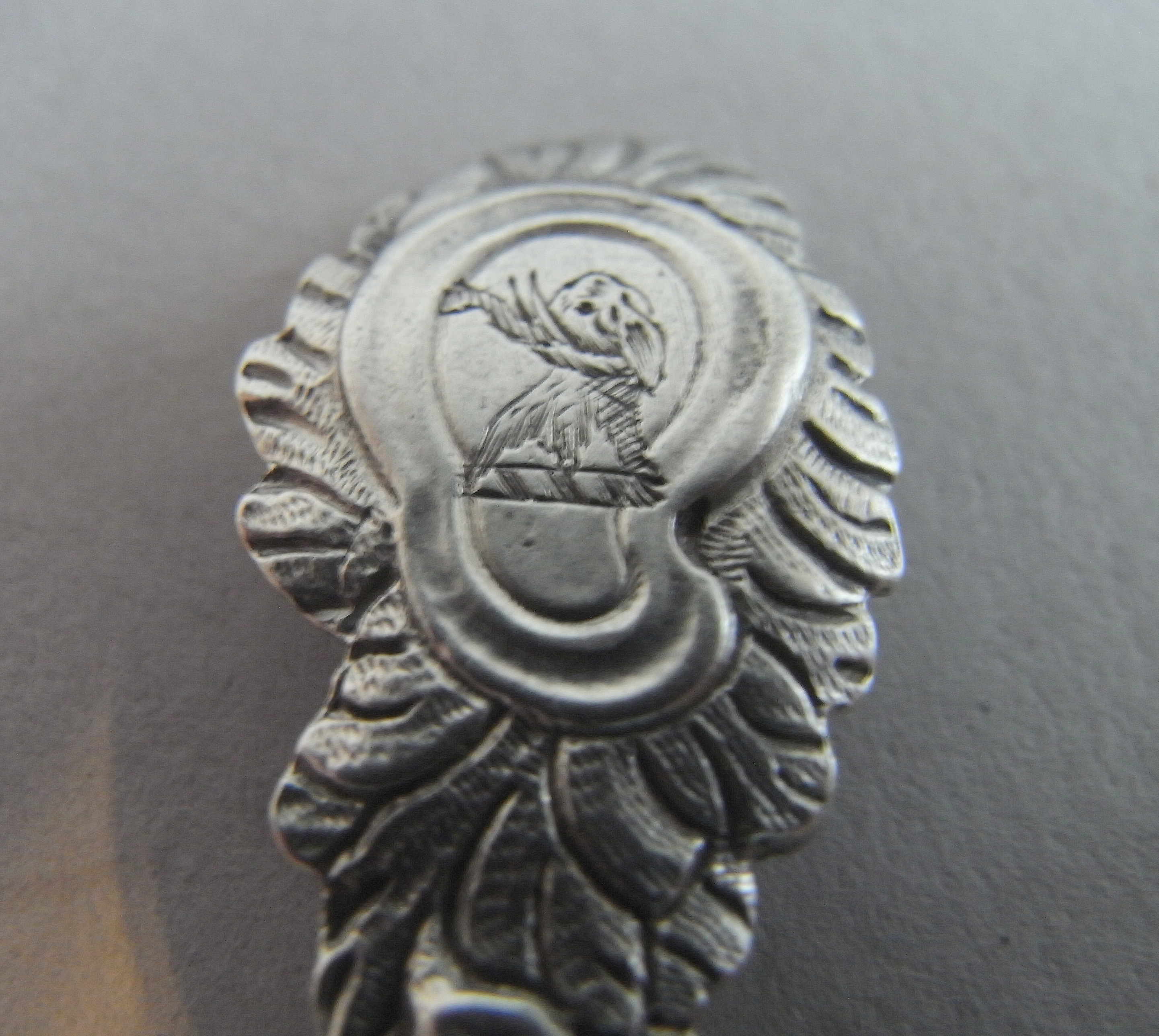
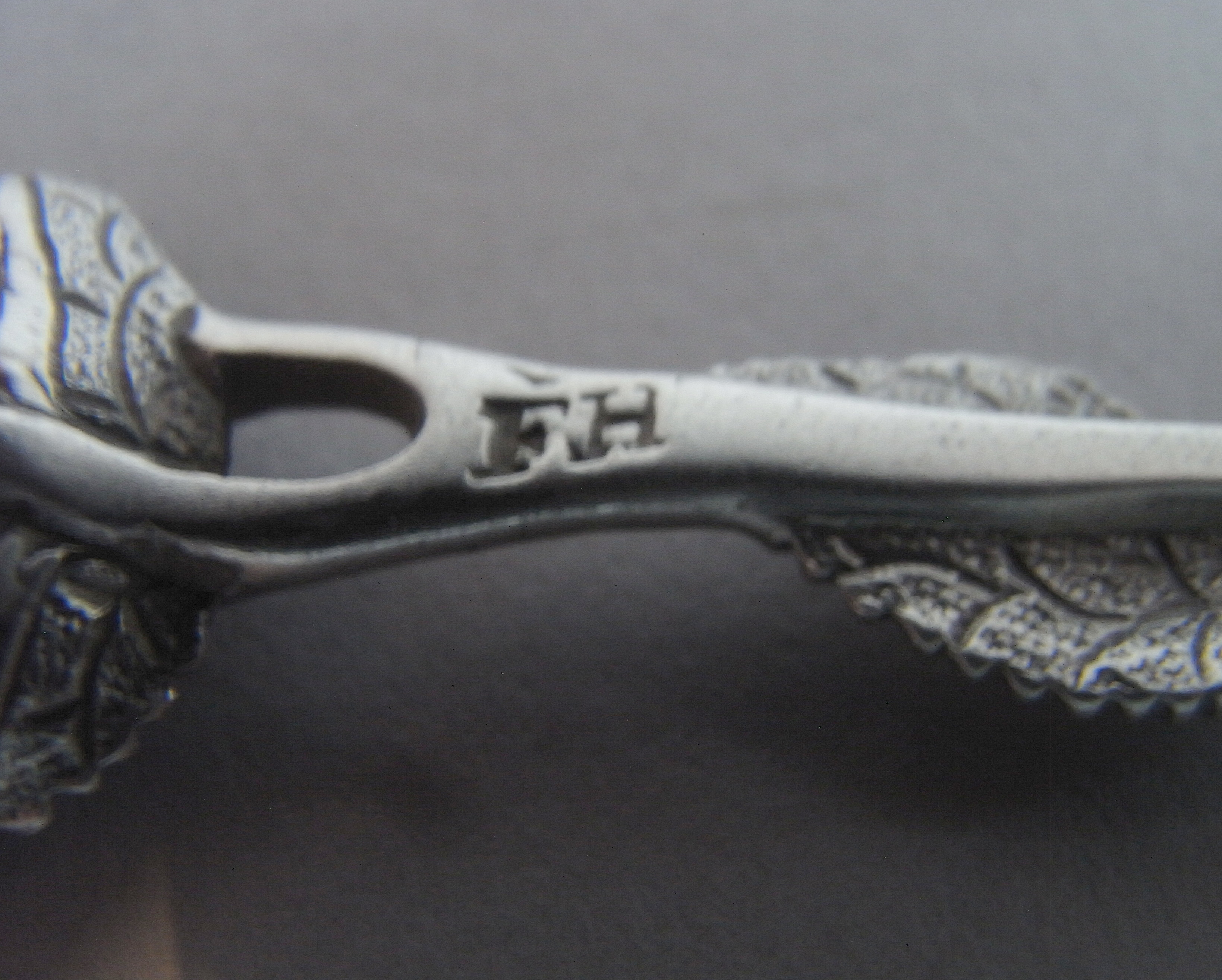
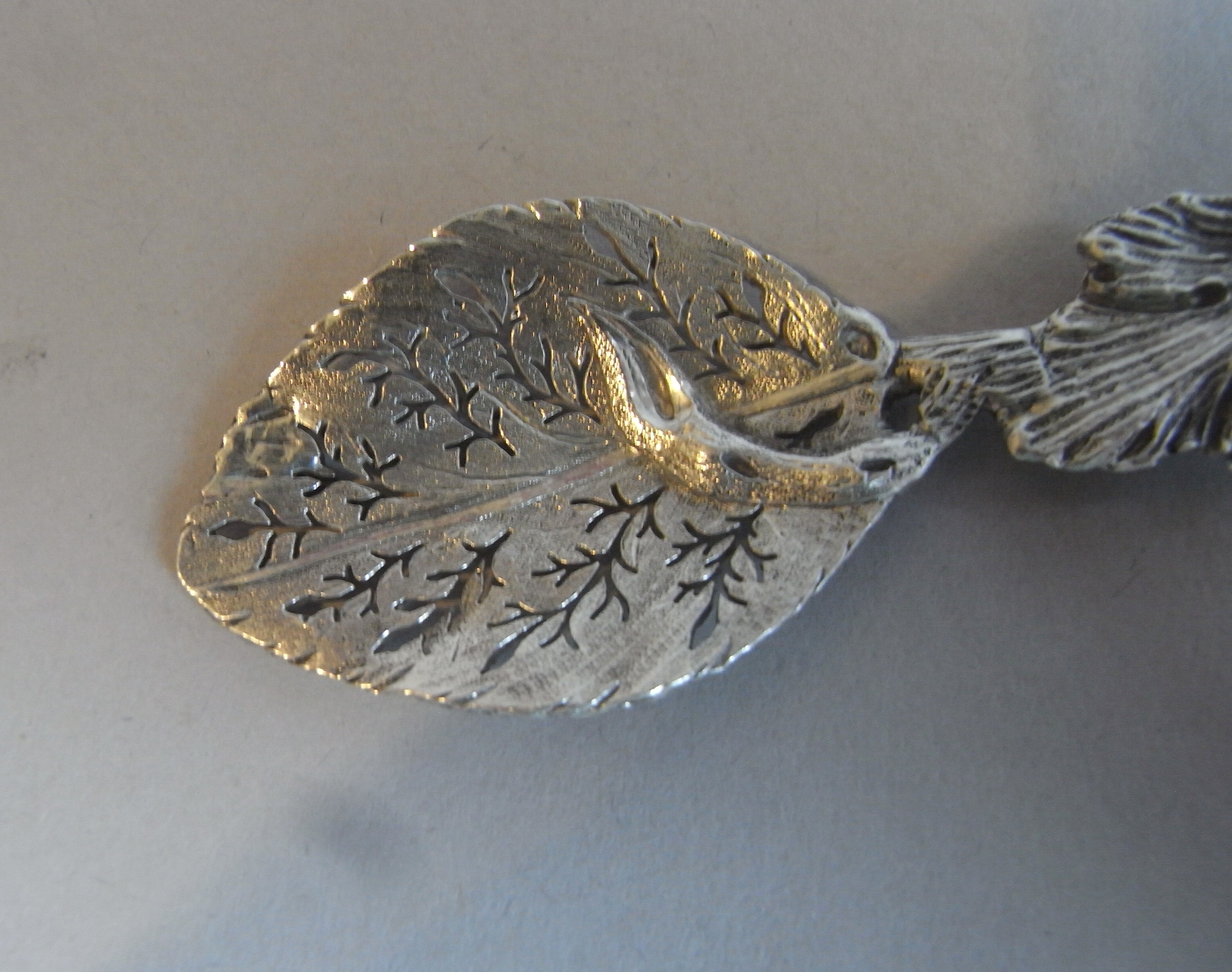
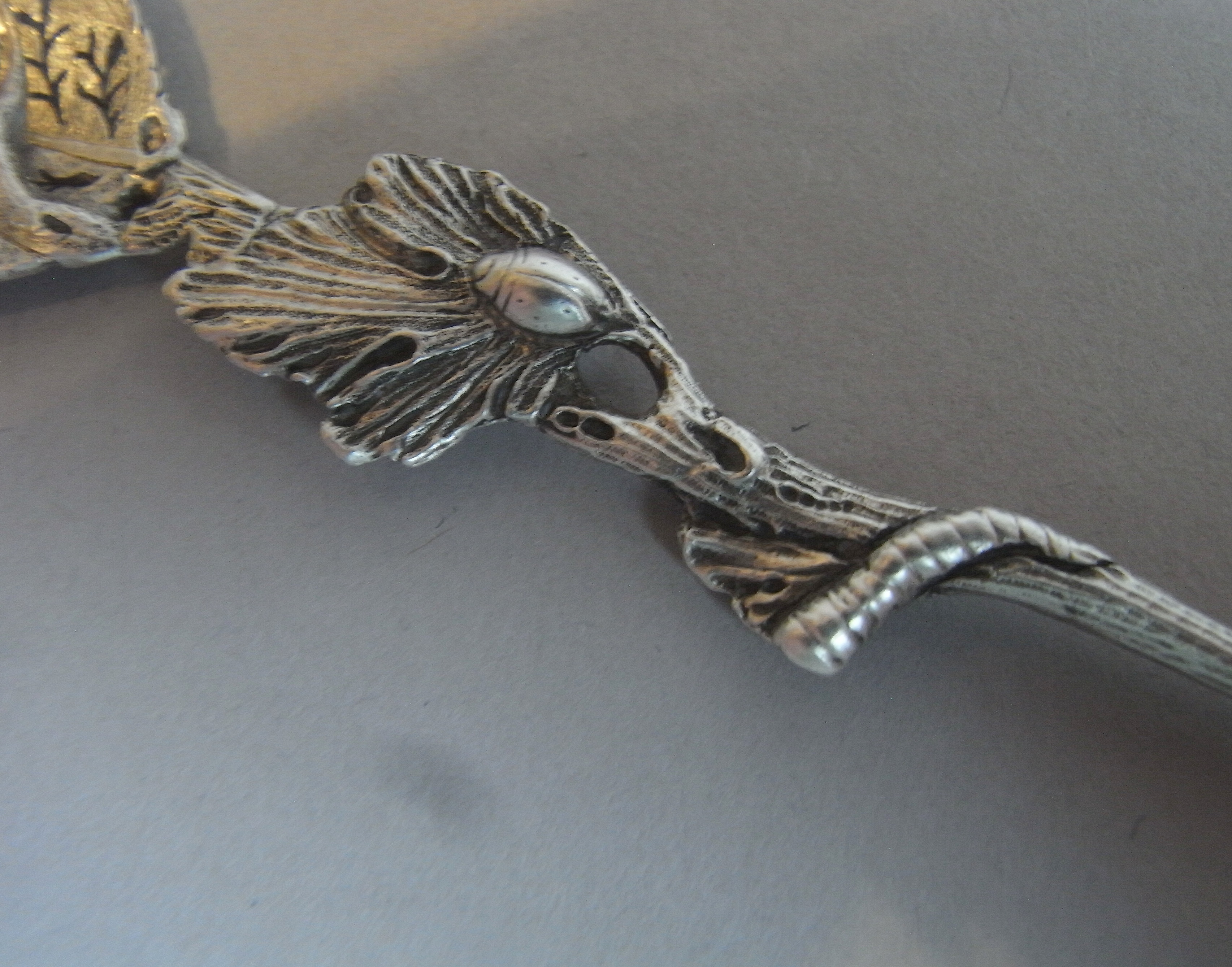
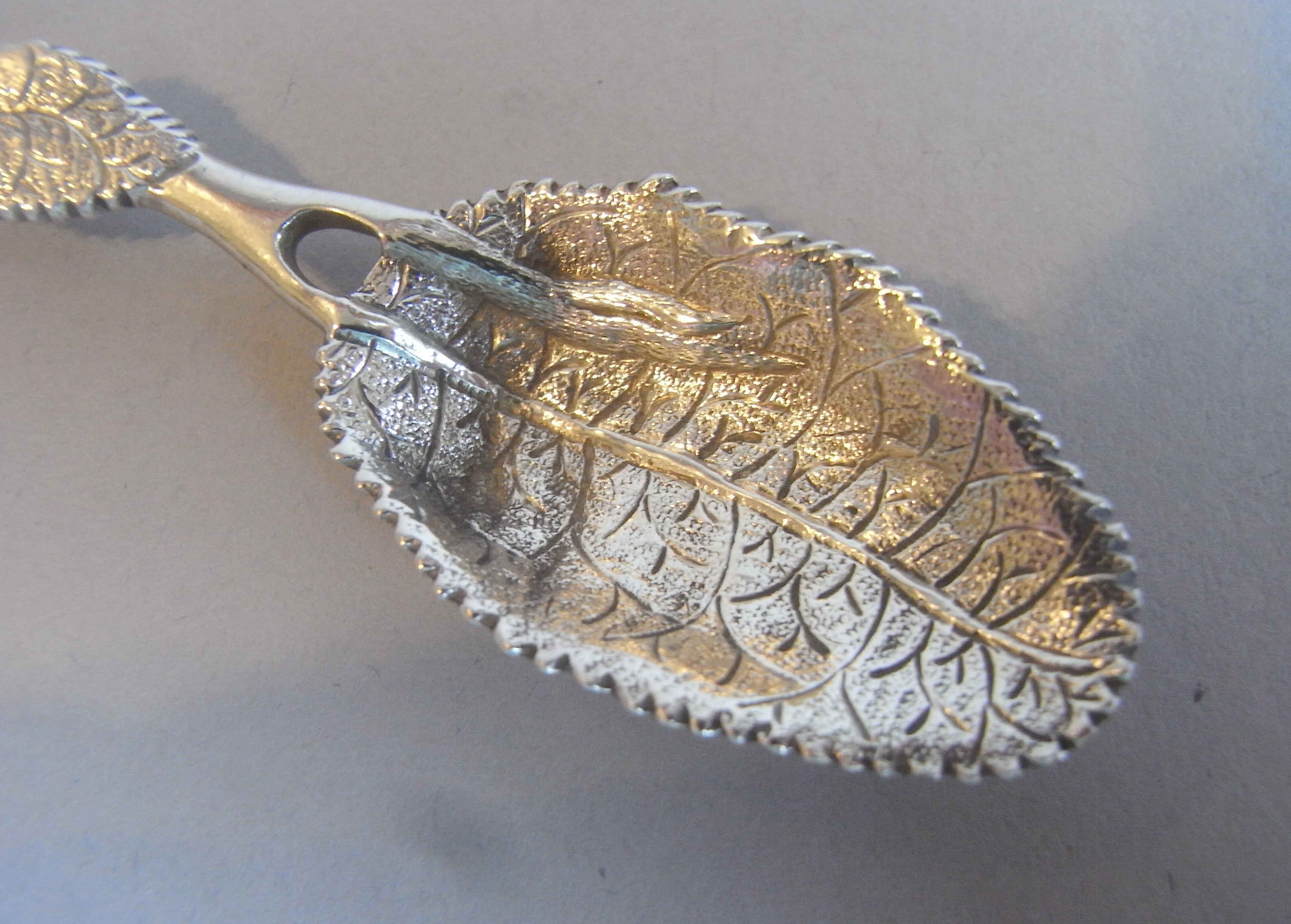
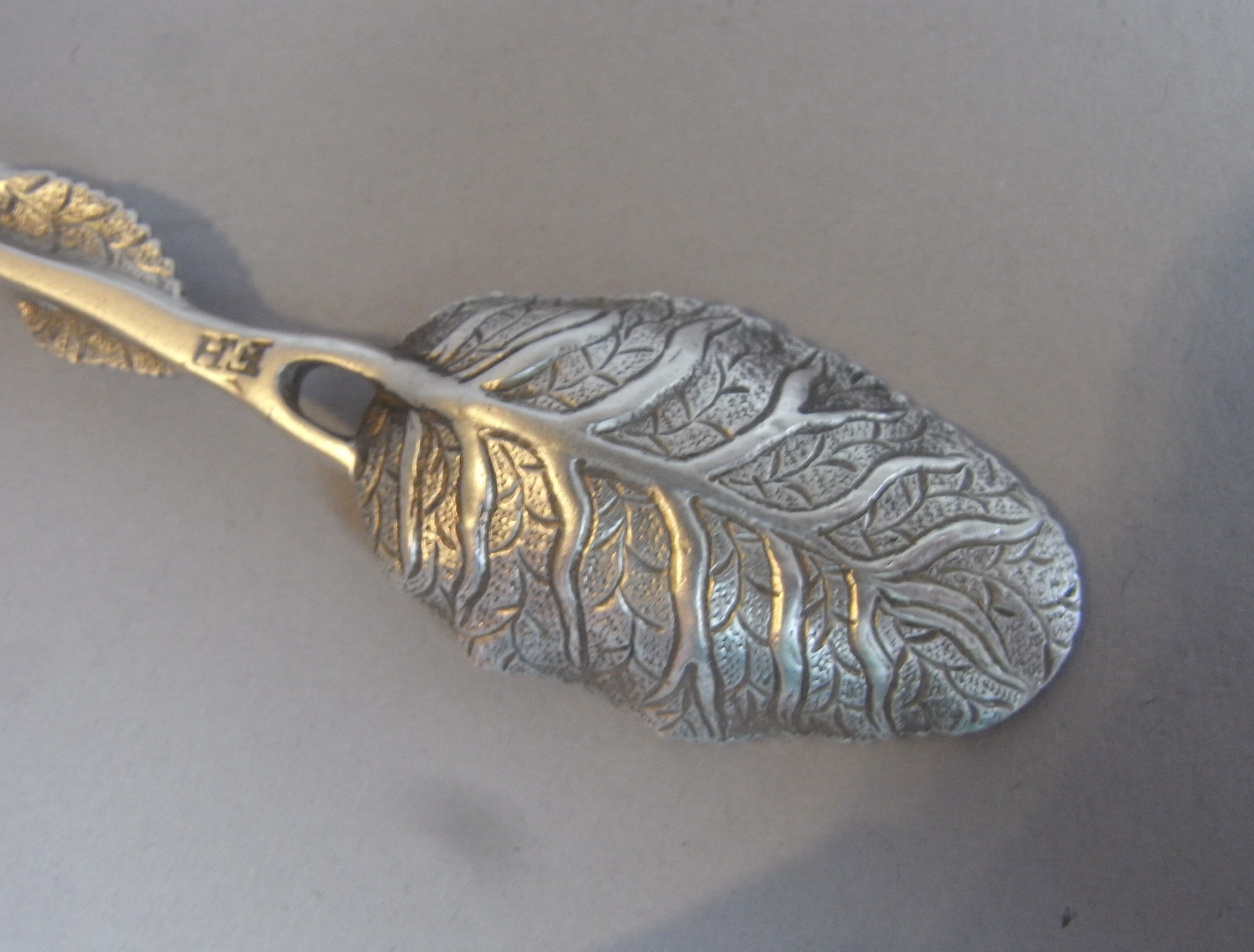
The contents of the Equipage are cast and consist of twelve Teaspoons ( only six shown in the image), a Mote Spoon and pair of Sugar Nips. The Spoons are modelled in the fashionable naturalistic style. The bowls of the spoons are finely modelled as a detailed leaf with raised veins. The stem is modelled as the branch of a tree, with leaves applied along its length. The Rococo scroll cartouche, at the top of the stem, is engraved with a contemporary elephant Crest. Each is marked with FH incuse, with crown above for Francis Harracche. The Nips are modelled in a similar fashion with leaves applied to the arms and grips. These have plain finger rings and foliate grips and the interior of the grips is engraved with the elephant Crest on one side and the incuse maker's mark on the other. The Mote Spoon is also cast and finely pierced to skim the tea leaves off the top of the tea in the tea bowl. The design detail of the mote spoon is outstanding as on the front you can see a ladybird and caterpillar, crawling along the stem. The set is in wonderful condition and is contained within its original green velvet lined shagreen case. As you will appreciate this piece is of the finest quality as to be expected from this Huguenot silversmith. A write up about Harrache is below.
Length of Spoons: 4.5 inches, 11.25 cm.
Length of Nips: 4.75 inches, 11.88 cm.
Length of Mote spoon: 5.45 inches, 13.63 cm.
Total Weight: 9oz. Francis Harrache was the son of Abraham Harrache, baptized at St Giles-in-the-Field 26 December 1710 and apprenticed to Isaac Cabane, silversmith of St Martin-in-the-Fields on 31 May 1725 for a premium of seven guineas.
On completion of his apprenticeship in 1732 he took his young brother, Thomas, apprentice, describing himself as a 'The snuff box maker' .
In the same year he married Jane Grigon of St Anne's, the daughter of Jean Grignon Hellenne LeSiure. Jean Grignon's trade or occupation has not been discovered. A native of Luondon in Poitou, he arrived in London in 1698 and married 1701. He was said to be living in Hogg Lane near the Three Pigeons when his daughter, Hellene, was baptized in 1702, but he does not appear in the rate books. Jane was baptized on 3 October 1708. She must have been related to Reynolds Grignion but was not his sister, as has been incorrectly suggested. Francis's marriage and the taking of his brother as apprentice, both in 1732, would suggest that he also became a partner with his stepfather, Gaspard Soleirol, in the family business in Great St Andrew Street In that year. The rate books show the latter's name until 1741, after which they shows Francis's, so it was probably about this time that Gaspard retired and moved to St Marylebone whence he later wrote his will, styling himself 'gentleman'.
Francis entered his first mark on on 16 February 1737/8 as a smallworker Describing himself as 'silversmith.....ye Seven Dyals in great St. Andrew Street att ye blackmoors head St. Giles'.
His second mark, which would have been entered in the now missing register of smallworkers in in 1739 In accordance with the 1738 Act, has long been accepted as the incuse FH crowned.
The rate books show him in Great St Andrews Street Until 1754, where is his family house since 1708. He moved to larger premises in nearby Little Earl Street where he remained until his death in 1757.
 Francis Harrache's Will, 7 August 1757. Source: National Archives. His will proved, on 7 August 1757, left everything to his wife Jane, who was sole executor, for life and then to their surviving children John and Elisabeth.
When Jane died the following year 1758, her will only mentioned Elisabeth and provisions that should she not reach twenty-one years of age, the estate was to be divided between Jane's two sisters. Should these sisters also die without children reaching twenty-one then the estate was to be divided between Thomas Harrache
RELATED ITEMS






, a Mote Spoon and pair of Sugar Nips. The Spoons are modelled in the fashionable naturalistic style. The bowls of the spoons are finely modelled as a detailed leaf with raised veins. The stem is modelled as the branch of a tree, with leaves applied along its length. The Rococo scroll cartouche, at the top of the stem, is engraved with a contemporary elephant Crest. Each is marked with FH incuse, with crown above for Francis Harracche. The Nips are modelled in a similar fashion with leaves applied to the arms and grips. These have plain finger rings and foliate grips and the interior of the grips is engraved with the elephant Crest on one side and the incuse maker's mark on the other. The Mote Spoon is also cast and finely pierced to skim the tea leaves off the top of the tea in the tea bowl. The design detail of the mote spoon is outstanding as on the front you can see a ladybird and caterpillar, crawling along the stem. The set is in wonderful condition and is contained within its original green velvet lined shagreen case. As you will appreciate this piece is of the finest quality as to be expected from this Huguenot silversmith. A write up about Harrache is below.Length of Spoons: 4.5 inches, 11.25 cm.Length of Nips: 4.75 inches, 11.88 cm.Length of Mote spoon: 5.45 inches, 13.63 cm.Total Weight: 9oz.Francis Harrache was the son of Abraham Harrache, baptized at St Giles-in-the-Field 26 December 1710 and apprenticed to Isaac Cabane, silversmith of St Martin-in-the-Fields on 31 May 1725 for a premium of seven guineas. On completion of his apprenticeship in 1732 he took his young brother, Thomas, apprentice, describing himself as a 'The snuff box maker' . In the same year he married Jane Grigon of St Anne's, the daughter of Jean Grignon Hellenne LeSiure. Jean Grignon's trade or occupation has not been discovered. A native of Luondon in Poitou, he arrived in London in 1698 and married 1701. He was said to be living in Hogg Lane near the Three Pigeons when his daughter, Hellene, was baptized in 1702, but he does not appear in the rate books. Jane was baptized on 3 October 1708. She must have been related to Reynolds Grignion but was not his sister, as has been incorrectly suggested. Francis's marriage and the taking of his brother as apprentice, both in 1732, would suggest that he also became a partner with his stepfather, Gaspard Soleirol, in the family business in Great St Andrew Street In that year. The rate books show the latter's name until 1741, after which they shows Francis's, so it was probably about this time that Gaspard retired and moved to St Marylebone whence he later wrote his will, styling himself 'gentleman'. Francis entered his first mark on on 16 February 1737/8 as a smallworker Describing himself as 'silversmith.....ye Seven Dyals in great St. Andrew Street att ye blackmoors head St. Giles'. His second mark, which would have been entered in the now missing register of smallworkers in in 1739 In accordance with the 1738 Act, has long been accepted as the incuse FH crowned. The rate books show him in Great St Andrews Street Until 1754, where is his family house since 1708. He moved to larger premises in nearby Little Earl Street where he remained until his death in 1757. Francis Harrache's Will, 7 August 1757. Source: National Archives. His will proved, on 7 August 1757, left everything to his wife Jane, who was sole executor, for life and then to their surviving children John and Elisabeth. When Jane died the following year 1758, her will only mentioned Elisabeth and provisions that should she not reach twenty-one years of age, the estate was to be divided between Jane's two sisters. Should these sisters also die without children reaching twenty-one then the estate was to be divided between Thomas Harrache)