
The Longleat House Table Bell. A very fine & unusual George IV cast Table Bell made in London in 1829 by the Royal Silversmith, Robert Garrard.
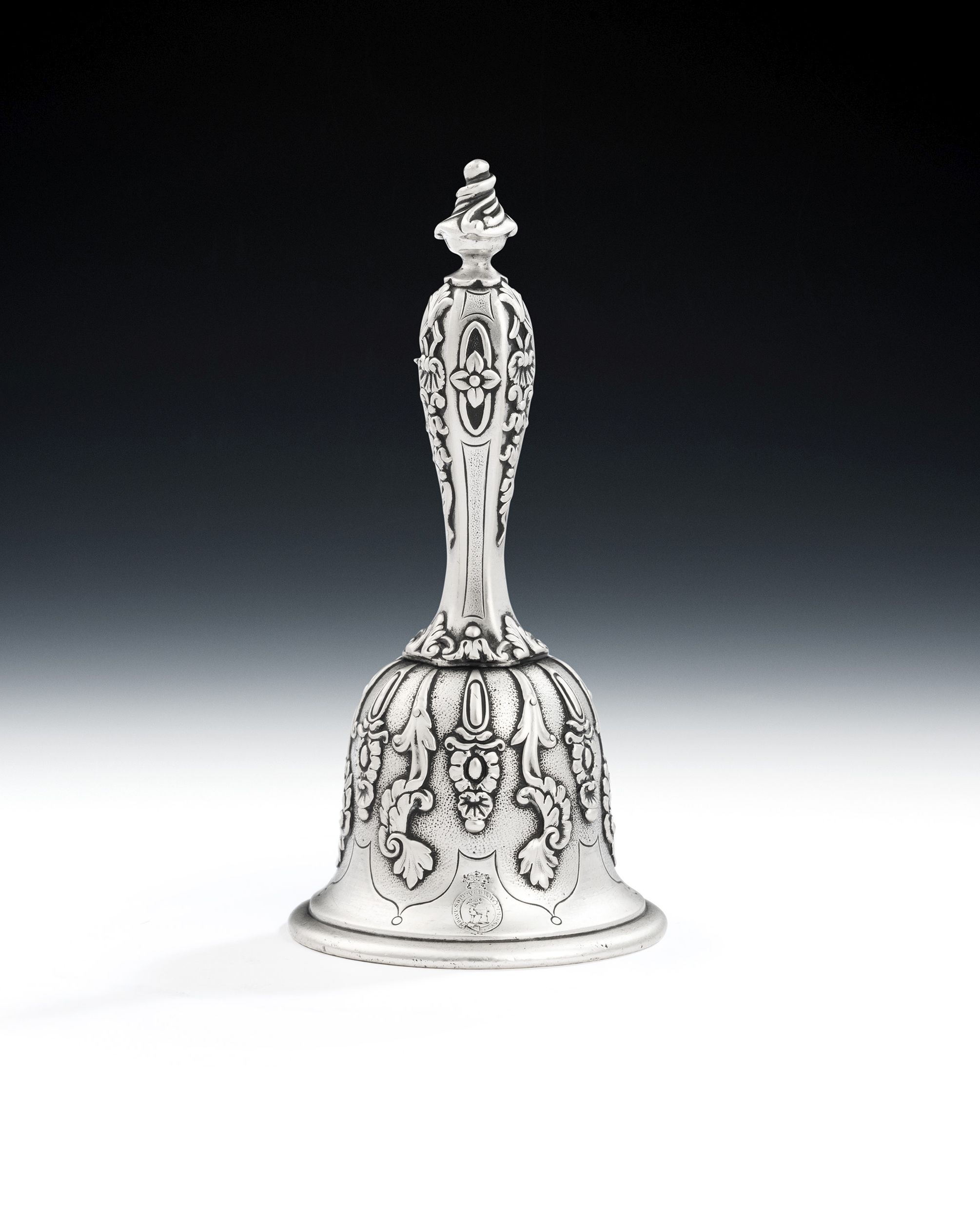
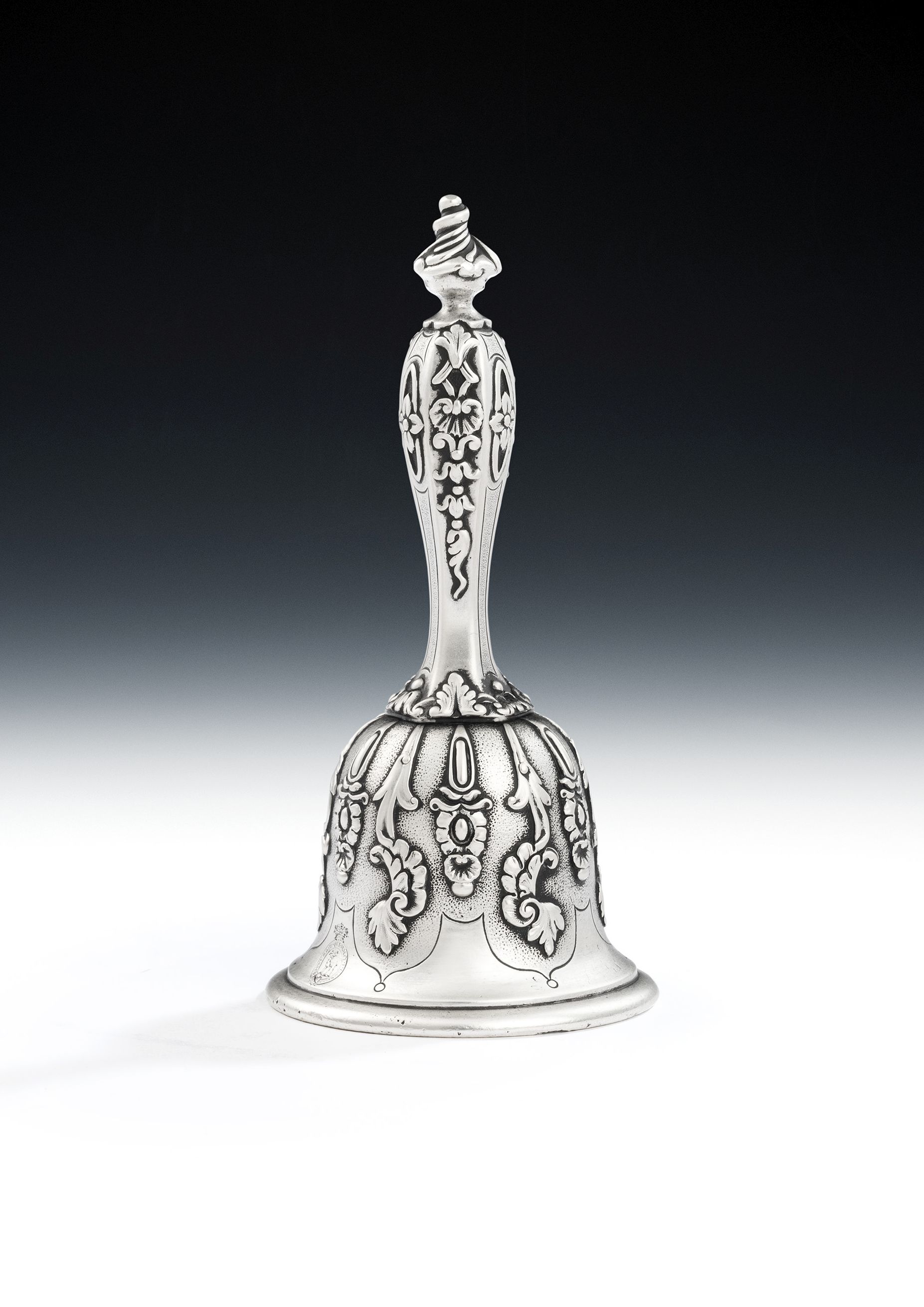
The Longleat House Table Bell. A very fine & unusual George IV cast Table Bell made in London in 1829 by the Royal Silversmith, Robert Garrard.
375596
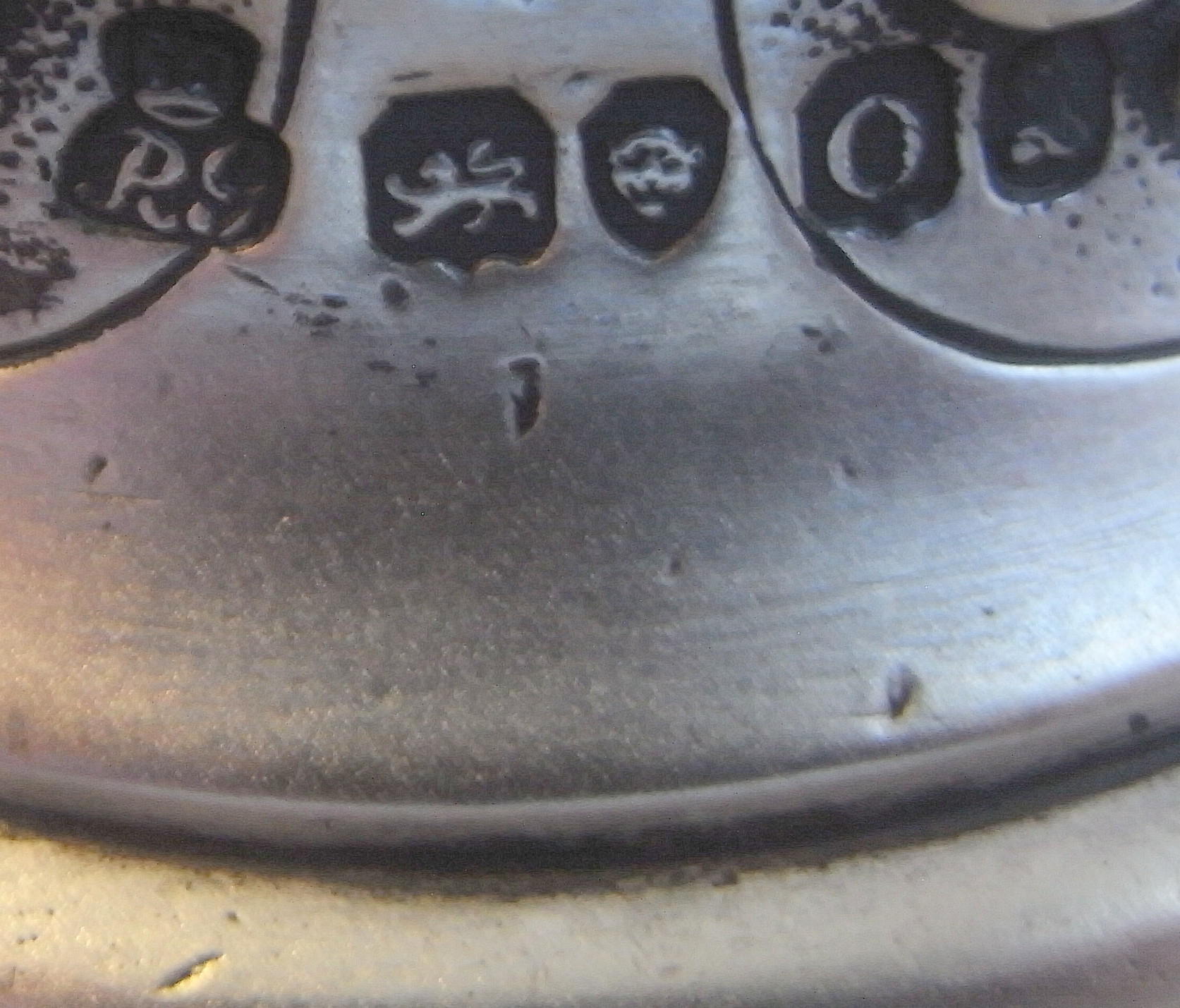
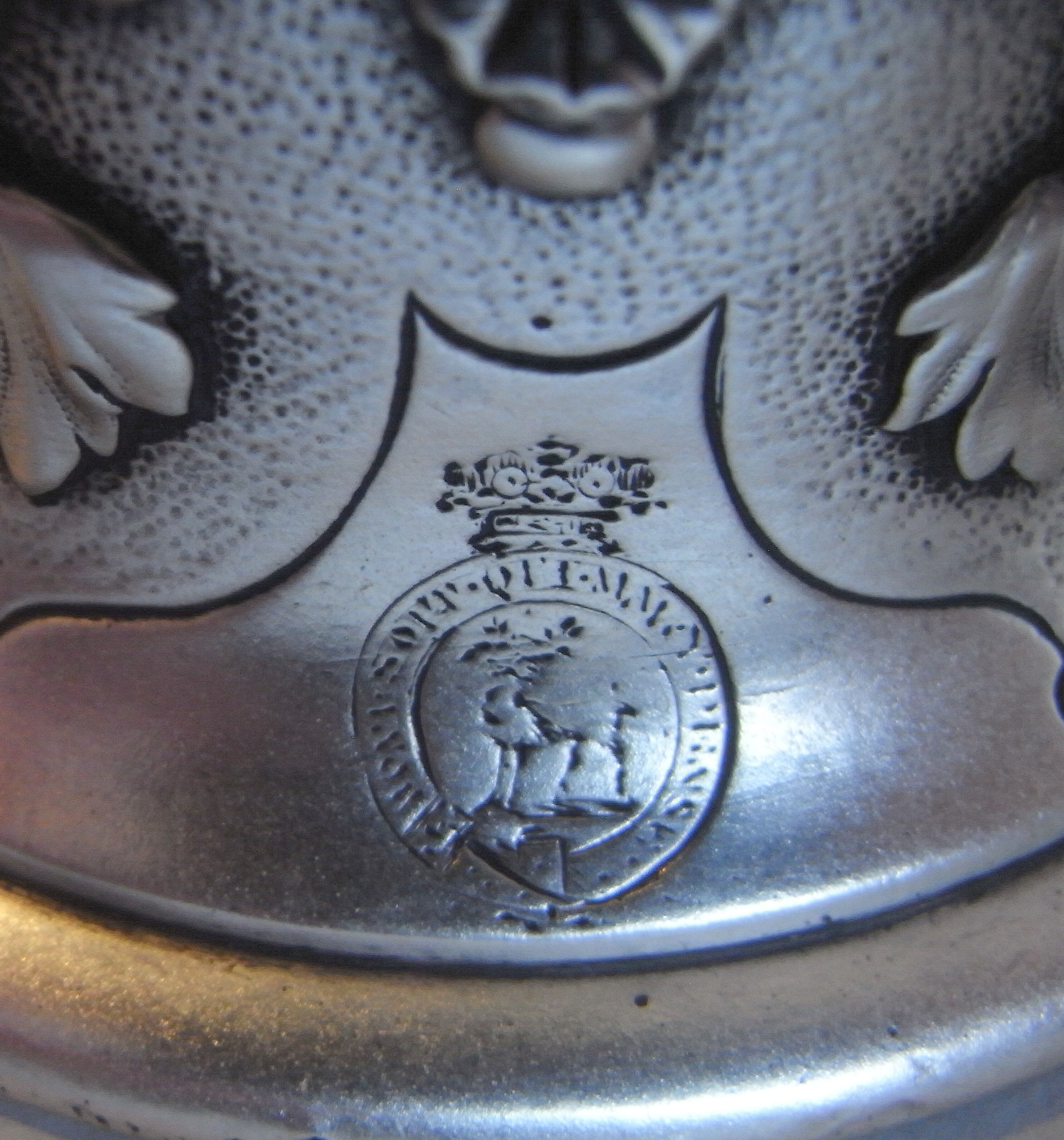
This very fine example is cast and the bowl is of typical form, with a reeded band at the base. The exterior is very unusually decorated with raised naturalistic vertical bands including foliate motifs and stylised flower heads all on a matted ground. The hexagonal baluster handle is decorated with flower heads in ovals, as well as vertical bands of blue bells, foliate scrolls and raying shells. The handle terminates in a Rococo style writhen finial. The main body is also engraved with a contemporary Crest, surrounded by the Motto of the Order of the Garter, all surmounted by the Coronet of a Marquess. The details of the heraldic engraving are below. The bell is in most excellent condition and is of the finest quality in both design and production, as would be expected from this maker. The bell is fully marked on the main body and with the sterling mark on the handle and the interior clapper.
Height: 5.4 inches.
Diameter at the base: 2.5 inches.
Weight: 9.5 oz.
CREST, CORONET & MOTTO ENGRAVED ON THE BELL.
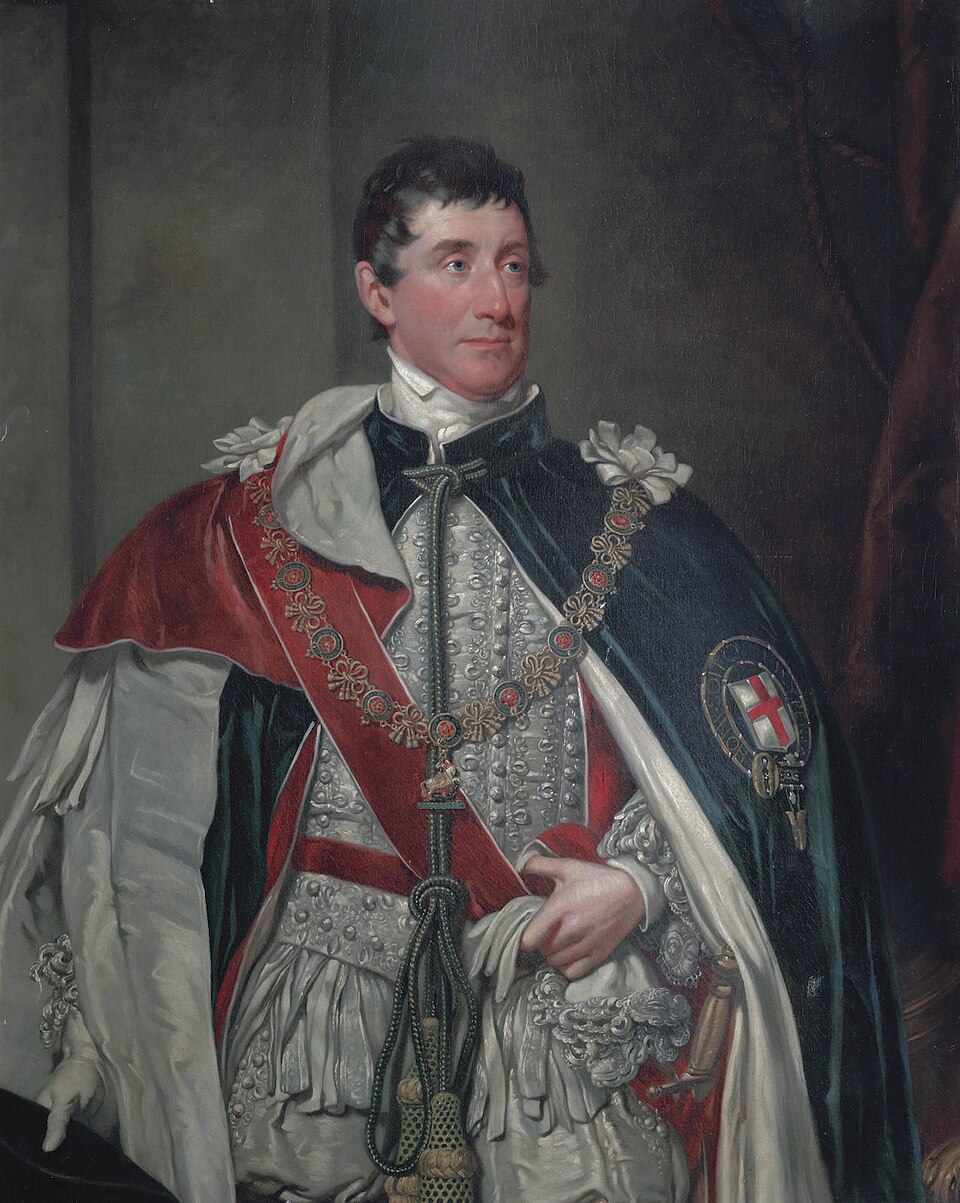
The Crest is that of the Thynne family with a Marquess's coronet above. The Crest is contained within a cartouche engraved with the Motto of the Order of the Garter. In 1829 Thomas Thynne (1765-1837), held the title and was the 2nd Marquess of Bath. Thomas was educated at Winchester and then was admitted as a nobleman to St. John's College, Cambridge (receiving his MA in 1787). He was Tory Member of Parliament for Weobley from 1786 to 1790 and Bath from 1790 to 1796 (when he inherited the estates and Marquissate). He also served as Lord Lieutenant of Somerset from 1819 to 1837. He was elected to the Order of the Garter in 1823. In 1794 Thomas married Isabella Elizabeth, daughter of George Byng, Viscount Torrington (1773-1830). He was a great benefactor, for the poor, in the nearby town of Frome. The main family seat was the magnificent Longleat House in Wiltshire where he was buried in 1837. It was reported that ten thousand were present at his funeral, one hundred and fifty horsemen, His eldest son, Thomas, predeceased him by some two months and he was therefore succeeded by his second son, Henry. A portrait of the 2nd Marquess is shown in his robes as a Knight of the Garter.
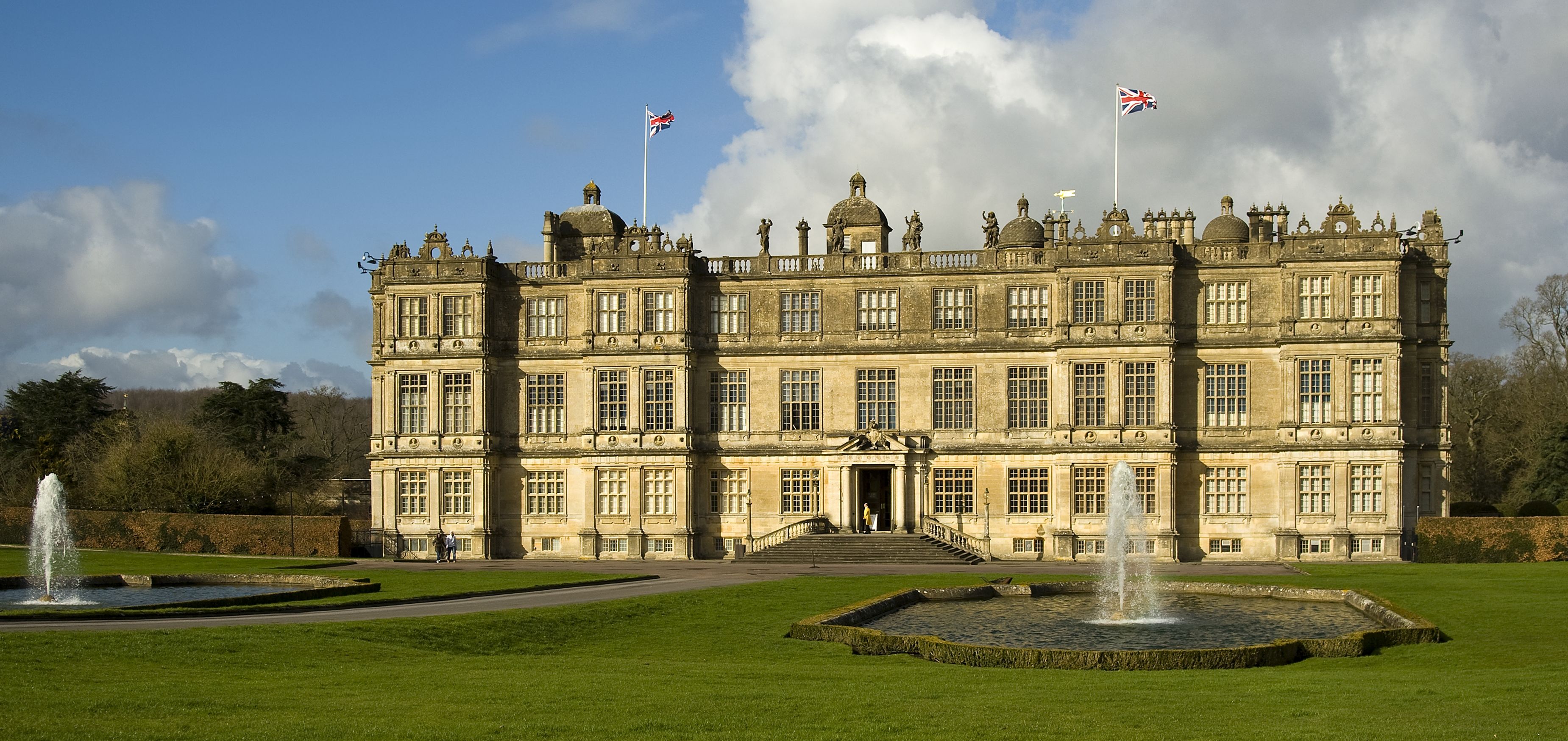
LONGLEAT HOUSE, WILTSHIRE - SEAT OF THE 2ND MARQUESS OF BATH.
Longleat ia about 4 miles west of Warminster in Wiltshire, England. A leading and early example of the Elizabethan prodigy house, it is a Grade I listed building and the seat of the Marquesses of Bath. Longleat is set in 1,000 acres (400 ha) of parkland landscaped by Capability Brown, along with 4,000 acres (1,600 ha) of let farmland and 4,000 acres (1,600 ha) of woodland[1] It was the first stately home to open to the public, and the Longleat estate has the first safari park outside Africa and other attractions including a hedge maze.
The house was built by Sir John Thynne and designed mainly by Robert Smythson, after Longleat Priory was destroyed by fire in 1567. It took 12 years to complete and is widely regarded as one of the finest examples of Elizabethan architecture in Britain. It continues to be the seat of the Thynn family, who have held the title of Marquess of Bath since 1789; the eighth, and present, Marquess is Ceawlin Thynn.
ROBERT GARRARD - THE MAKER
The Company that was to become Garrard was founded by George Wickes (1698-1761) who entered his mark at Goldsmiths' Hall in 1722. The Company moved to Panton Street, off Haymarket, in 1735, as a goldsmith and provider of jewellery and other luxury items to aristocratic patrons. Wickes was an accomplished silversmith who gained the patronage of Frederick, Prince of Wales. Two apprentices of Wickes, John Parker and Edward Wakelin, purchased the company following Wickes' retirement in 1760, replaced by John Wakelin and William Taylor in 1776. Following the death of Taylor, Robert Garrard became a partner in 1792. Garrard took sole control of the firm in 1802, being patronised by the Royal family. In 1843 Queen Victoria appointed Garrard as the first ever official Crown Jeweller, leading to the production of numerous pieces of silverware and jewellery for the Royal family, as well as the upkeep of the Crown Jewels.
RELATED ITEMS






, held the title and was the 2nd Marquess of Bath. Thomas was educated at Winchester and then was admitted as a nobleman to St. John's College, Cambridge (receiving his MA in 1787). He was Tory Member of Parliament for Weobley from 1786 to 1790 and Bath from 1790 to 1796 (when he inherited the estates and Marquissate). He also served as Lord Lieutenant of Somerset from 1819 to 1837. He was elected to the Order of the Garter in 1823. In 1794 Thomas married Isabella Elizabeth, daughter of George Byng, Viscount Torrington (1773-1830). He was a great benefactor, for the poor, in the nearby town of Frome. The main family seat was the magnificent Longleat House in Wiltshire where he was buried in 1837. It was reported that ten thousand were present at his funeral, one hundred and fifty horsemen, His eldest son, Thomas, predeceased him by some two months and he was therefore succeeded by his second son, Henry. A portrait of the 2nd Marquess is shown in his robes as a Knight of the Garter.LONGLEAT HOUSE, WILTSHIRE - SEAT OF THE 2ND MARQUESS OF BATH.Longleat ia about 4 miles west of Warminster in Wiltshire, England. A leading and early example of the Elizabethan prodigy house, it is a Grade I listed building and the seat of the Marquesses of Bath. Longleat is set in 1,000 acres (400 ha) of parkland landscaped by Capability Brown, along with 4,000 acres (1,600 ha) of let farmland and 4,000 acres (1,600 ha) of woodland[1] It was the first stately home to open to the public, and the Longleat estate has the first safari park outside Africa and other attractions including a hedge maze. The house was built by Sir John Thynne and designed mainly by Robert Smythson, after Longleat Priory was destroyed by fire in 1567. It took 12 years to complete and is widely regarded as one of the finest examples of Elizabethan architecture in Britain. It continues to be the seat of the Thynn family, who have held the title of Marquess of Bath since 1789; the eighth, and present, Marquess is Ceawlin Thynn. ROBERT GARRARD - THE MAKERThe Company that was to become Garrard was founded by George Wickes (1698-1761) who entered his mark at Goldsmiths' Hall in 1722. The Company moved to Panton Street, off Haymarket, in 1735, as a goldsmith and provider of jewellery and other luxury items to aristocratic patrons. Wickes was an accomplished silversmith who gained the patronage of Frederick, Prince of Wales. Two apprentices of Wickes, John Parker and Edward Wakelin, purchased the company following Wickes' retirement in 1760, replaced by John Wakelin and William Taylor in 1776. Following the death of Taylor, Robert Garrard became a partner in 1792. Garrard took sole control of the firm in 1802, being patronised by the Royal family. In 1843 Queen Victoria appointed Garrard as the first ever official Crown Jeweller, leading to the production of numerous pieces of silverware and jewellery for the Royal family, as well as the upkeep of the Crown Jewels. )