PHILIP RUNDELL. An exceptional George III Soup Tureen & Cover made in London in 1820 by Philip Rundell.
PHILIP RUNDELL. An exceptional George III Soup Tureen & Cover made in London in 1820 by Philip Rundell.
375625
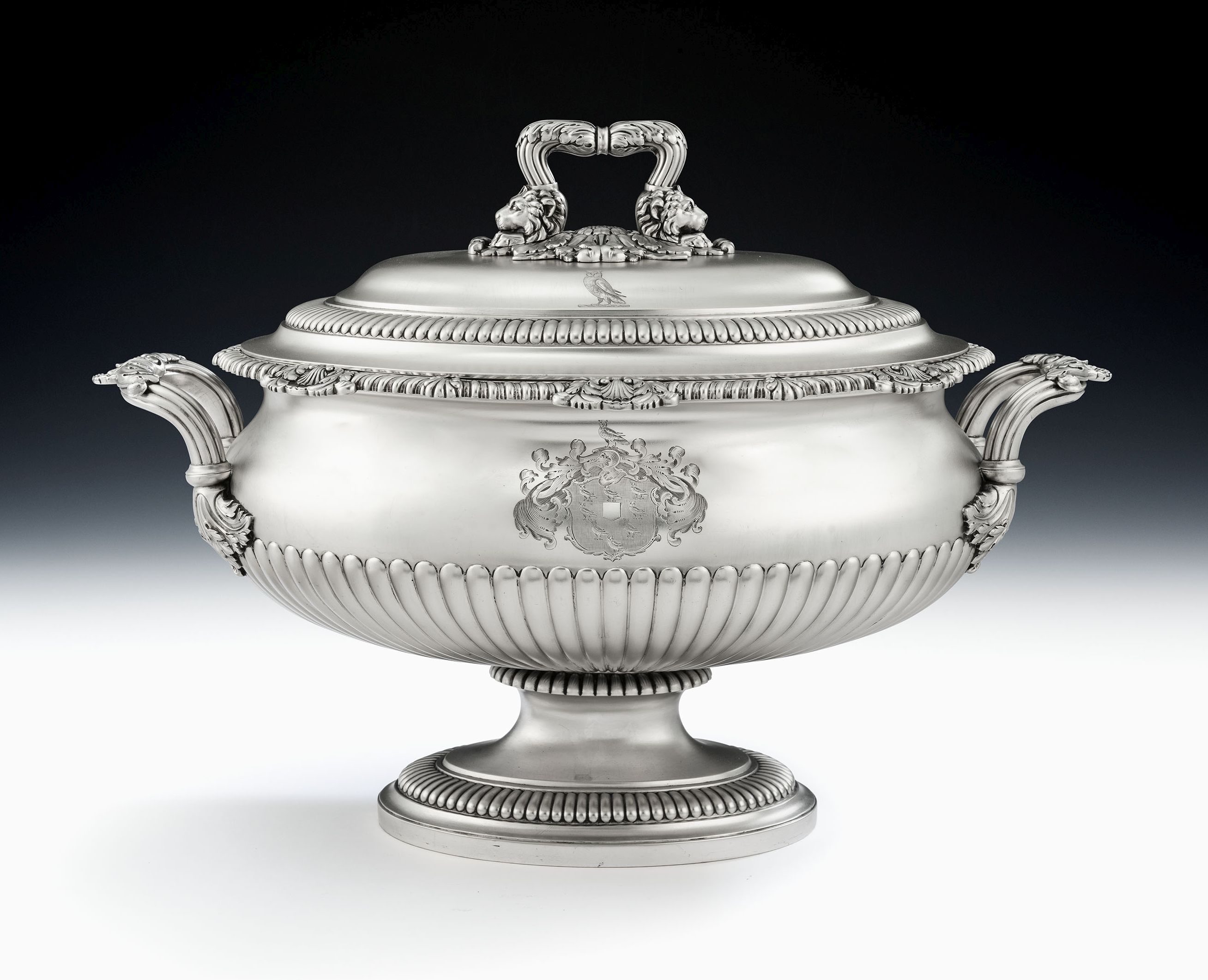
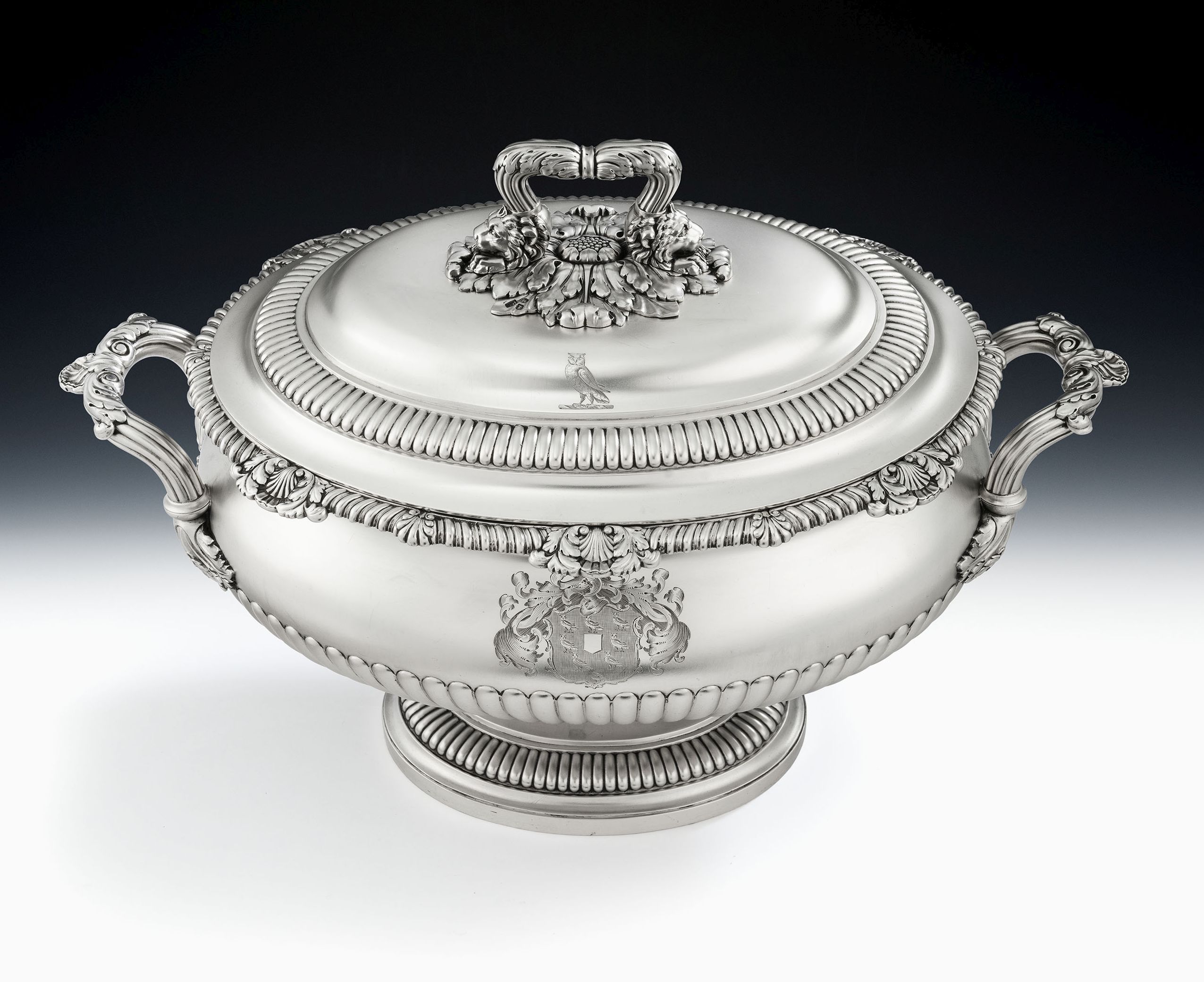
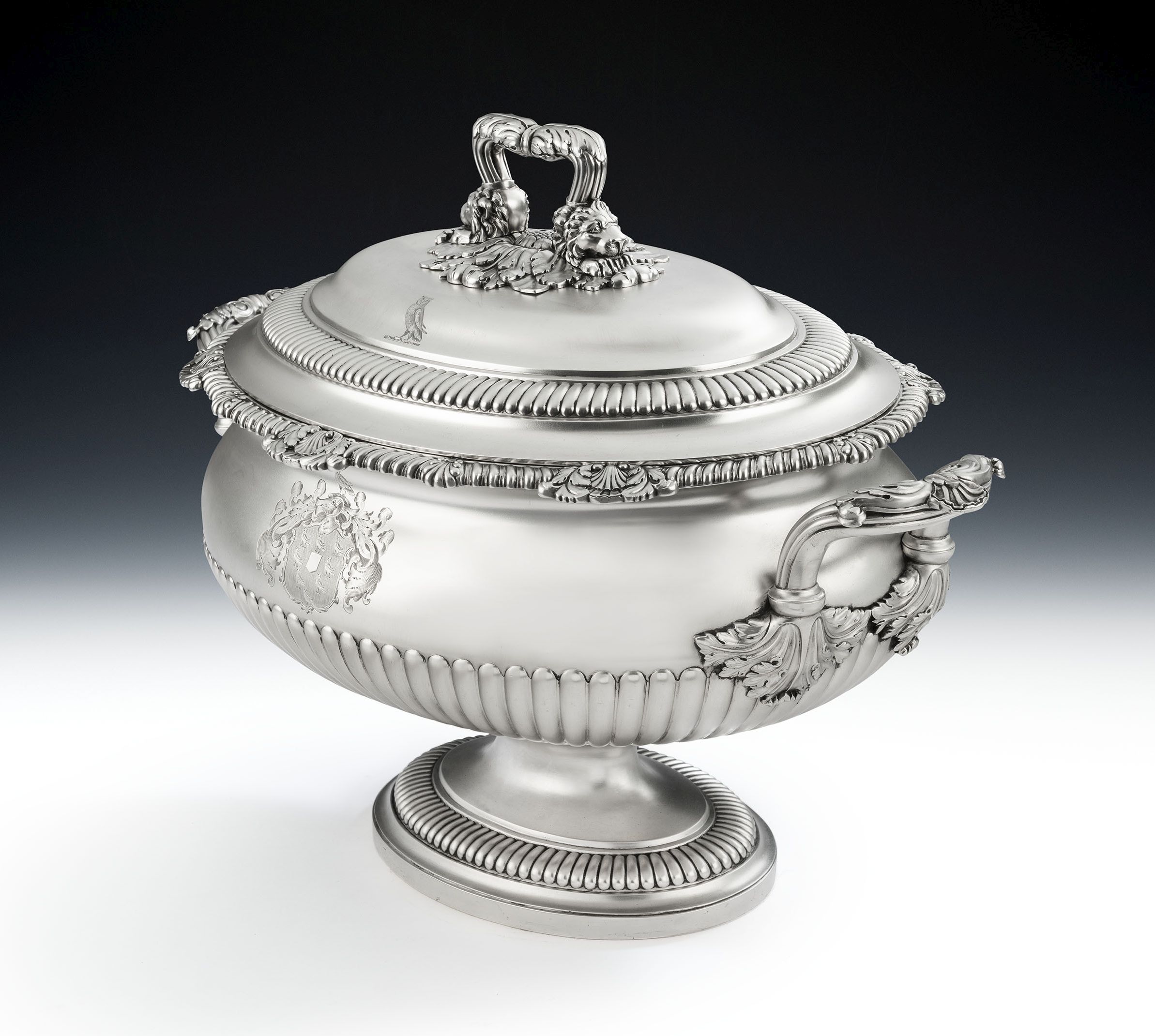
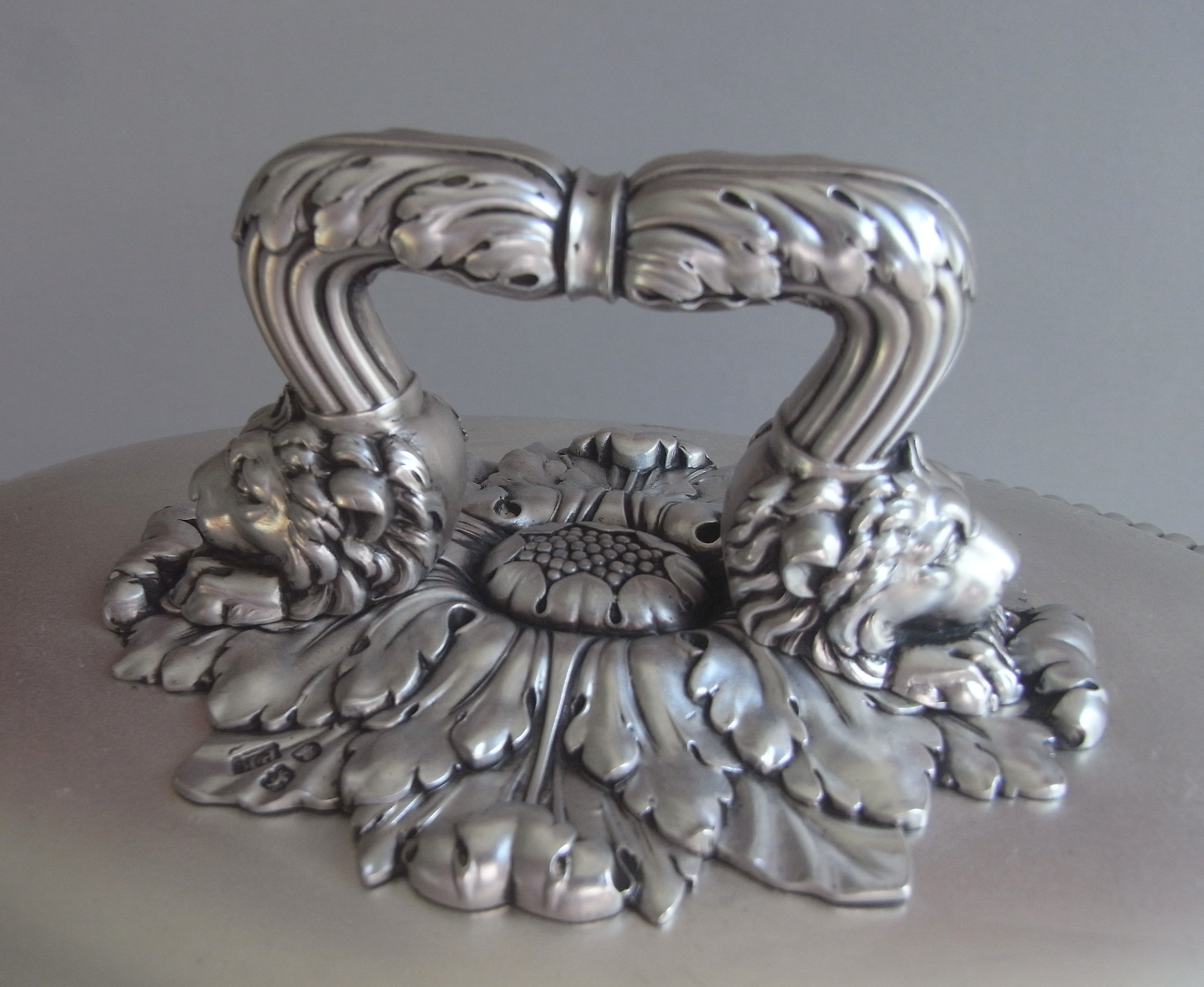
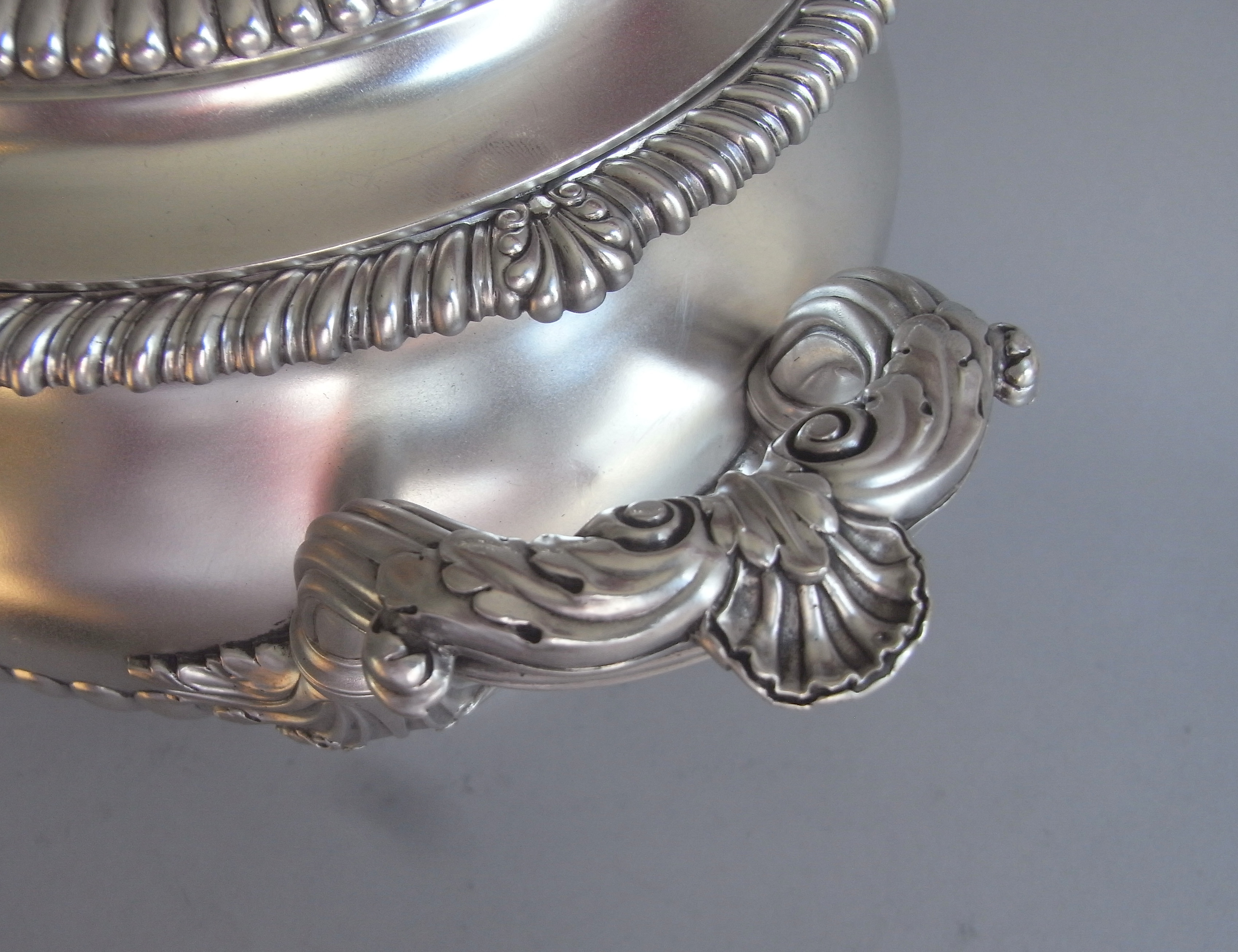
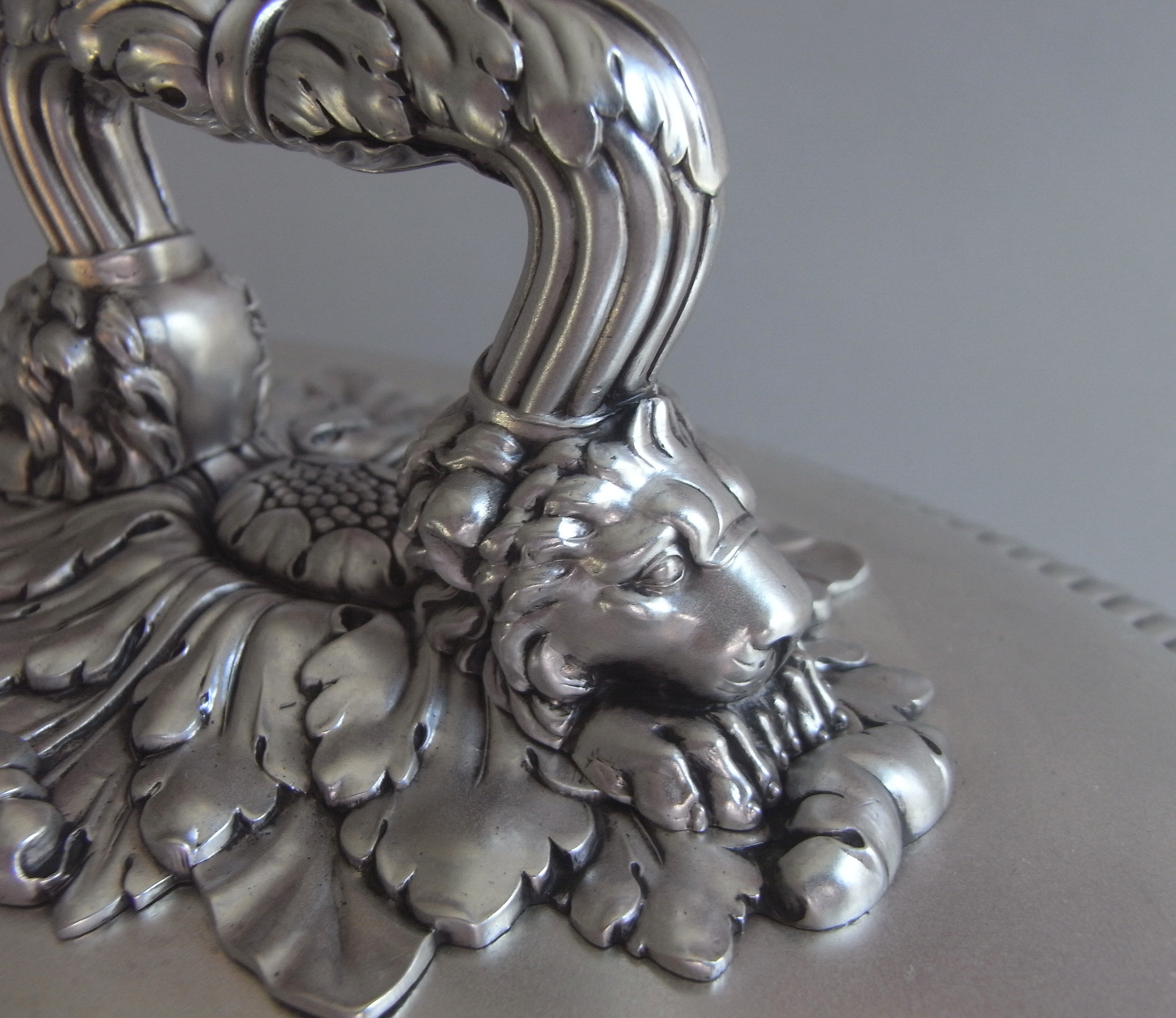
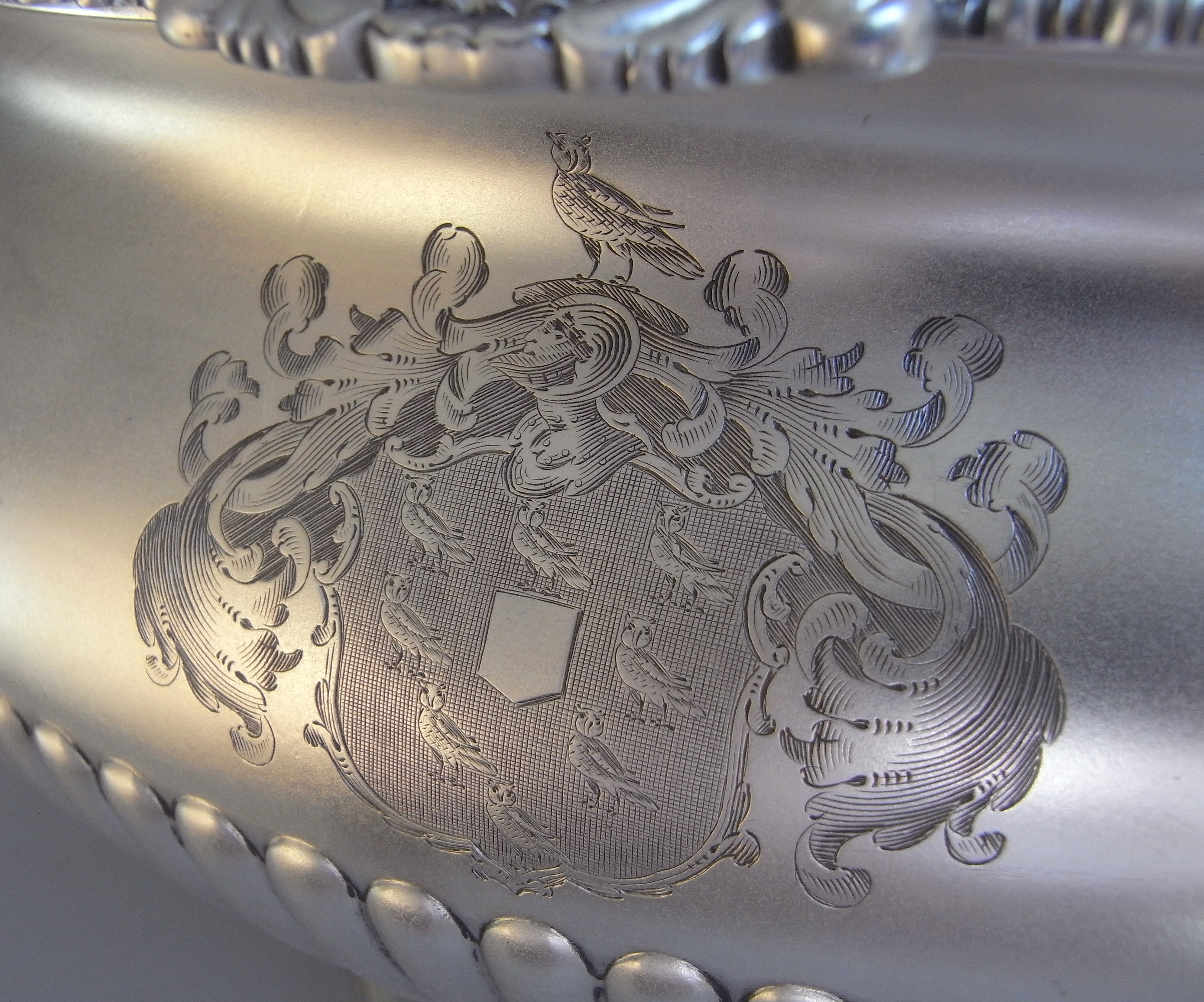
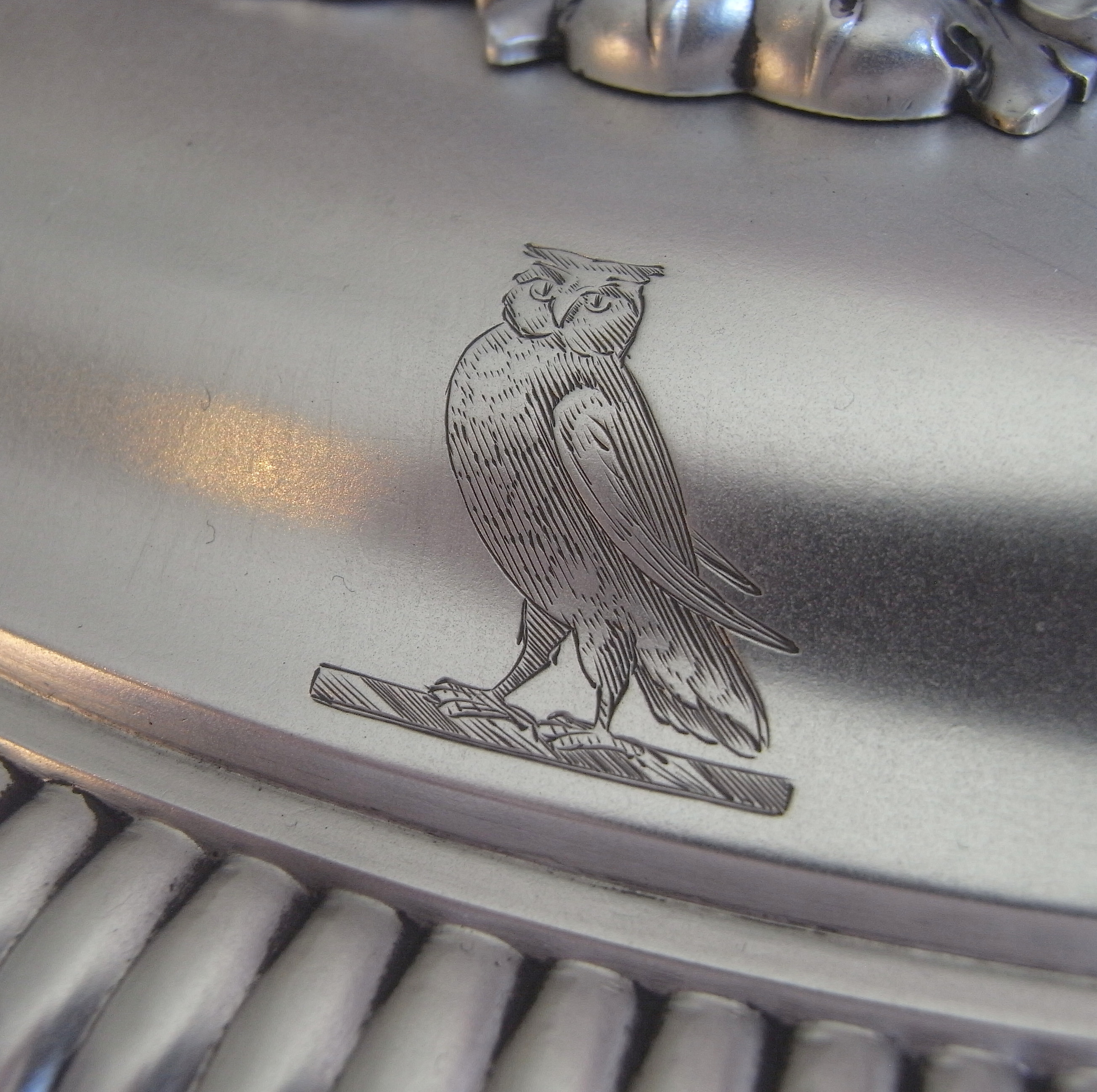
The Tureen stands on a stepped oval foot decorated with a lobed band, which rises to a second lobed band under the body. The main body is modelled in an oval baluster form with a wide band of lobing on the lower section. This rises to an everted rim decorated with gadrooning interspersed with shells flanked by acanthus leaves and anthemion motifs. The bold reeded side handles are decorated with leaf capping and shells and are attached to the main body with acanthus leaf mouldings. The slightly domed, pull-off, cover is decorated with gadrooning and terminates in a beautiful lion head and paw reeded handle, which rests on an acanthus leaf platform centred with a raying flower head. The front and rear are engraved with a contemporary Armorial surrounded by a pluming scroll cartouche and the cover is also engraved on each side with a contemporary Crest. The Armorial and Crest are those of the Calverley family of Ewell Castle and Outon Hall.
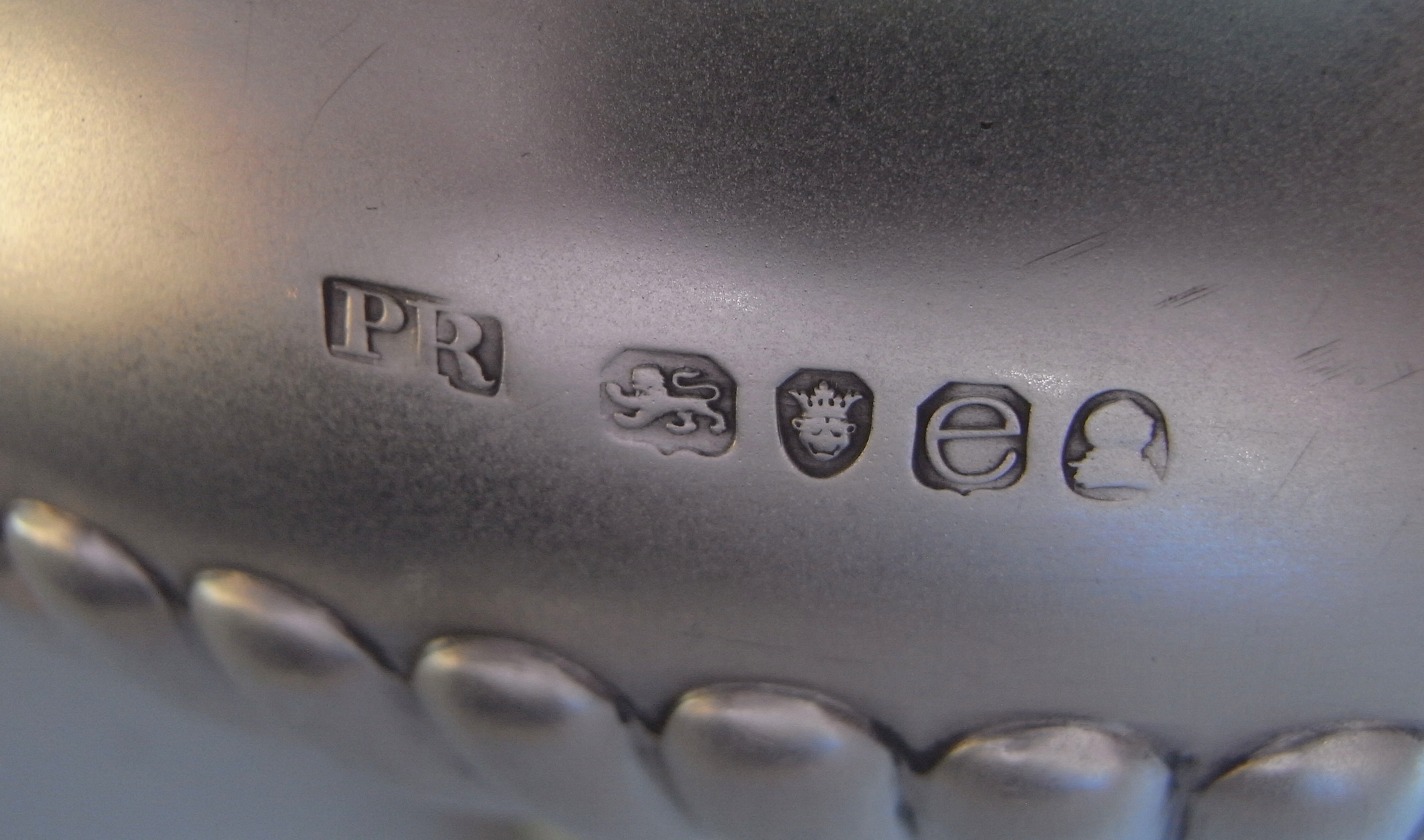
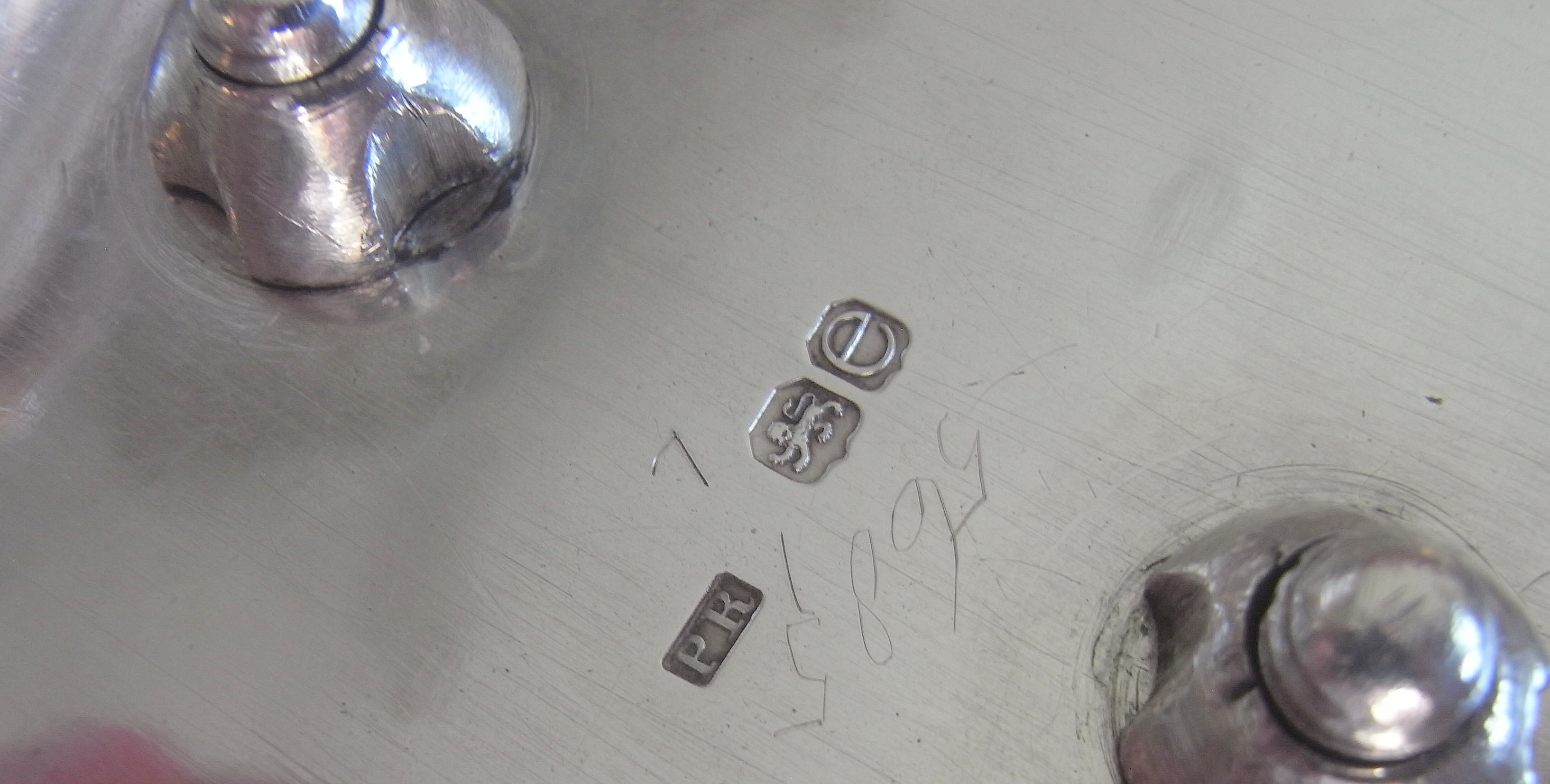
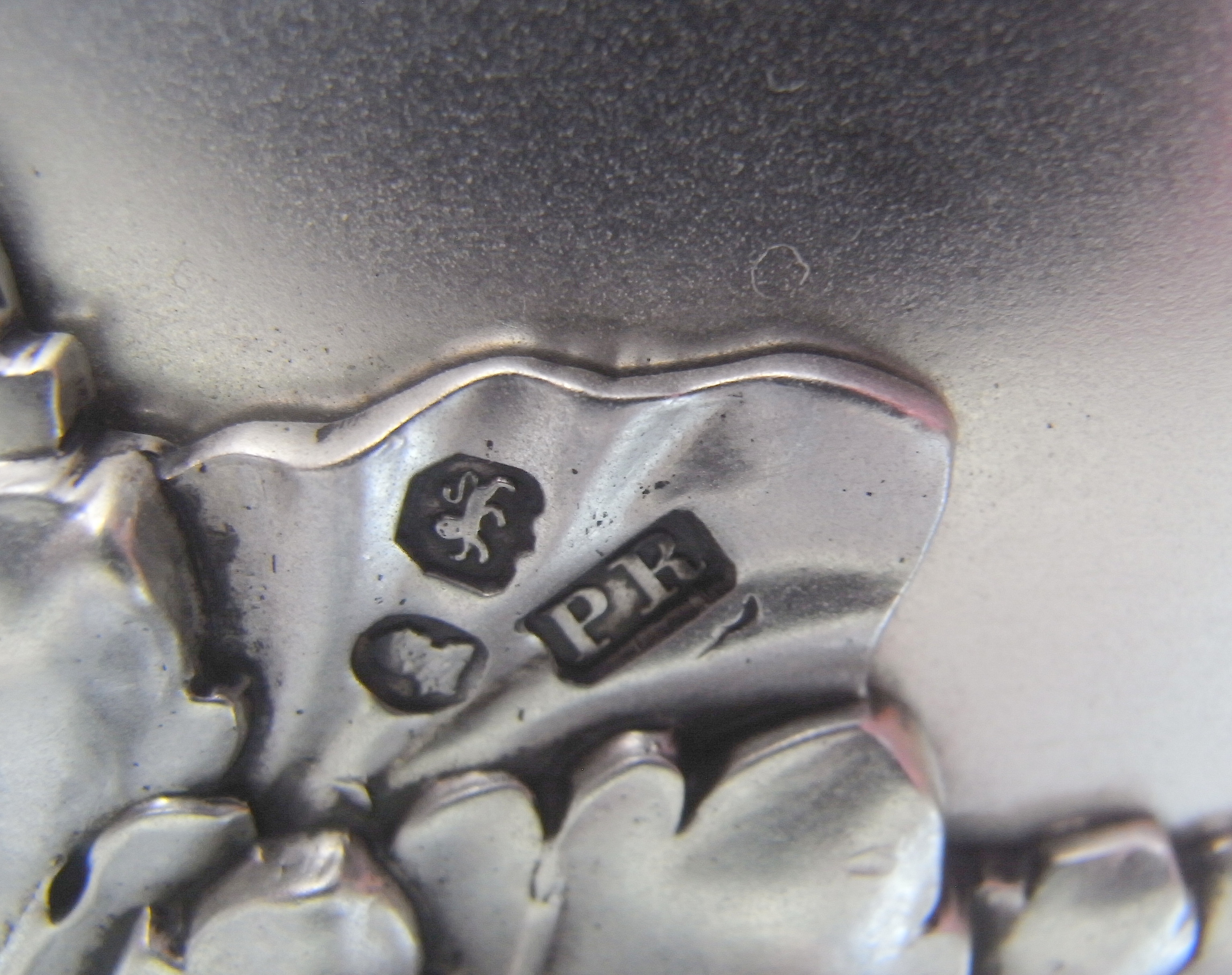
The Tureen is of the finest quality in both design and production, as would be expected from the Rundell workshops, and is in excellent condition. It is very well marked on the main body, cover and handle.
Height: 12 inches, 30 cm.
Length: 16.25 inches, 40.63 cm.
Width: 9.75 inches, 24.38 cm.
Weight: 110 oz.
PHILIP RUNDELL
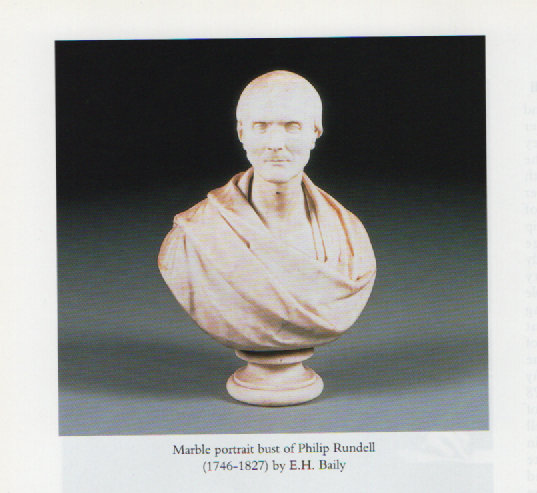
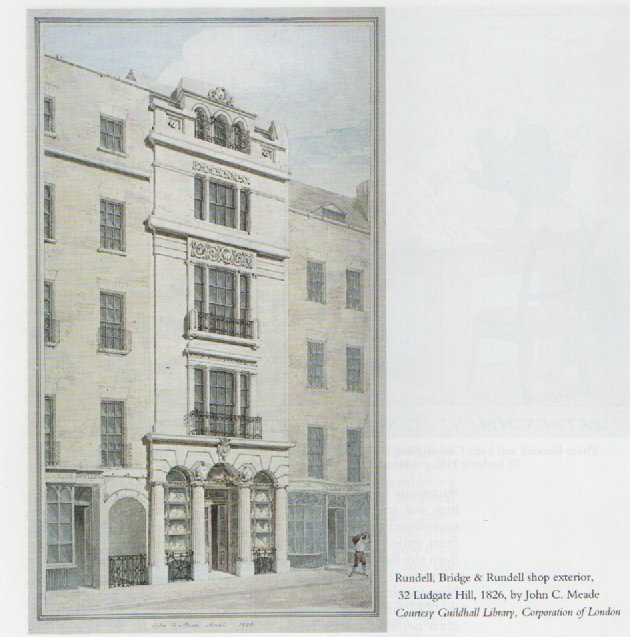
Philip Rundell was apprentice to Joseph Rogers of Bath, arriving in London in 1767 as shop man to Theed and Pickett of Ludgate Hill. He was made a partner in 1772 and acquired sole ownership of the business in 1785-6. He took John Bridge into partnership in 1788 and his nephew Edmund Walter Rundell by 1803, the firm being styled Rundell, Bridge & Rundell from 1805. Rundell's was the largest silver retailer of the Regency period. They set the standard during the nineteenth century for both the organisation of the silver trade and its promotions of artistic designs. A print of the shop exterior of Rundell, Bridge & Rundell is shown, which was situated by St. Paul's Cathedral at the top of Ludgate Hill. They were appointed Goldsmith and Jeweller to the King in 1797 and took Paul Storr into working partnership in 1807, an arrangement which lasted until 1819, when Rundell entered his own mark from workshops in Dean Street, Soho. He died in 1827, leaving his fortune of £ 1.25 million to his nephew Joseph Nield, one of the largest estates ever proved. When Neild died he left his entire estate to Queen Victoria, which hugely increased the wealth of the British Monarchy.
He was held in great admiration by King George IV and he asked him to make the crown jewels for his coronation in 1821. The state diadem, worn frequently by the late Queen, was also from Rundell's workshops. A marble portrait bust of Philip Rundell is also shown, as well the premises of Rundell, Bridge & Rundell in Ludgate Hill.
RELATED ITEMS