
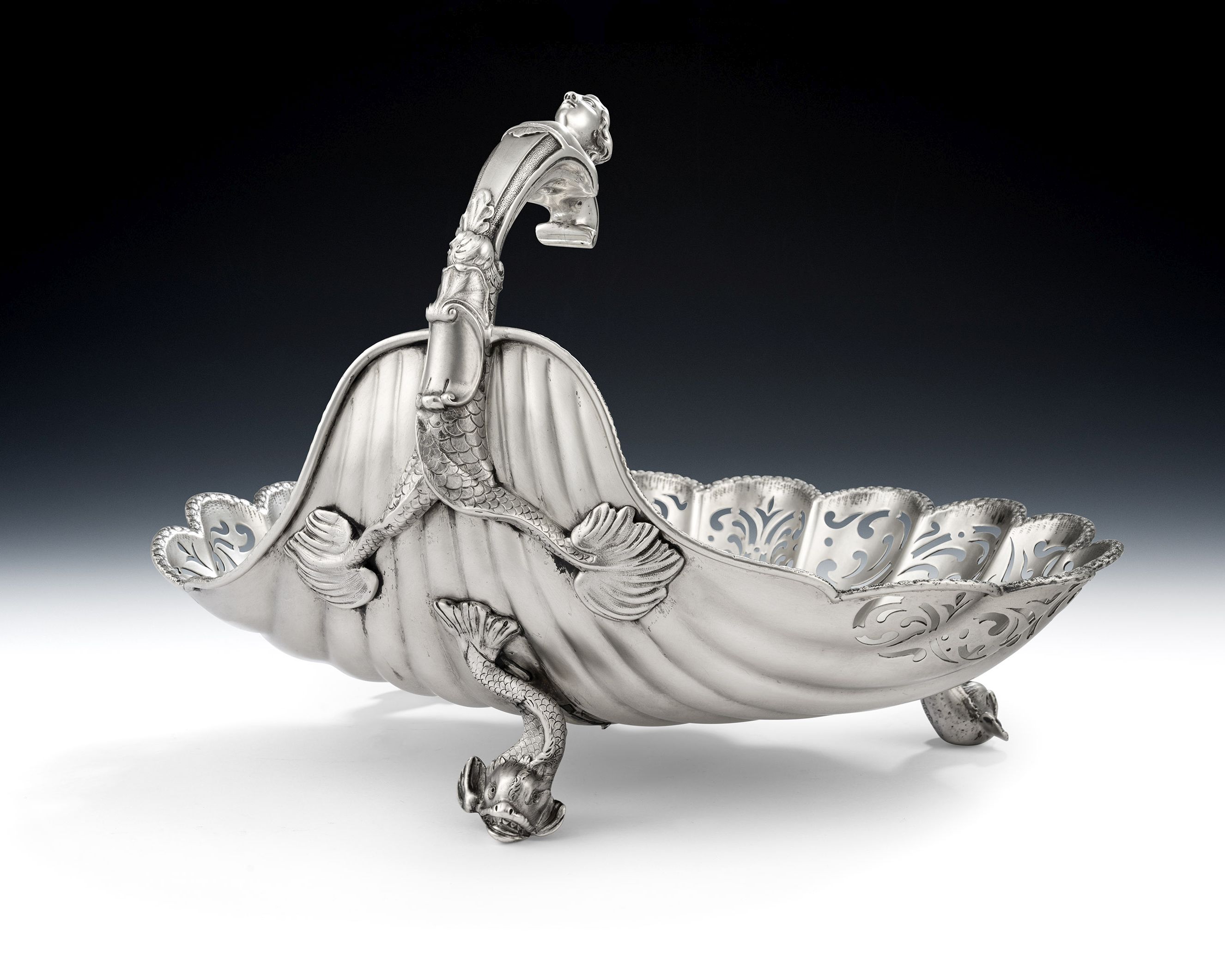
After Paul De Lamerie. An exceptional Shell Basket made in London in 1839 by Edward Farrell.
After Paul De Lamerie. An exceptional Shell Basket made in London in 1839 by Edward Farrell.
375555
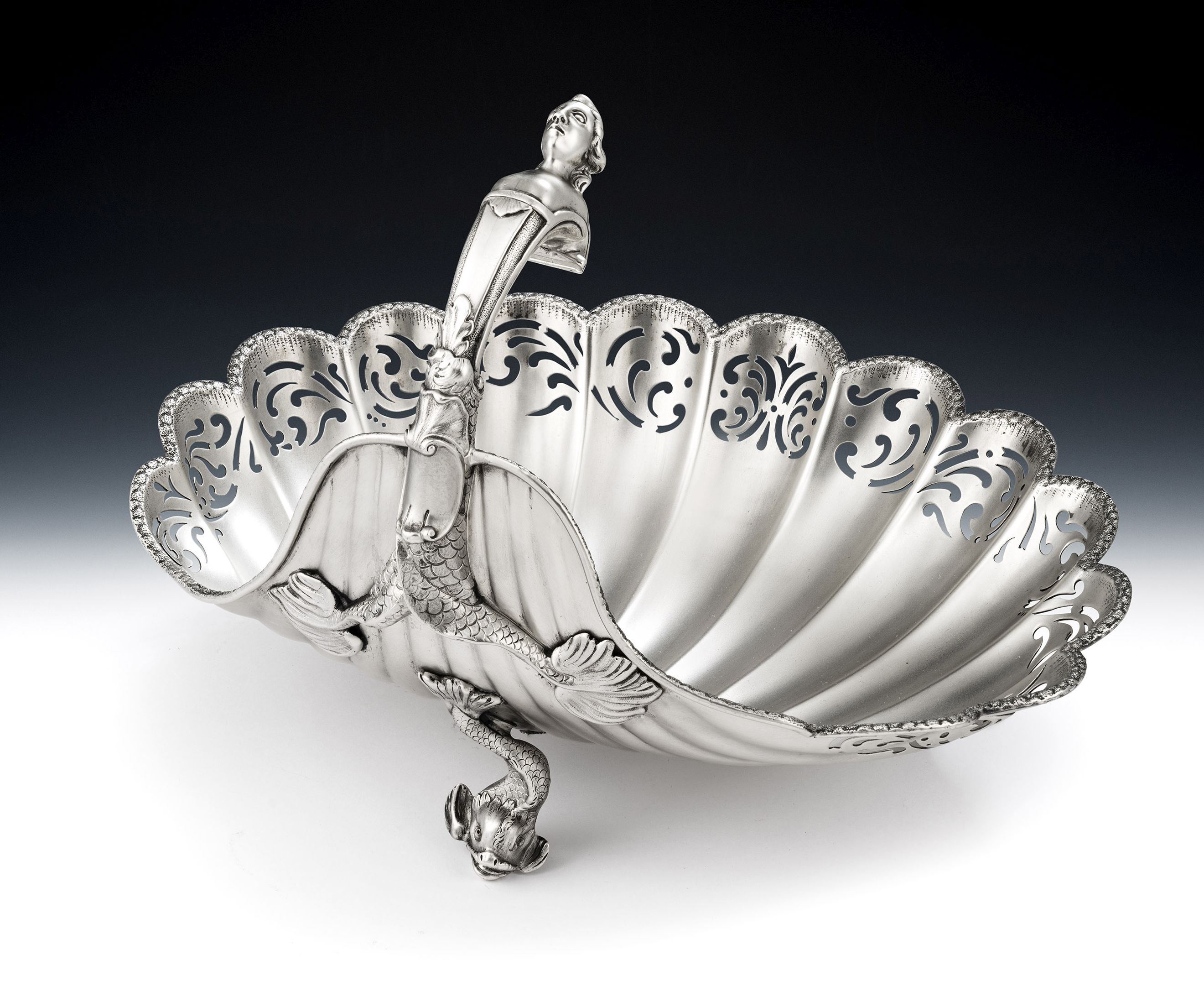
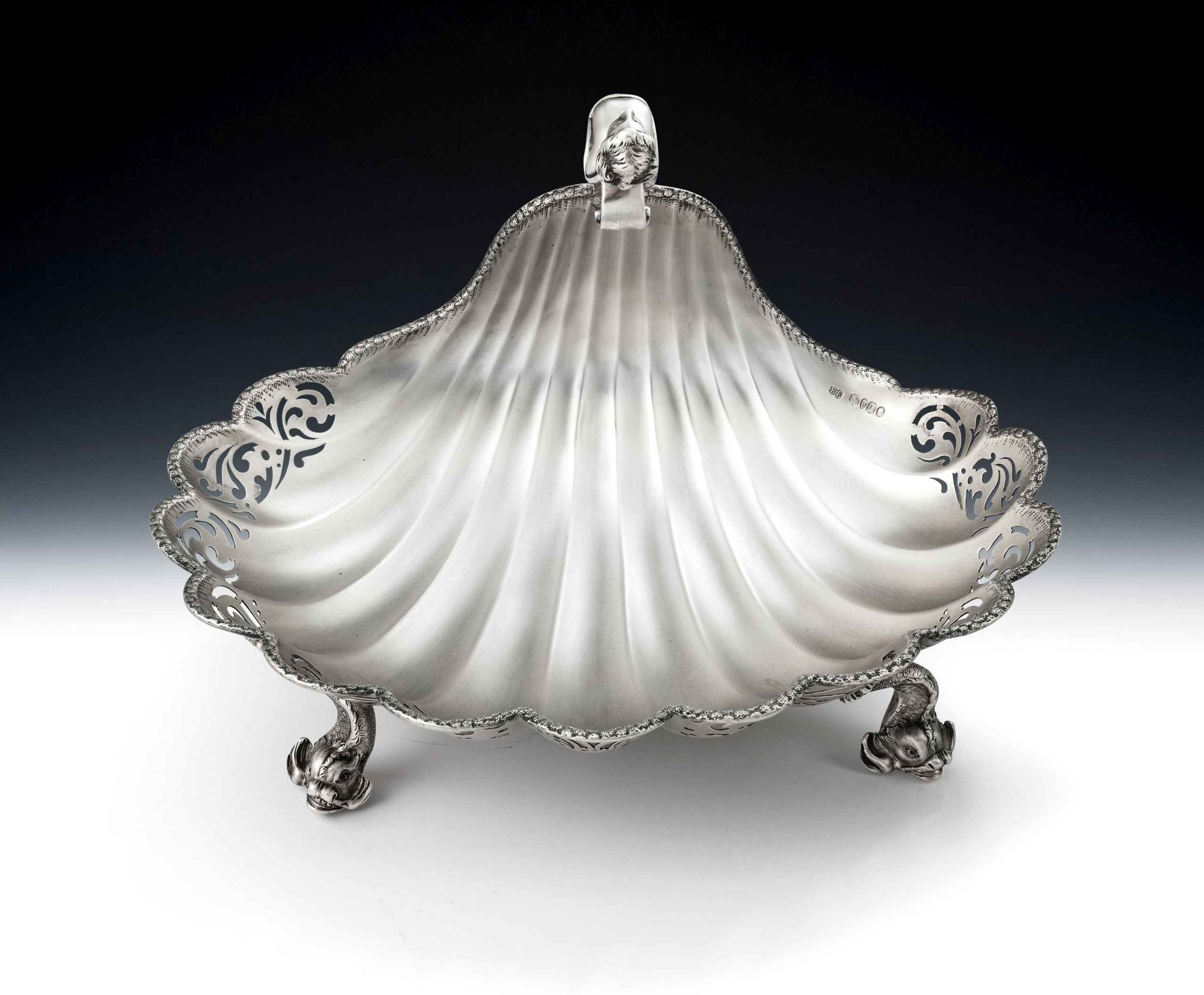
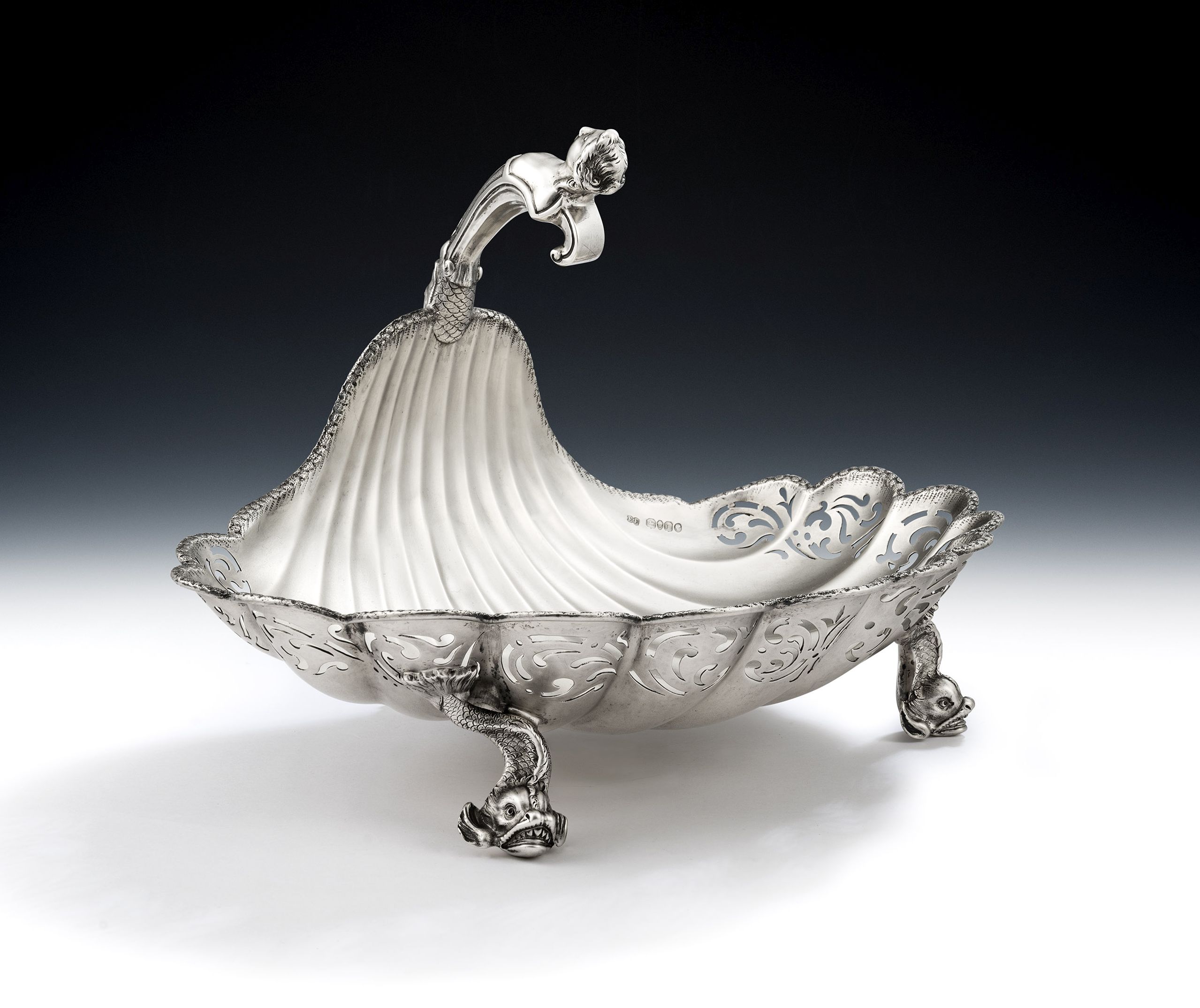
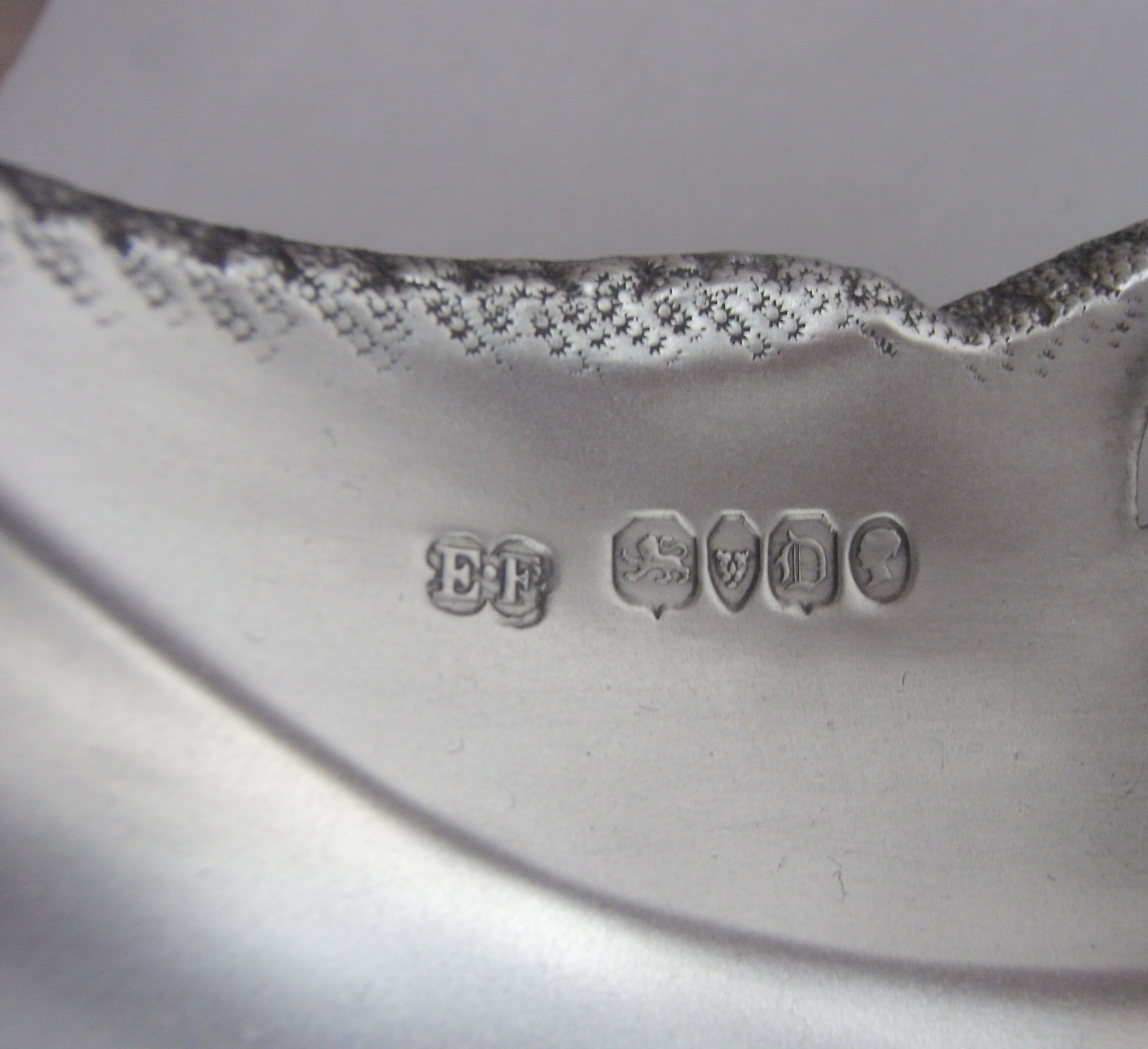
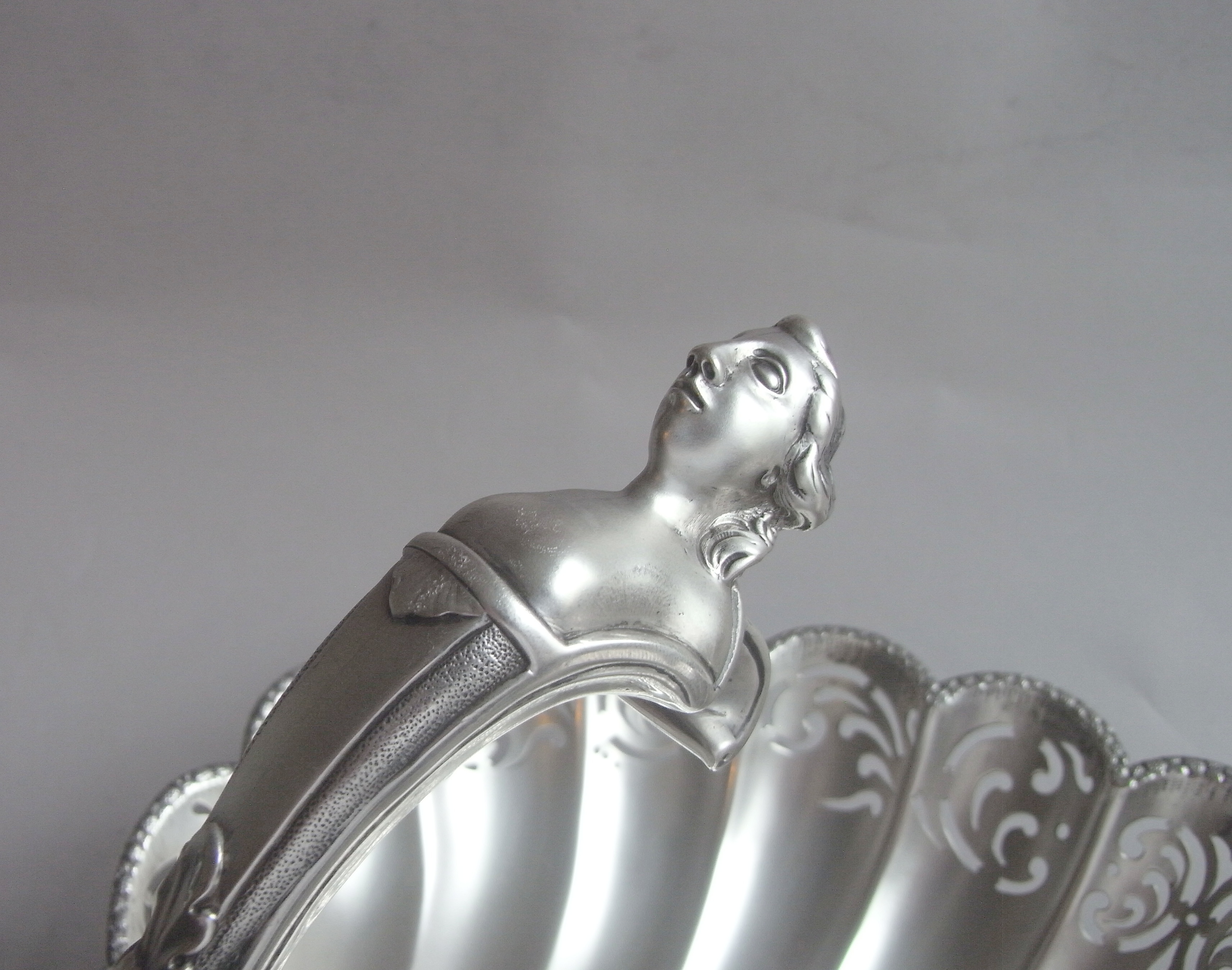
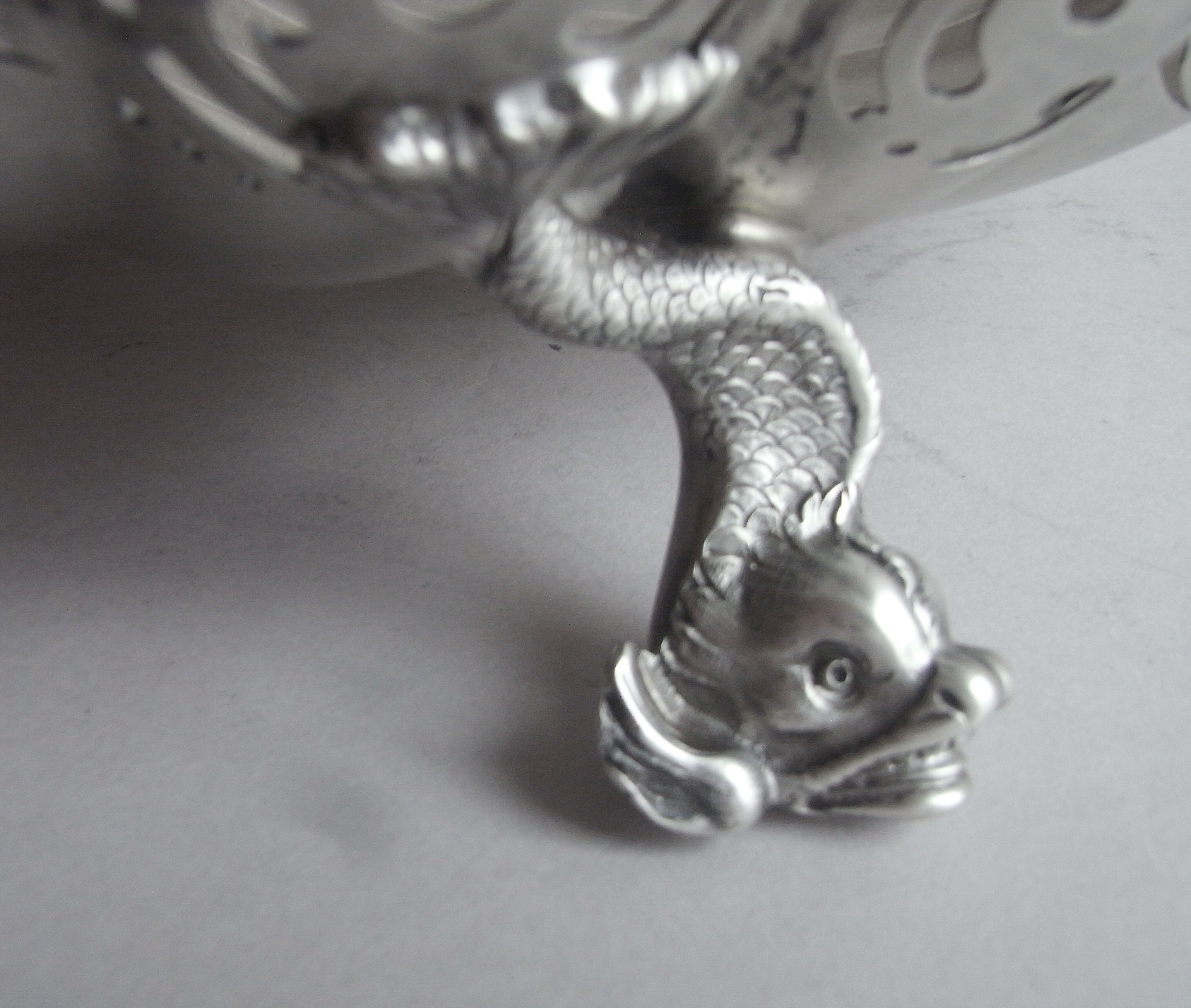
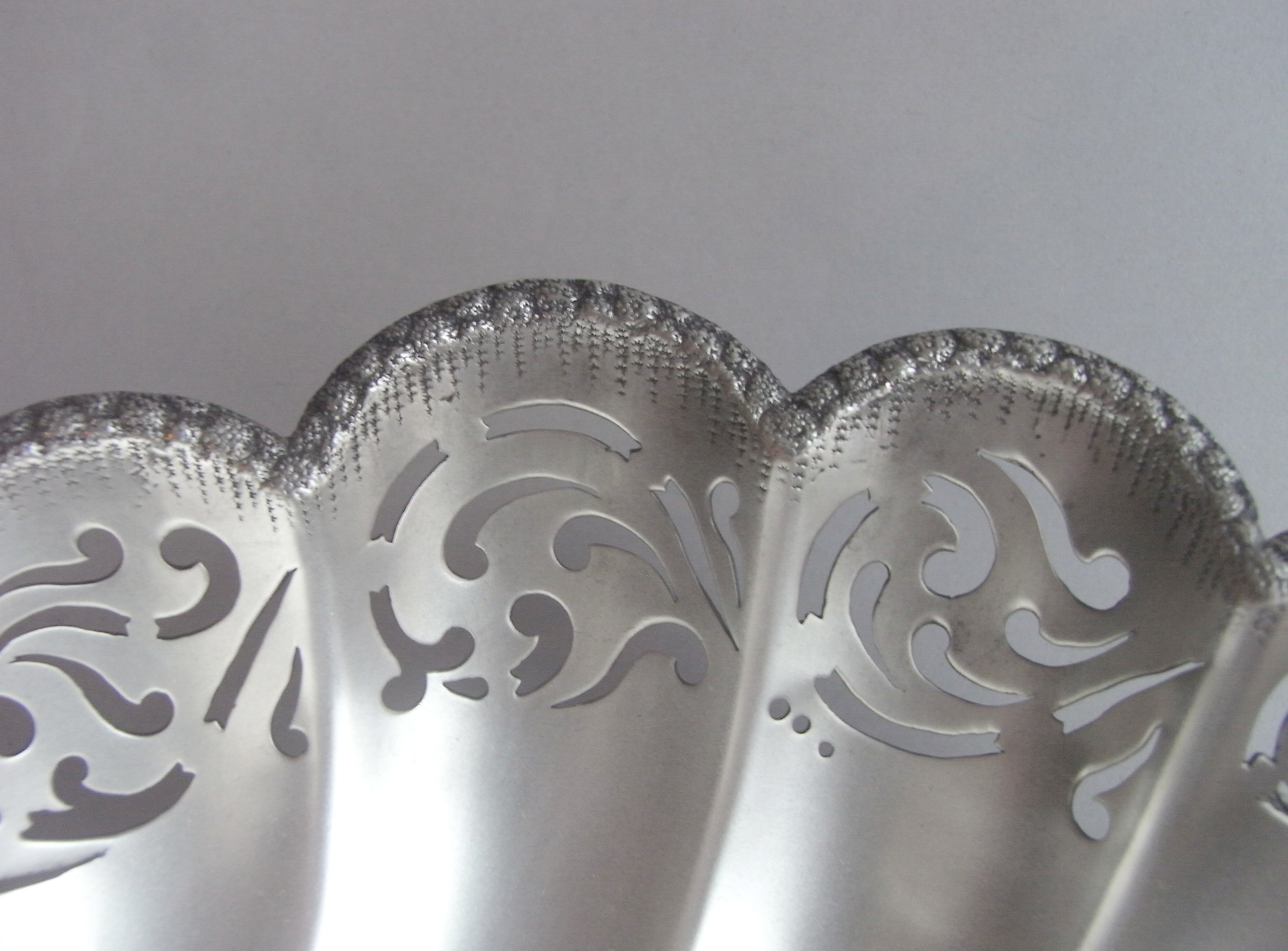
This rare basket is formed as an open shell, with fluted interior, and rim decorated with prick dot and stipple designs. The end of each flute is also pierced with scroll work and roundels. This piece stands on three dolphin feet finely chased with scale work. The overhanging scroll handle is formed as the upward-facing head and torso of a mermaid, with reeded border, her hair arranged in Grecian style, and her double tail chased with scale work, shown at the rear of the main body. The basket is in excellent condition and is very well marked in the bowl.
The earliest known example of such a shell-shaped basket, on cast dolphin feet, is by Paul de Lamerie, now in the collection of the Philadelphia Museum of Art. A later example of 1747 is in the Farrer Collection, The Ashmolean Museum, Oxford, and was exhibited London, The Victoria and Albert Museum, Rococo Art and Design in Hogarth's England, 1984, no. G21. In the catalogue entry Phillipa Glanville suggests that Lamerie was perhaps inspired by earlier Meissen porcelain examples, which were being imported into London in the 1730s. She cites an escallop-shaped dish by Heroldt of circa 1728 with a painted diaper border which bears resemblance to the piercing on the Lamerie baskets (see Pantheon, XV, 1935, p. 203). Moreover French silver shell-shaped baskets are thought to have been produced after a design, tentatively attributed to Germain, published by Diderot in Encyclopedie Planches, vol. 8, Orfevres Grossier, Paris, 1771, fig. 5, pl. VI.
Phillips Garden purchased Paul de Lamerie's tools and patterns on the latter's death in 1751. Although Edward Wakelin and Thomas Gilpin had produced similar baskets in 1747, there can be little doubt that Lamerie's casts were used by Garden to produce this and other similar baskets
Edward Farrell was one of the finest silversmiths of this period and his mark is to be found on some of the most unusual productions of the Regency and later periods, generally conceived in a kind of revival Rococo style. He produced outstanding pieces for H.R.H., The Duke of York, son of George III & Queen Charlotte, the most remarkable of which is the Hercules Candelabrum which was made for the Duke in 1822.
Length: 14 inches, 35 cm.
Width: 10.75 inches, 26.88 cm.
Height: 11 inches, 27.5 cm.
Weight: 49 oz in Weight.
RELATED ITEMS




. Moreover French silver shell-shaped baskets are thought to have been produced after a design, tentatively attributed to Germain, published by Diderot in Encyclopedie Planches, vol. 8, Orfevres Grossier, Paris, 1771, fig. 5, pl. VI.Phillips Garden purchased Paul de Lamerie's tools and patterns on the latter's death in 1751. Although Edward Wakelin and Thomas Gilpin had produced similar baskets in 1747, there can be little doubt that Lamerie's casts were used by Garden to produce this and other similar baskets Edward Farrell was one of the finest silversmiths of this period and his mark is to be found on some of the most unusual productions of the Regency and later periods, generally conceived in a kind of revival Rococo style. He produced outstanding pieces for H.R.H., The Duke of York, son of George III & Queen Charlotte, the most remarkable of which is the Hercules Candelabrum which was made for the Duke in 1822.Length: 14 inches, 35 cm.Width: 10.75 inches, 26.88 cm.Height: 11 inches, 27.5 cm.Weight: 49 oz in Weight. )