
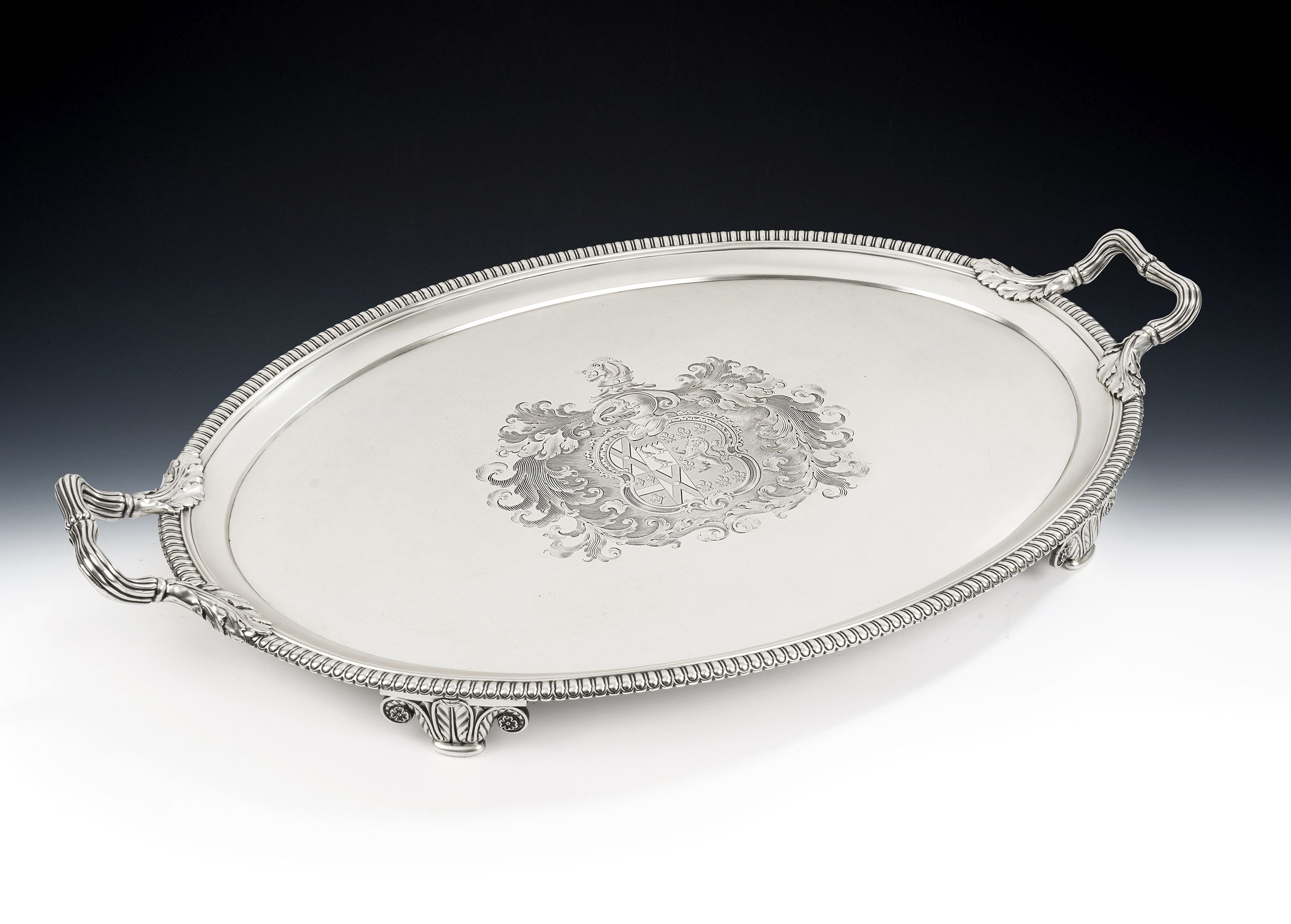
PAUL STORR. The Magnificent Erddig Tray. An important George III Two Handled Tray made in London in 1808 by Paul Storr.
PAUL STORR. The Magnificent Erddig Tray. An important George III Two Handled Tray made in London in 1808 by Paul Storr.
375648
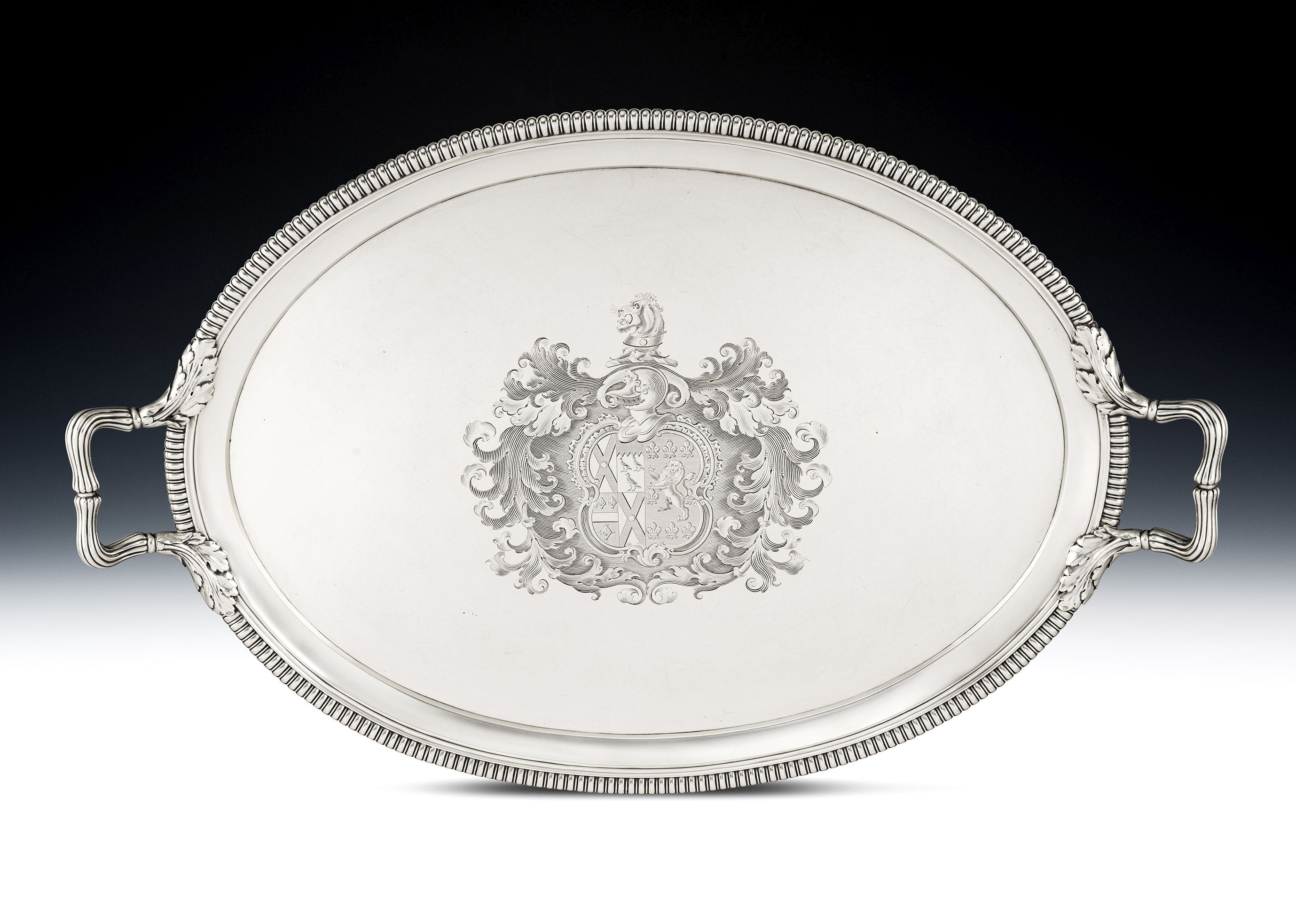
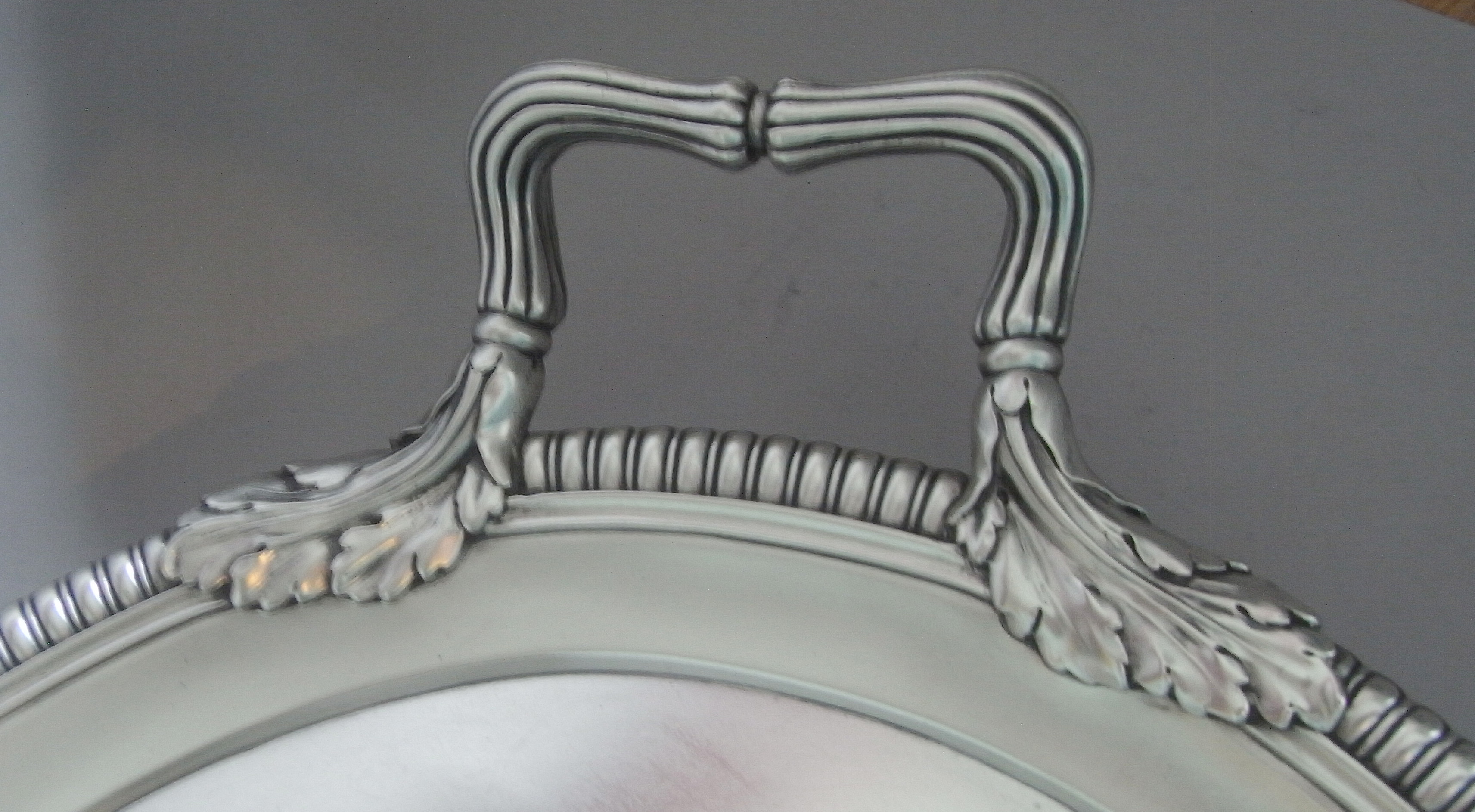
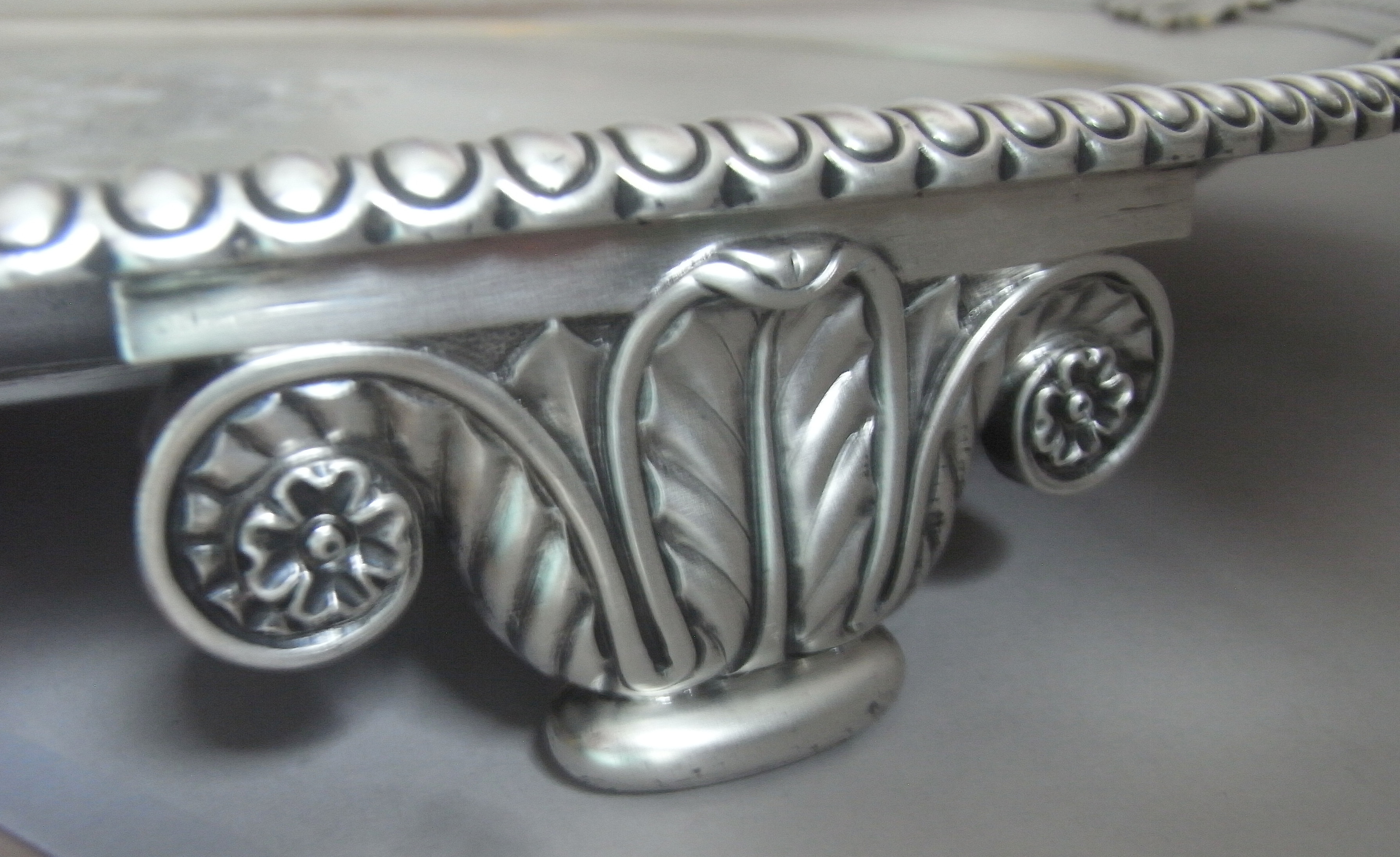
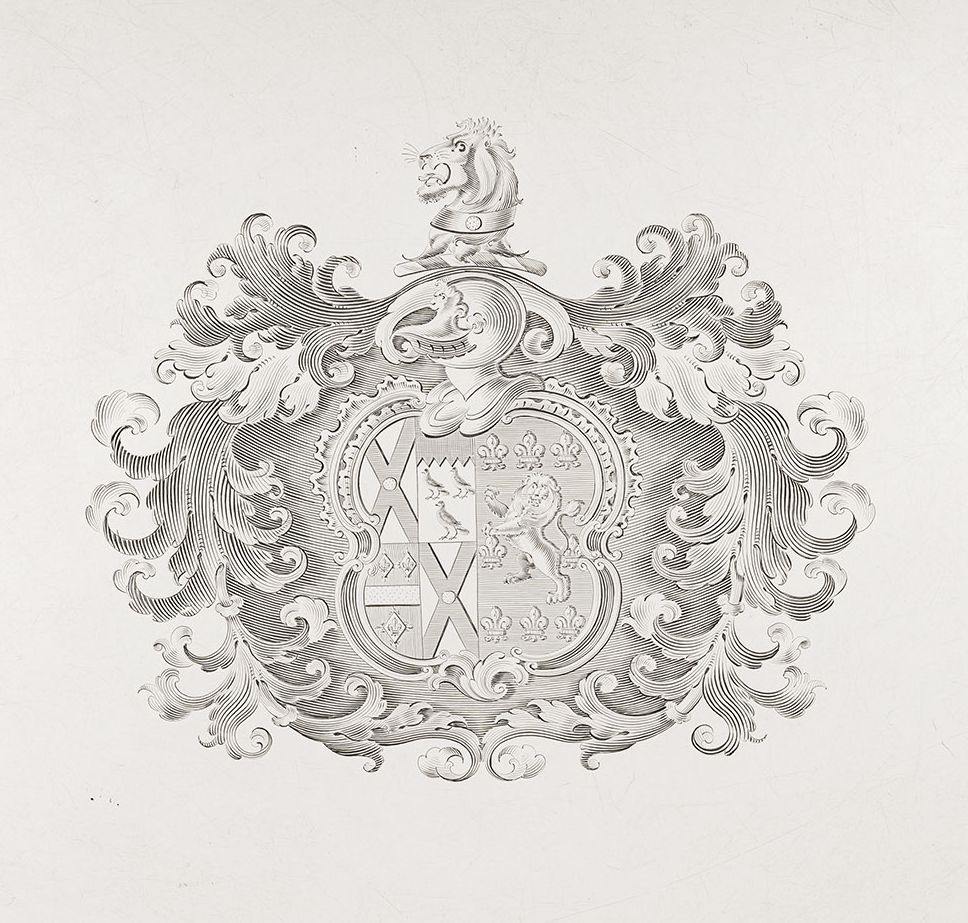
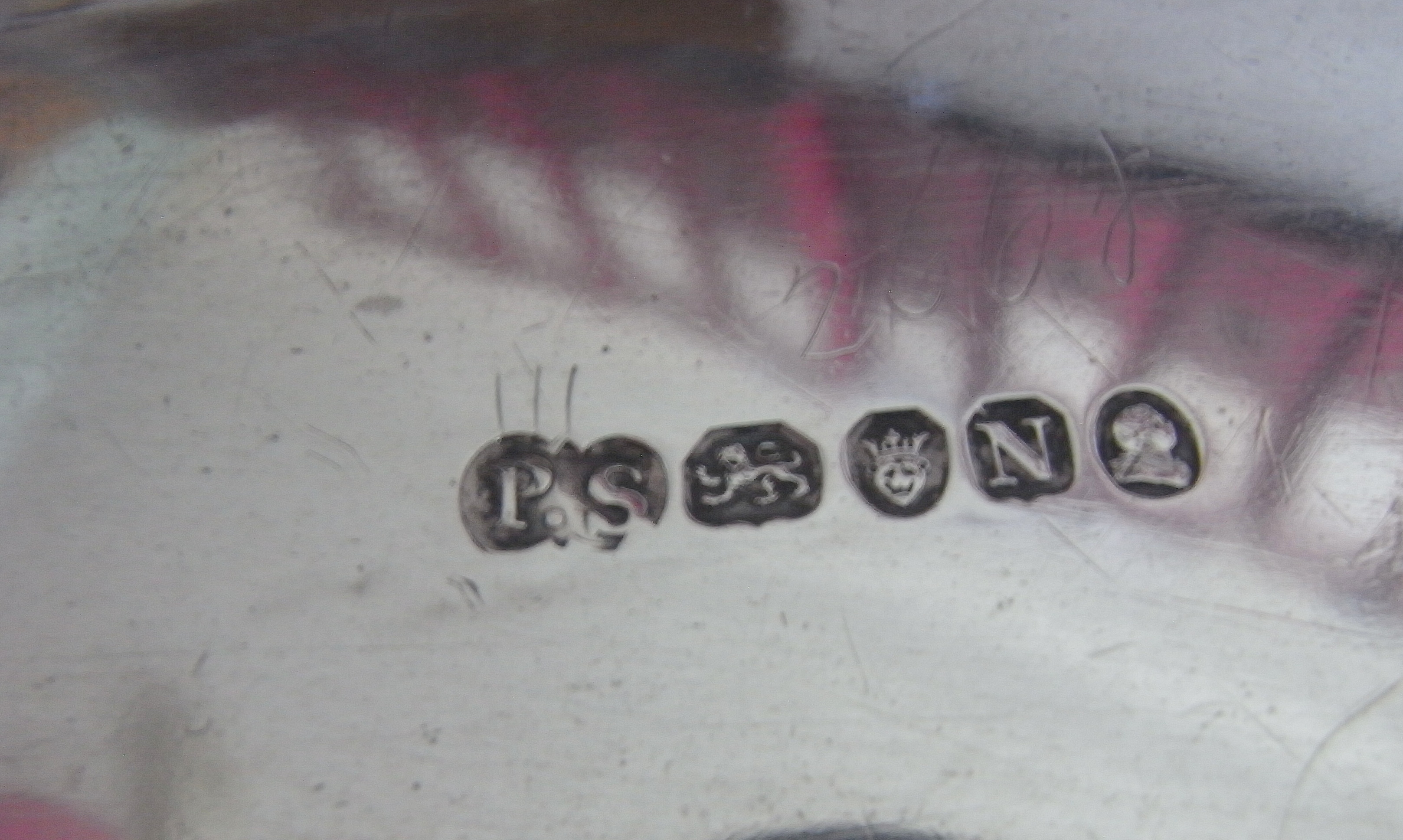
The Tray is of a large size and stands on four cast lotus leaf feet, also decorated with raying floral medallions. The stepped outer border rises to a gadrooned rim and two reeded bracket handles, attached to the main body with acanthus leaf mouldings. The centre of the tray is engraved with a magnificent contemporary Armorial, with Crest above, all surrounded by a linear pluming scroll cartouche. The Tray is in exceptional condition, has a very good colour and is of an outstanding weight. It is fully marked on the reverse. It would appear that this Paul Storr Trays of this design are very scarce, most of which were made in 1808.
Length, handle to handle: 30 inches, 75 cm.
Width: 19.5 inches, 48.75 cm.
Weight: 192 oz.
ARMORIAL & CREST ENGRAVED ON THE TRAY
The Arms are those of Yorke, quartering Meller of Middle Temple, London, granted 1719, and lastly Appenrich. They impale those of Holland. They are therefore specifically those of Simon Yorke II (1771-1834) of Erddig and his wife Margaret who he married in 1807. She was the younger daughter of John Holland Esq. of Teirdan, Co. Denbigh. Yorke was the son of Philip Yorke of Erddig and his first wife Elizabeth Cust, daughter of Sir John Cust, 3rd Baronet. He was educated at Eton College in 1784 and entered St. John’s College, Cambridge, on 29th November, 1788.
Simon Yorke sat as member of Parliament for Grantham from 1793 to 1802. He was Lieutenant in the Wrexham Yeomanry from 1795 to 1797 and Sheriff of Denbighshire from 1807 to 1808. He was also distinguished as the author of “The Royal Tribes of Wales.” Yorke died on 12 the December 1834 and was succeeded by his eldest son Simon III. The family of Yorke, of which the Earl of Harwicke represents the elder branch, came originally from Calne, in Wiltshire, and were afterwards seated at Dover and in the Isle of Thanet.
ERDDIG
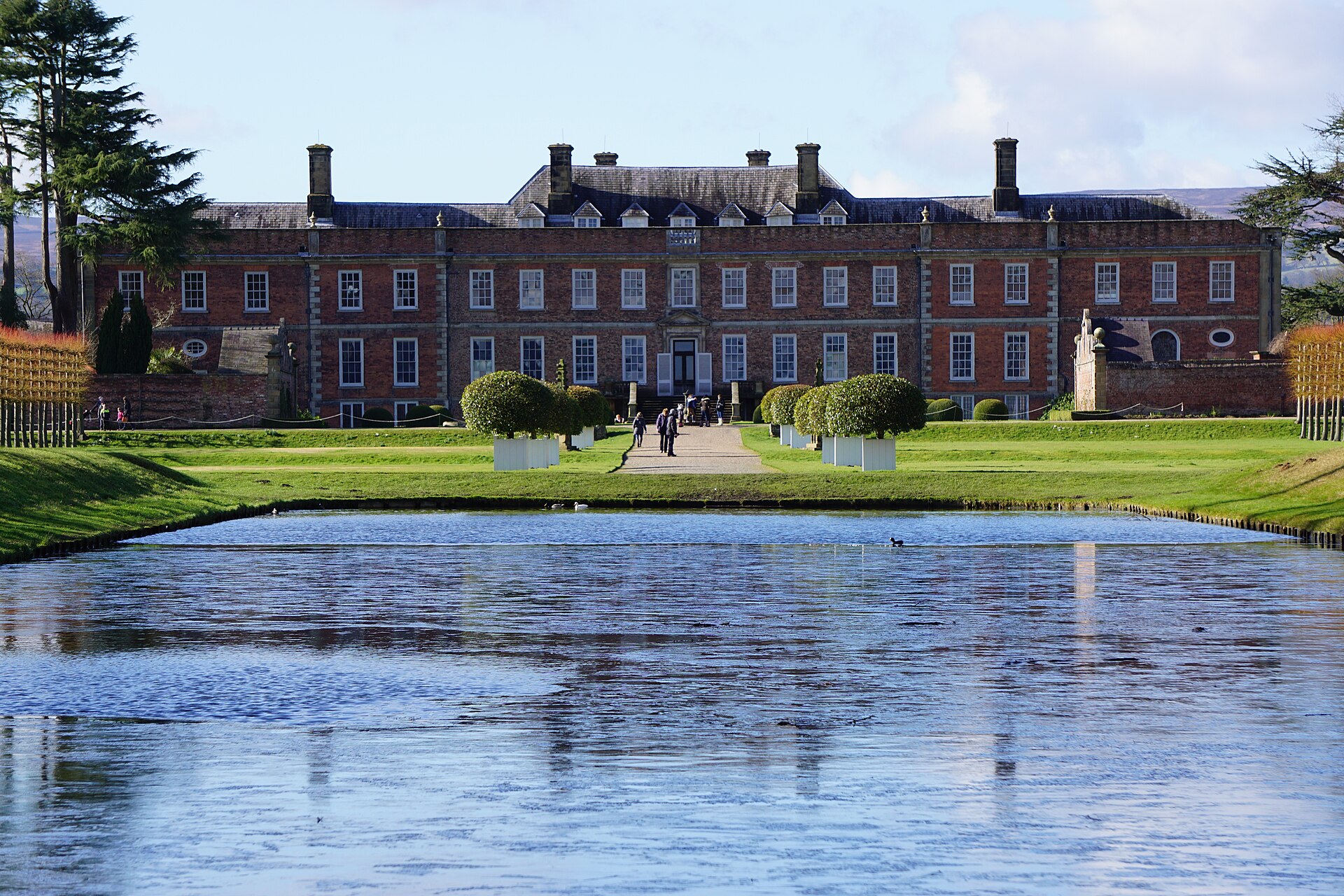
Erddig is a country house and estate in the community of Marchwiel, approximately 2 miles south of Wrexham, Wales. It is centred on a country house which dates principally from between 1684 and 1687, when the central block was built by Joshua Edisbury, and the 1720s, when the flanking wings were added by its second owner, John Meller. Erddig was inherited by Simon Yorke in 1733, and remained in the Yorke family until it was given to the National Trust by Philip Scott Yorke in 1973.
The Yorke family had an unusual relationship with their servants, and commemorated them in a large and unique collection of portraits and poems. This collection, and the good state of preservation of the servants' quarters and estate workshops, provide an insight into how servants lived between the eighteenth and twentieth centuries. The house is also significant for its collection of seventeenth-century furniture; this includes the state bed, a rare surviving example of a lit à la duchesse canopy bed which retains its original hangings and bed cover of silk satin embroidered with Chinese designs. The house was designated a grade I listed building in 1952.
The gardens were laid out between 1718 and 1733, and the surrounding park was landscaped between 1767 and 1789. The estate is approximately 1,900 acres (770 ha) in size, and includes part of Wat's Dyke and the remains of a motte-and-bailed castle of the Norman period. A pair of gates, originally located at Stansty Park and attributed to Robert Davies, stand at the end of the garden canal.
RELATED ITEMS




 of Erddig and his wife Margaret who he married in 1807. She was the younger daughter of John Holland Esq. of Teirdan, Co. Denbigh. Yorke was the son of Philip Yorke of Erddig and his first wife Elizabeth Cust, daughter of Sir John Cust, 3rd Baronet. He was educated at Eton College in 1784 and entered St. John’s College, Cambridge, on 29th November, 1788.Simon Yorke sat as member of Parliament for Grantham from 1793 to 1802. He was Lieutenant in the Wrexham Yeomanry from 1795 to 1797 and Sheriff of Denbighshire from 1807 to 1808. He was also distinguished as the author of “The Royal Tribes of Wales.” Yorke died on 12 the December 1834 and was succeeded by his eldest son Simon III. The family of Yorke, of which the Earl of Harwicke represents the elder branch, came originally from Calne, in Wiltshire, and were afterwards seated at Dover and in the Isle of Thanet.ERDDIGErddig is a country house and estate in the community of Marchwiel, approximately 2 miles south of Wrexham, Wales. It is centred on a country house which dates principally from between 1684 and 1687, when the central block was built by Joshua Edisbury, and the 1720s, when the flanking wings were added by its second owner, John Meller. Erddig was inherited by Simon Yorke in 1733, and remained in the Yorke family until it was given to the National Trust by Philip Scott Yorke in 1973. The Yorke family had an unusual relationship with their servants, and commemorated them in a large and unique collection of portraits and poems. This collection, and the good state of preservation of the servants' quarters and estate workshops, provide an insight into how servants lived between the eighteenth and twentieth centuries. The house is also significant for its collection of seventeenth-century furniture; this includes the state bed, a rare surviving example of a lit à la duchesse canopy bed which retains its original hangings and bed cover of silk satin embroidered with Chinese designs. The house was designated a grade I listed building in 1952. The gardens were laid out between 1718 and 1733, and the surrounding park was landscaped between 1767 and 1789. The estate is approximately 1,900 acres (770 ha) in size, and includes part of Wat's Dyke and the remains of a motte-and-bailed castle of the Norman period. A pair of gates, originally located at Stansty Park and attributed to Robert Davies, stand at the end of the garden canal. )