
PAUL STORR. A very fine Serving Dish made in London in 1823 by Paul Storr.
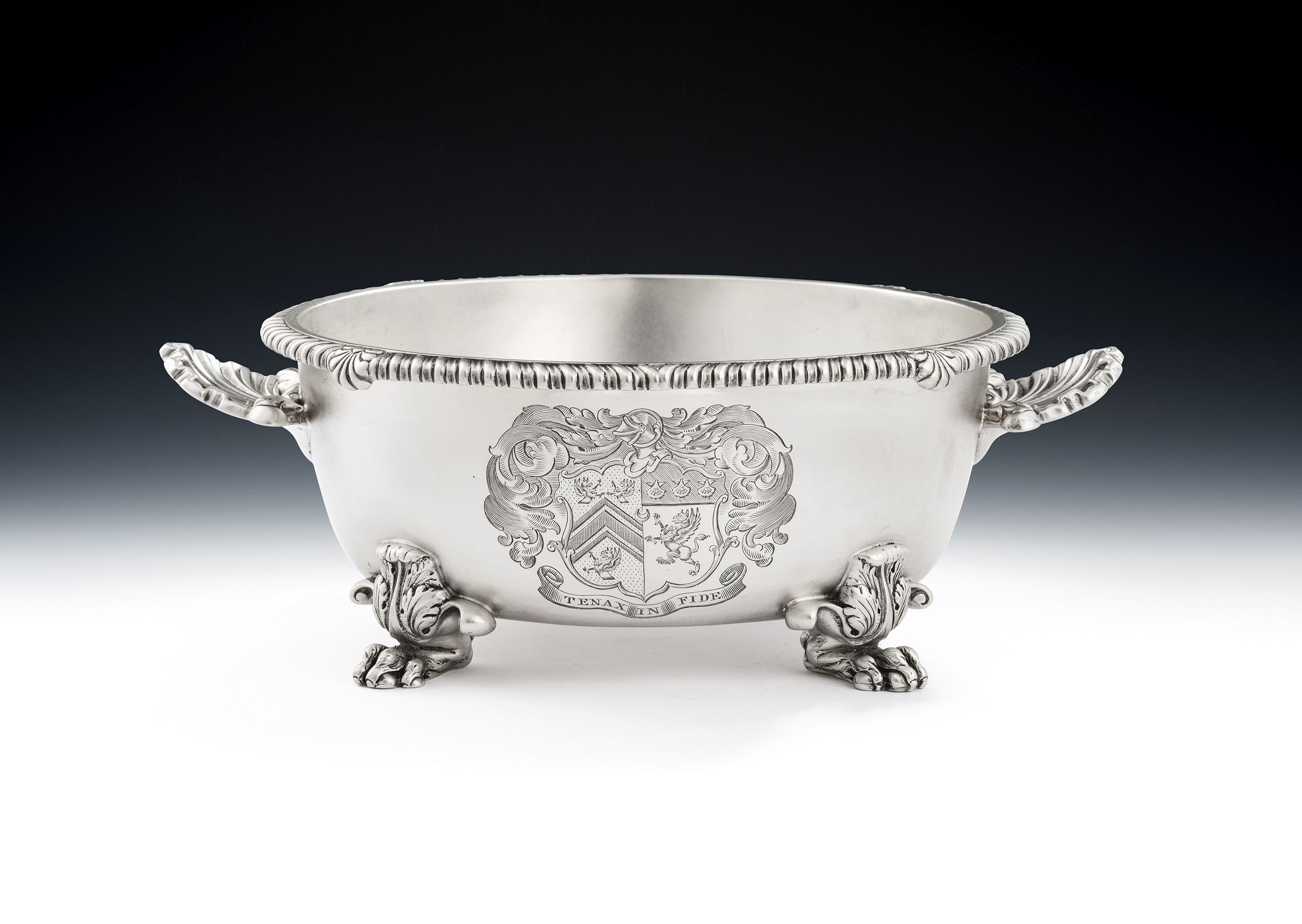
PAUL STORR. A very fine Serving Dish made in London in 1823 by Paul Storr.
375587
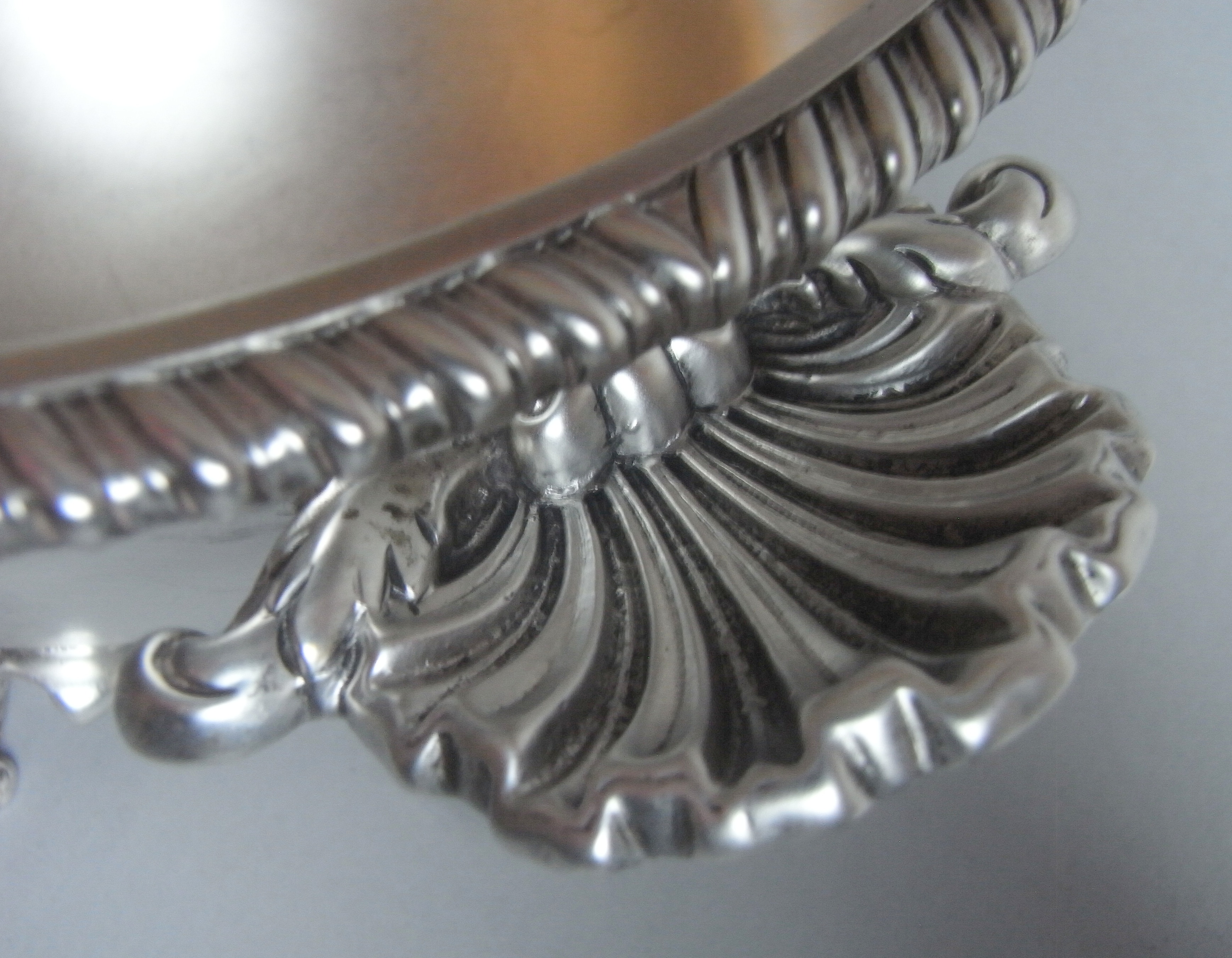
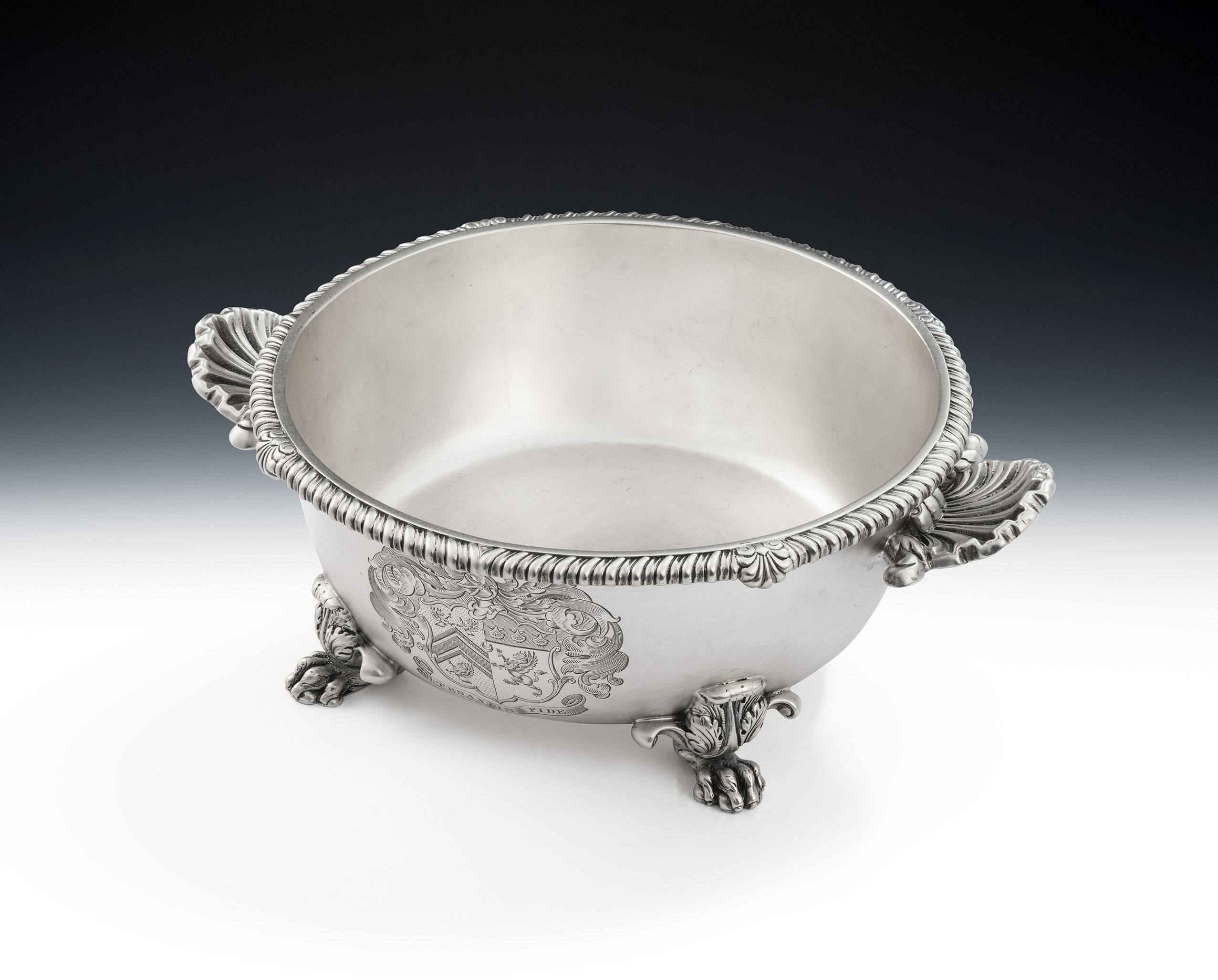
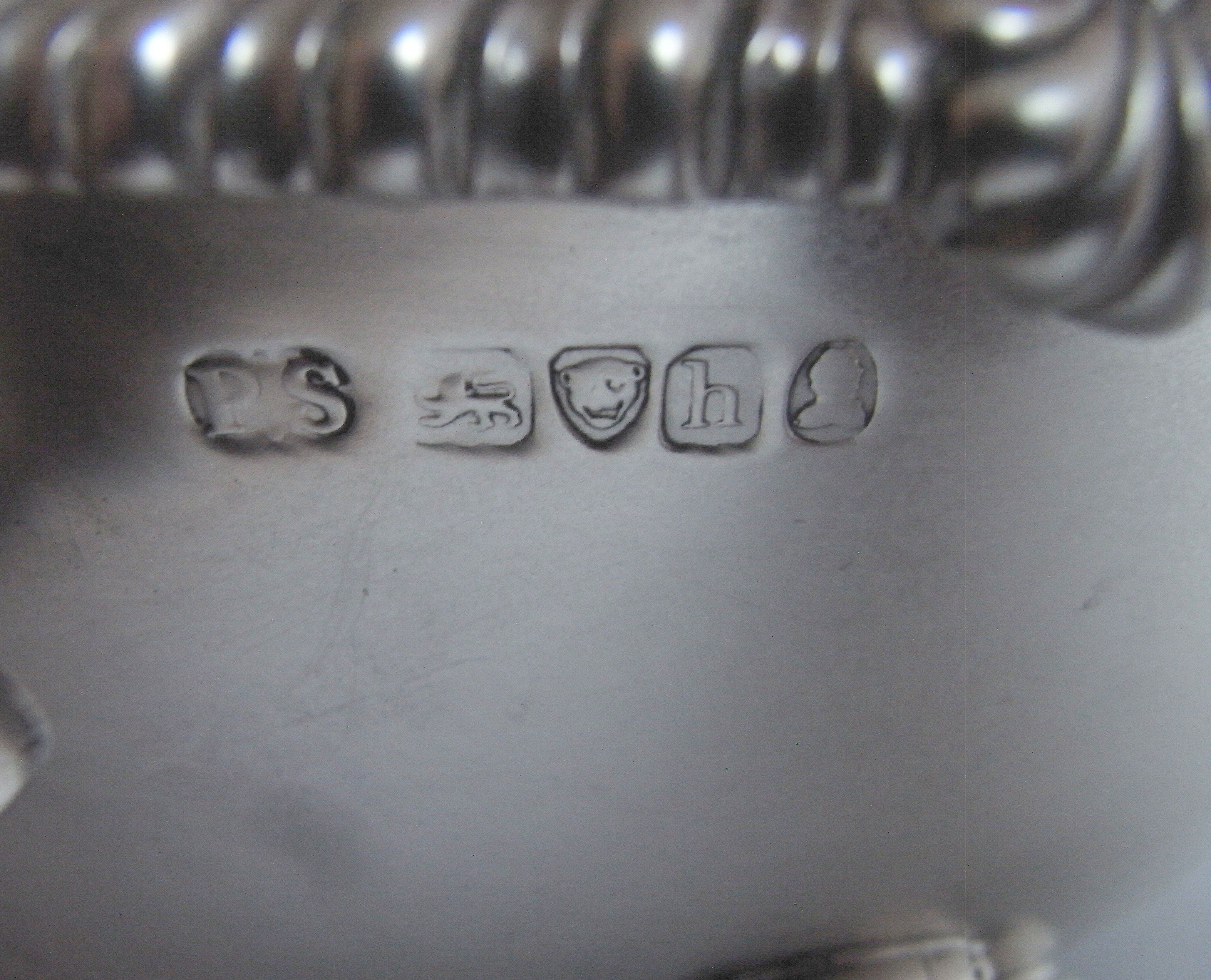
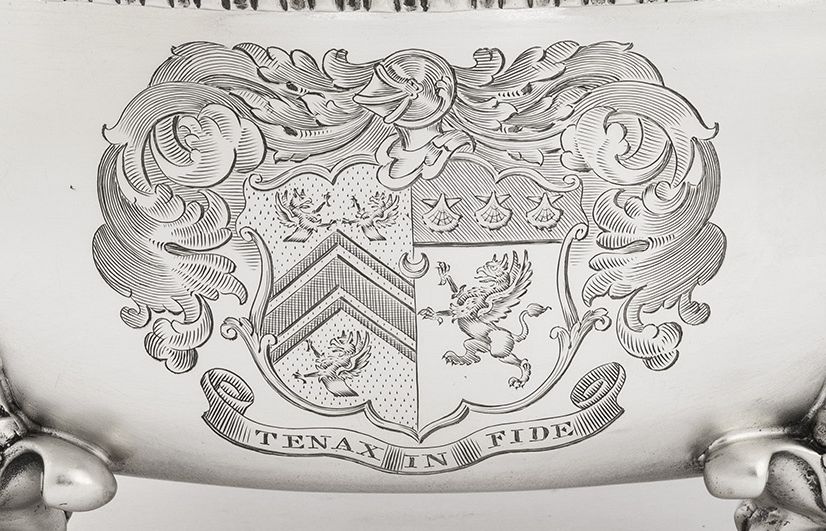
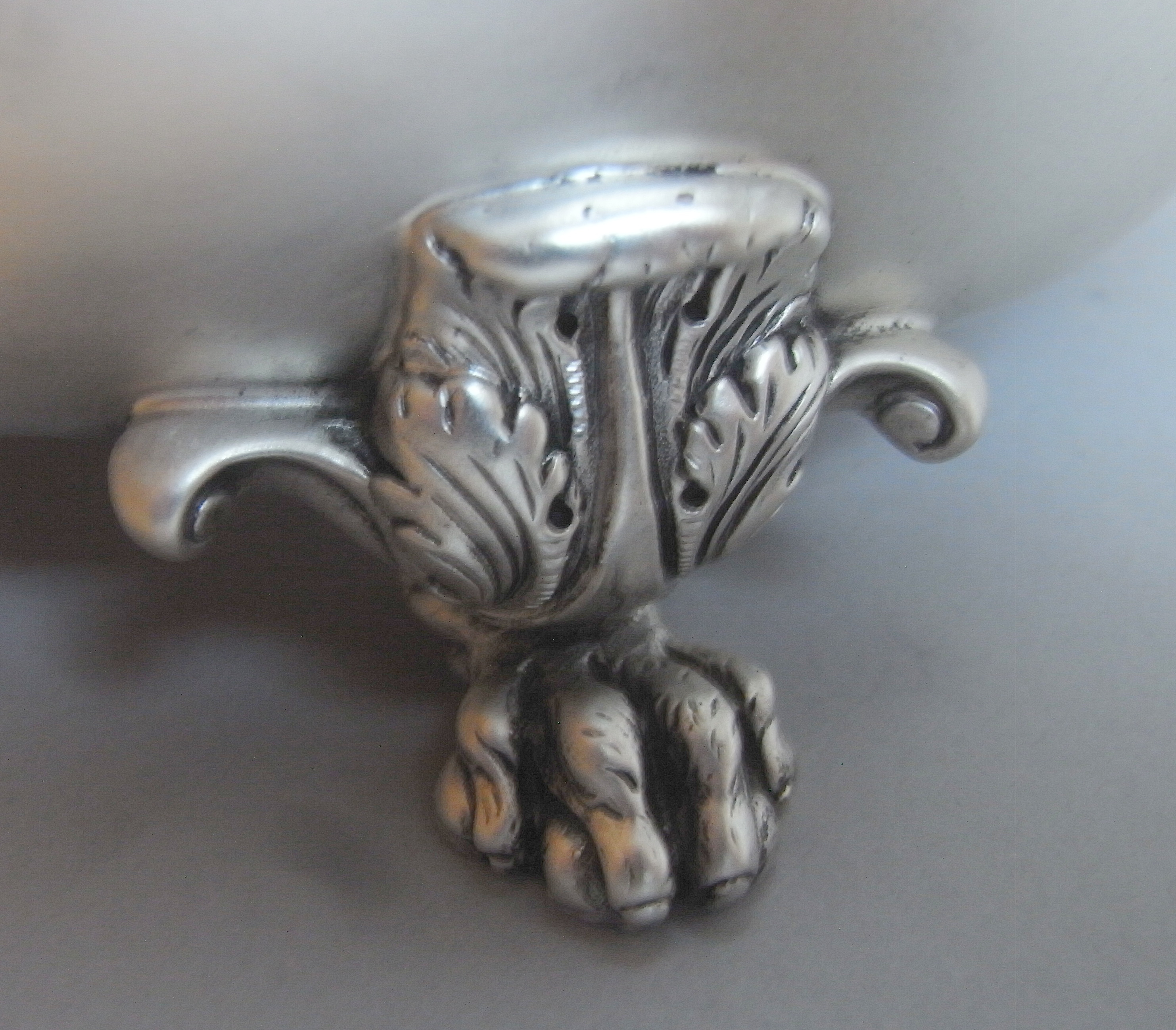
The Dish has a deep circular form and stands on four winged paw feet, decorated with leaf capping. The sides of the dish rise to an everted rim decorated with gadrooning and anthemion motifs. The side carrying handles are modelled as raying Rococo shells, with foliate scroll ends. The front of the main body is engraved with a contemporary Armorial, with Motto below engraved with the Motto "Tenax In Fide", this is all surrounded by a pluming scroll cartouche. The dish is in quite excellent condition and is fully marked on the side of the main body.
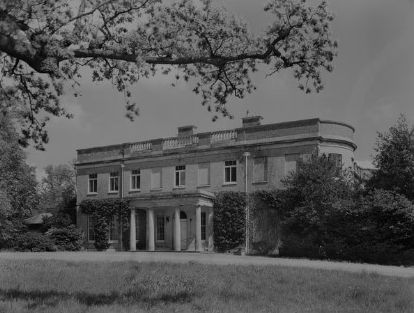
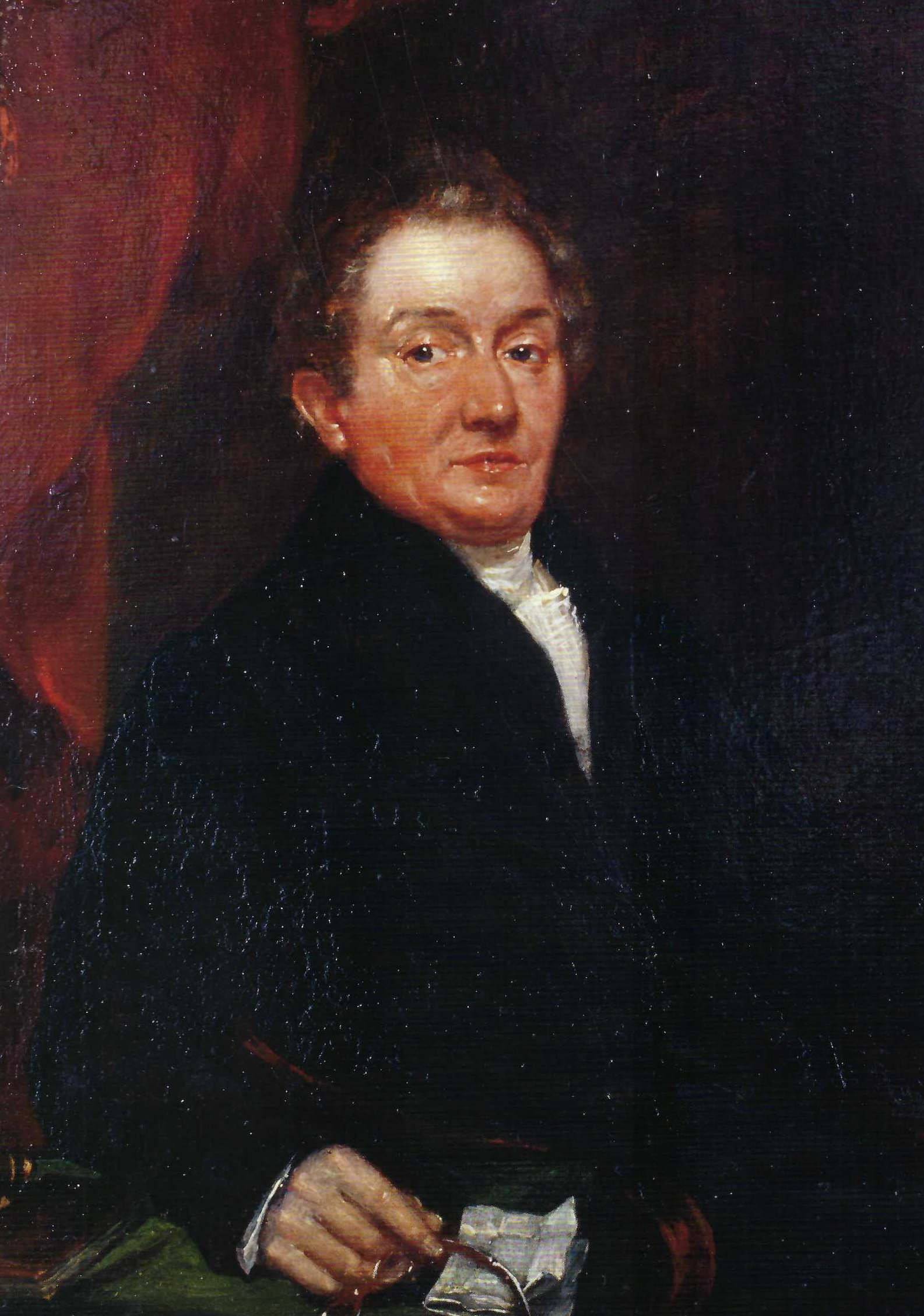
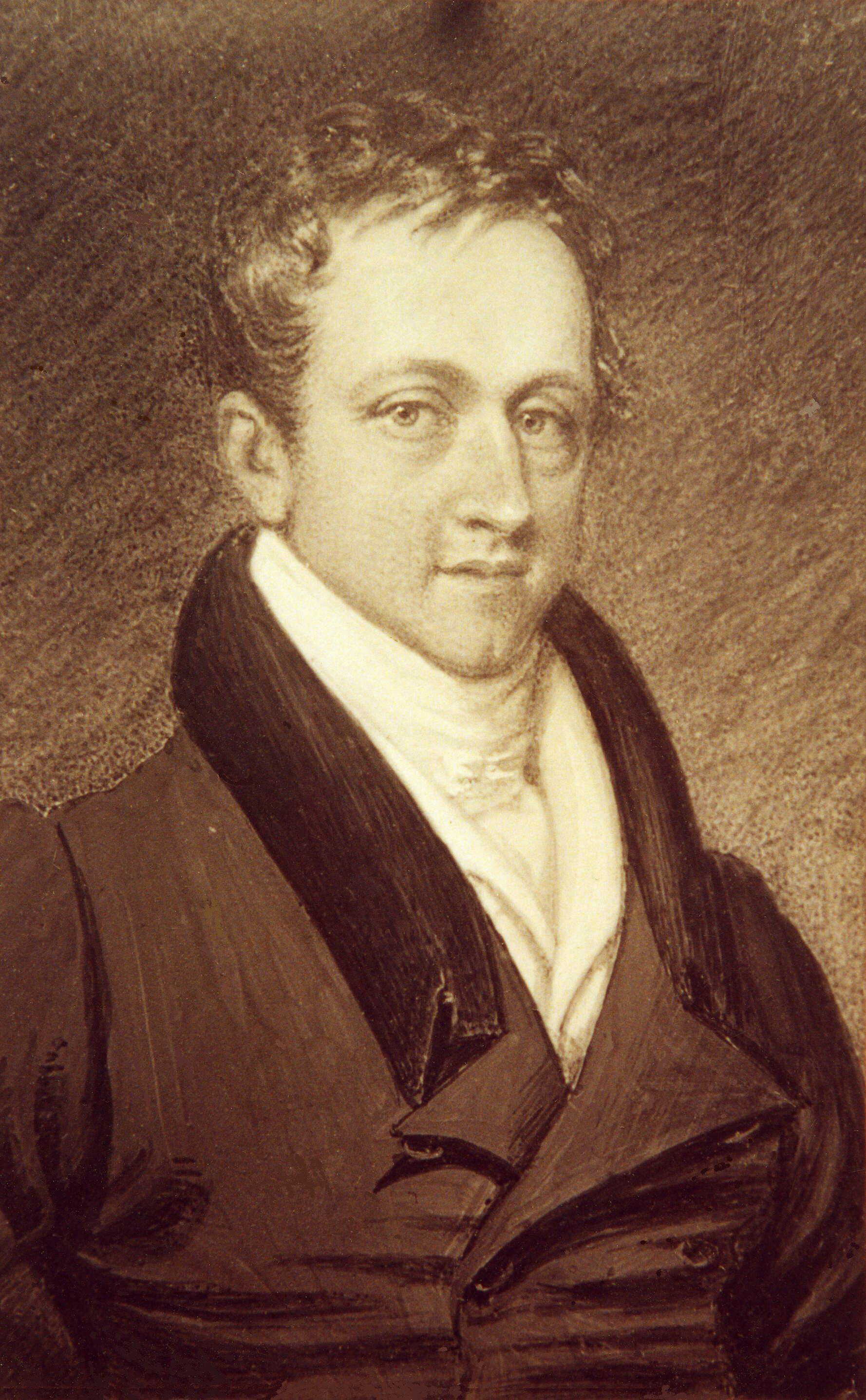
The Arms and Motto are those of Smith impaling Chatfield for Samuel George Smith (1789-1863) of Sacombe Park, Ware, Hertfordshire who married Eugenia Chatfield (1803-1838), 3rd daughter of the Rev. Robert Chatfield LL.D. vicar of Chatteris, Cambridgeshire in 1821. Samuel George Smith was grandson of Abel Smith (1717-1788), a banker of Nottingham. Abel Smith's 4th son was Samuel (1754-1834) and his second son was Samuel George Smith (1789-1863). Abel Smith's fourth son was the 1st Baron Carrington. George Samuel Smith died in 1863 and when his Will was proved he left an estate worth £ 500,000 at this date. His portrait is shown, as well as the maker of this dish, Paul Storr, regarded as the greatest of all British Silversmiths.
Height: 3.2 inches, 8 cm.
Length, handle to handle: 10 inches, 25 cm.
Weight: 37oz.
PAUL STORR
Paul Storr was England's most celebrated silversmith during the first half of the nineteenth century and his legacy lives on today. His pieces historically and currently adorn royal palaces and the finest stately homes throughout Europe and the world. Storr's reputation rests on his mastery of the grandiose neo-Classical style developed in the Regency period. He quickly became the most prominent silversmith of the nineteenth century, producing much of the silver purchased by King George III and King George IV. Storr entered his first mark in the first part of 1792, which reflects his short-lived partnership with William Frisbee. Soon after, he began to use his PS mark, which he maintained throughout his career with only minor changes. His first major work was a gold font commissioned by the Duke of Portland in 1797 and in 1799 he created the "Battle of the Nile Cup" for presentation to Lord Nelson.
Much of Storr's success was due to the influence of Philip Rundell, of the popular silver retailing firm, Rundell, Bridge and Rundell. Rundell's firm nearly monopolised the early nineteenth-century market for superior silver and obtained the Royal Warrant in 1806. This shrewd businessman realised the talent of Paul Storr and began pursuing him in 1803, however it was not until 1807 that Storr finally joined the firm.[4] After many years of working for Rundell, Storr realised he had lost much of his artistic freedom and by 1819 he left the firm to open his own shop, turning his attentions towards more naturalistic designs and soon began enjoying the patronage he desired. After only a few years of independence, Storr realised he needed a centralised retail location and partnered with John Mortimer, founding Storr and Mortimer in 1822 on New Bond Street.
RELATED ITEMS




 of Sacombe Park, Ware, Hertfordshire who married Eugenia Chatfield (1803-1838), 3rd daughter of the Rev. Robert Chatfield LL.D. vicar of Chatteris, Cambridgeshire in 1821. Samuel George Smith was grandson of Abel Smith (1717-1788), a banker of Nottingham. Abel Smith's 4th son was Samuel (1754-1834) and his second son was Samuel George Smith (1789-1863). Abel Smith's fourth son was the 1st Baron Carrington. George Samuel Smith died in 1863 and when his Will was proved he left an estate worth £ 500,000 at this date. His portrait is shown, as well as the maker of this dish, Paul Storr, regarded as the greatest of all British Silversmiths. Height: 3.2 inches, 8 cm.Length, handle to handle: 10 inches, 25 cm.Weight: 37oz.PAUL STORRPaul Storr was England's most celebrated silversmith during the first half of the nineteenth century and his legacy lives on today. His pieces historically and currently adorn royal palaces and the finest stately homes throughout Europe and the world. Storr's reputation rests on his mastery of the grandiose neo-Classical style developed in the Regency period. He quickly became the most prominent silversmith of the nineteenth century, producing much of the silver purchased by King George III and King George IV. Storr entered his first mark in the first part of 1792, which reflects his short-lived partnership with William Frisbee. Soon after, he began to use his PS mark, which he maintained throughout his career with only minor changes. His first major work was a gold font commissioned by the Duke of Portland in 1797 and in 1799 he created the "Battle of the Nile Cup" for presentation to Lord Nelson.Much of Storr's success was due to the influence of Philip Rundell, of the popular silver retailing firm, Rundell, Bridge and Rundell. Rundell's firm nearly monopolised the early nineteenth-century market for superior silver and obtained the Royal Warrant in 1806. This shrewd businessman realised the talent of Paul Storr and began pursuing him in 1803, however it was not until 1807 that Storr finally joined the firm.[4] After many years of working for Rundell, Storr realised he had lost much of his artistic freedom and by 1819 he left the firm to open his own shop, turning his attentions towards more naturalistic designs and soon began enjoying the patronage he desired. After only a few years of independence, Storr realised he needed a centralised retail location and partnered with John Mortimer, founding Storr and Mortimer in 1822 on New Bond Street. )