
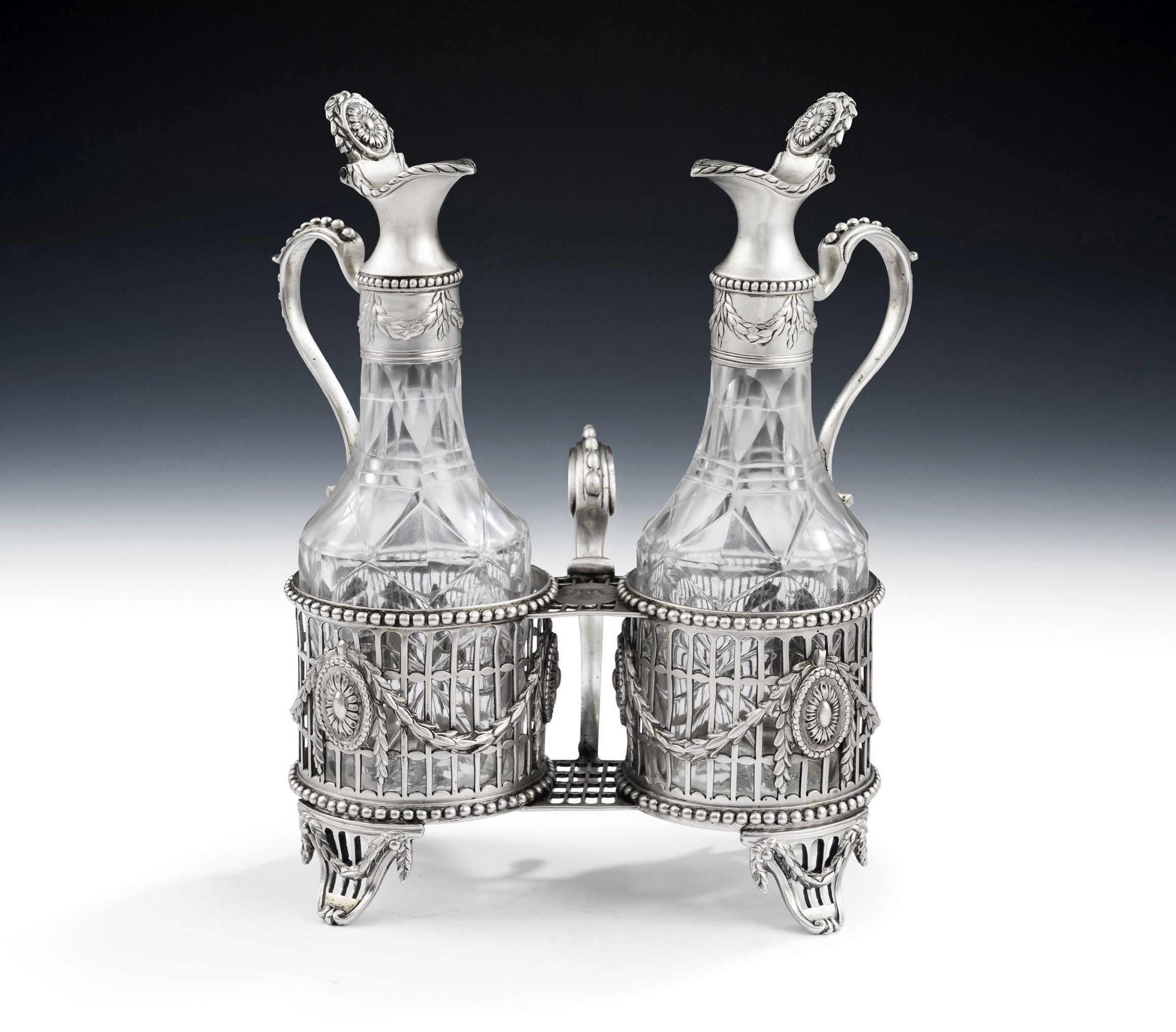
A rare George III Neo Classical Cruet made in London in 1772 by Thomas & Jabez Daniel, the decorative design originally attributed to the Royal Architect, Sir William Chambers.
A rare George III Neo Classical Cruet made in London in 1772 by Thomas & Jabez Daniel, the decorative design originally attributed to the Royal Architect, Sir William Chambers.
375646
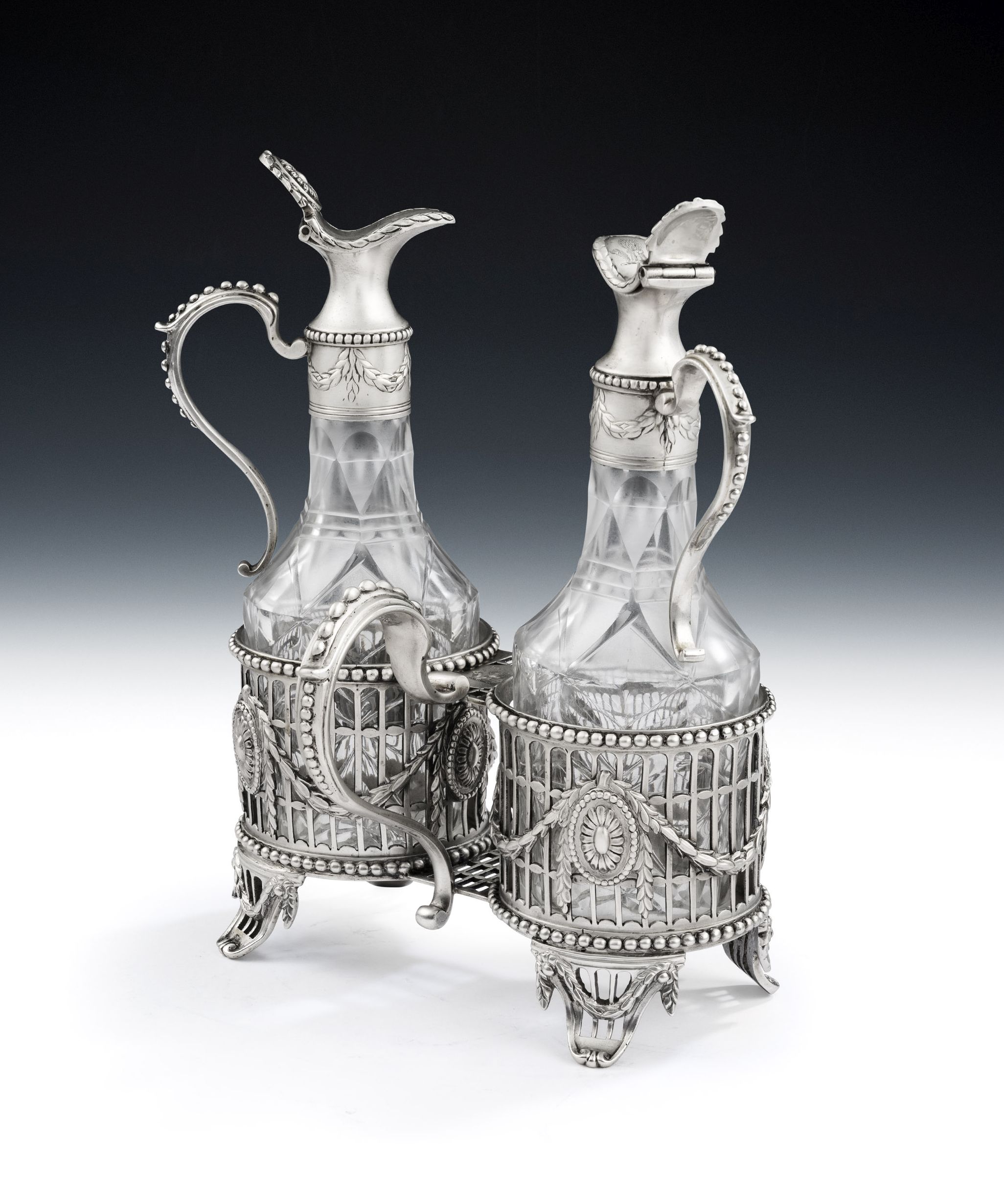
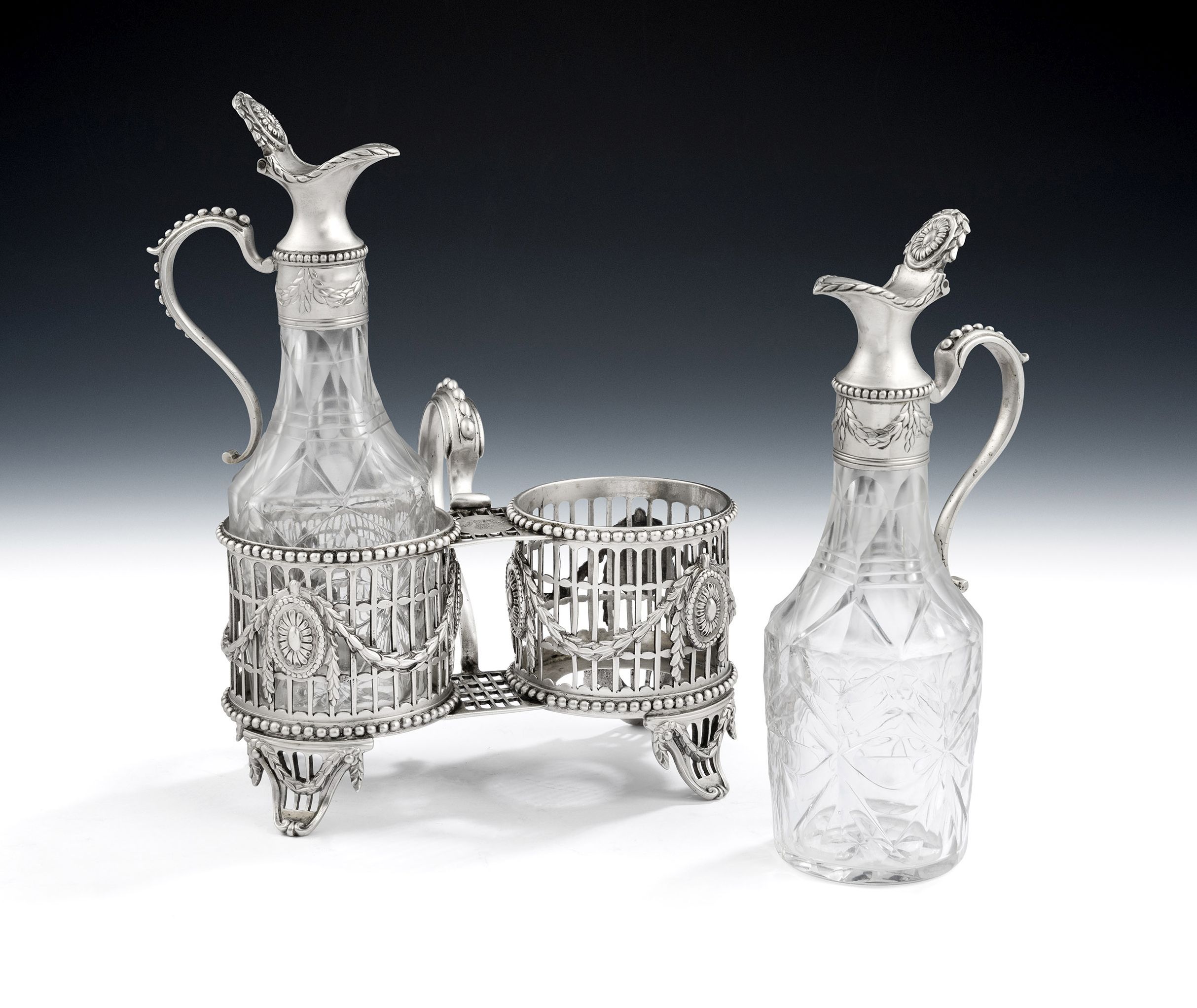
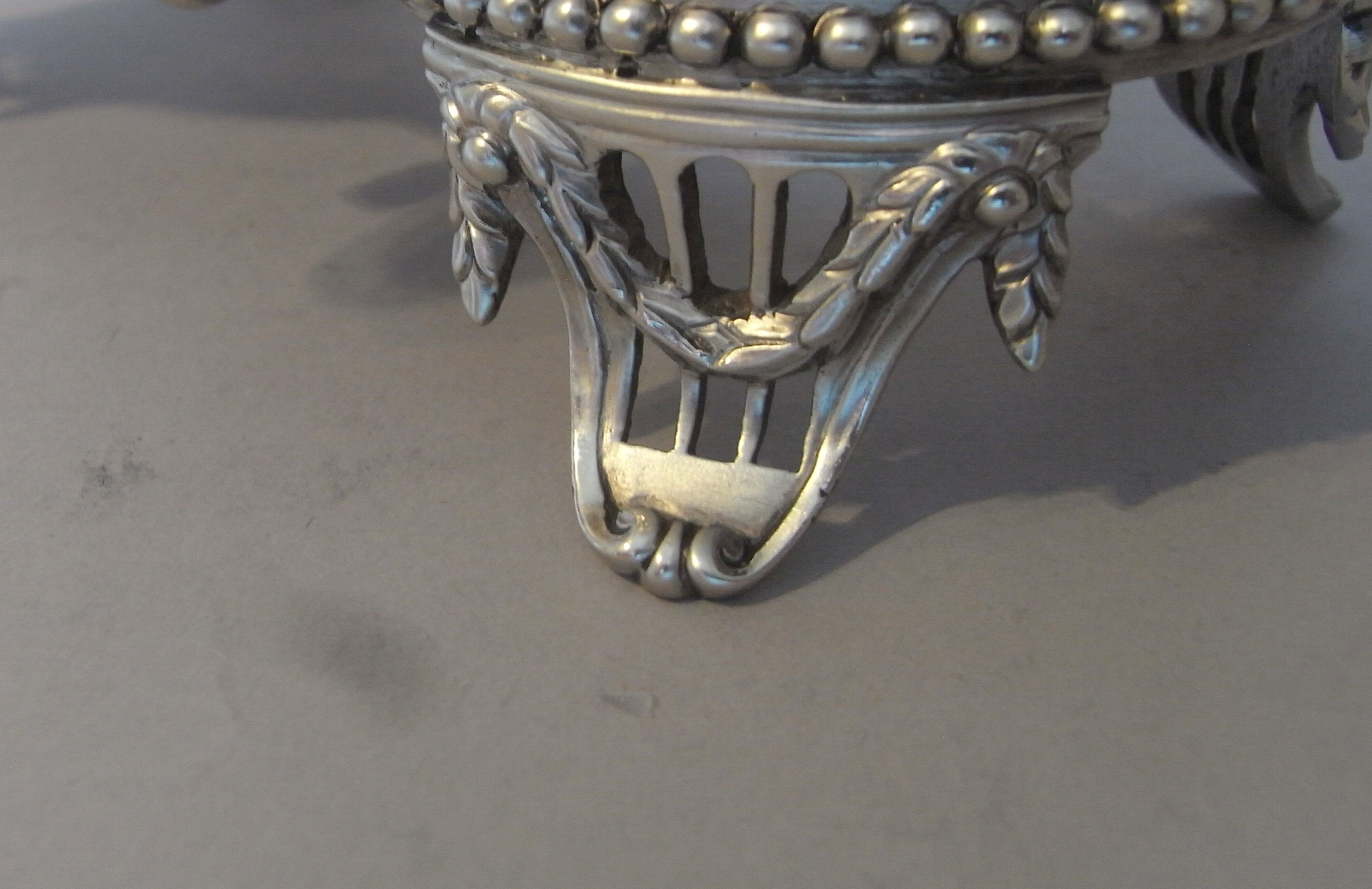
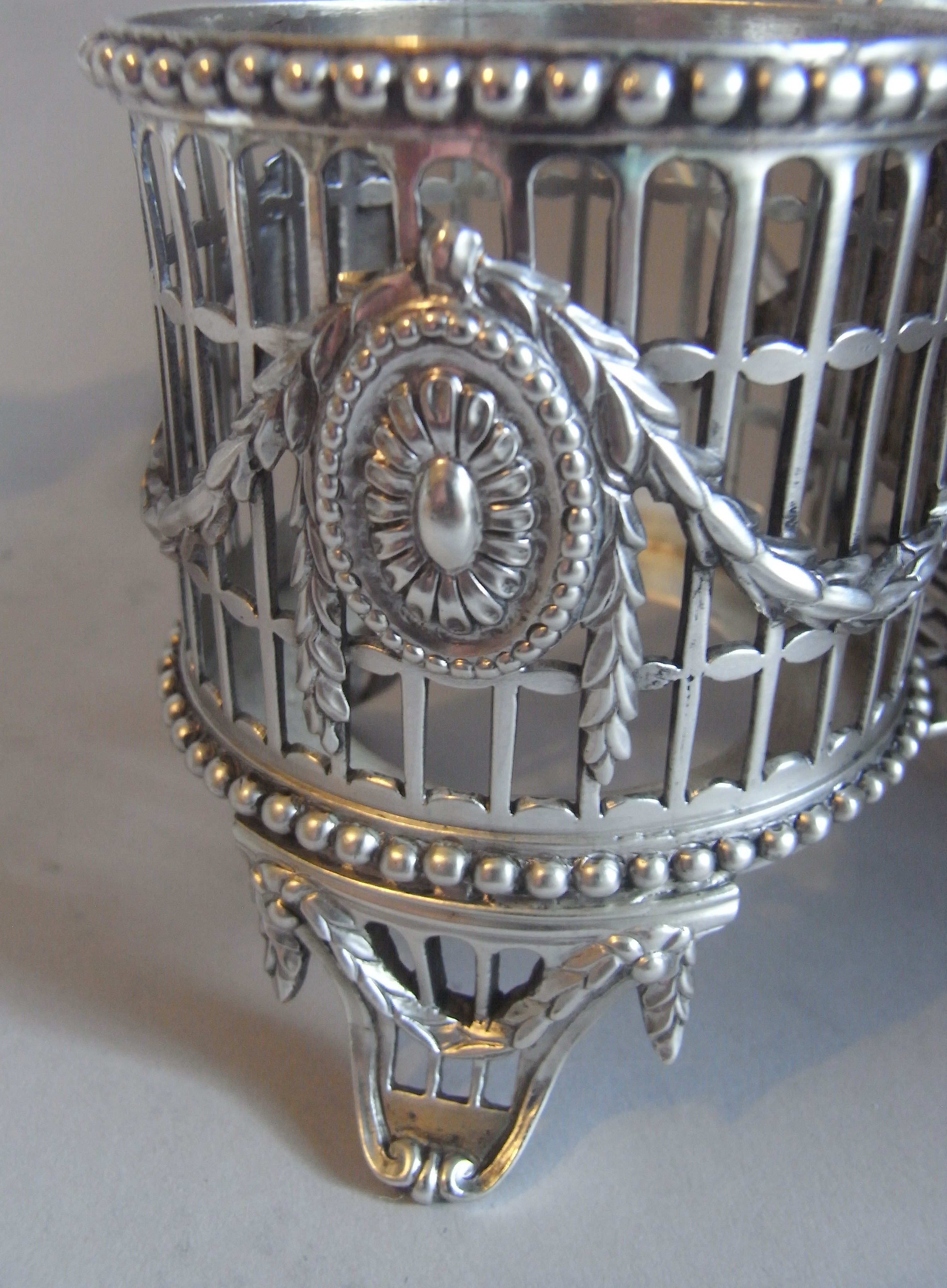
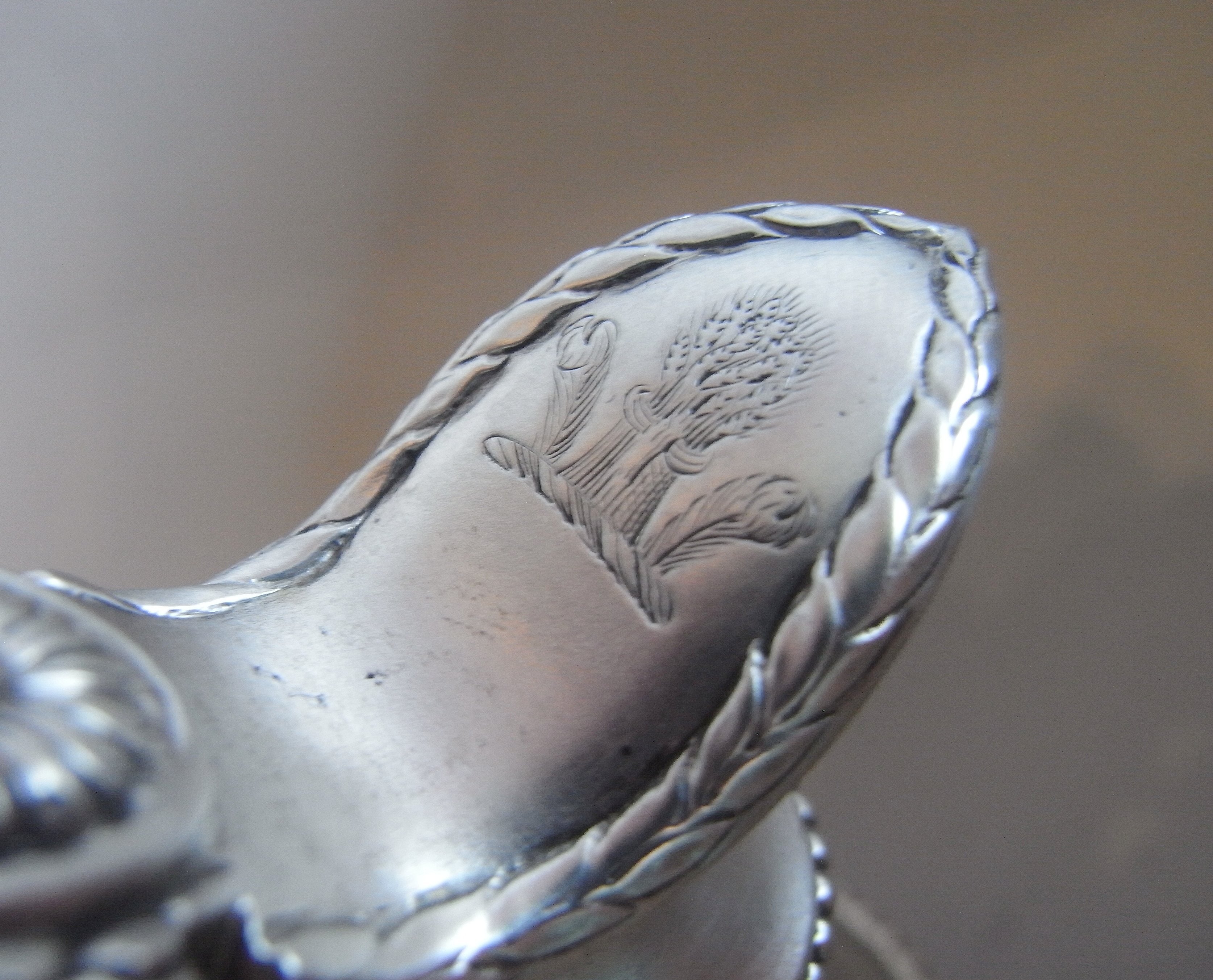
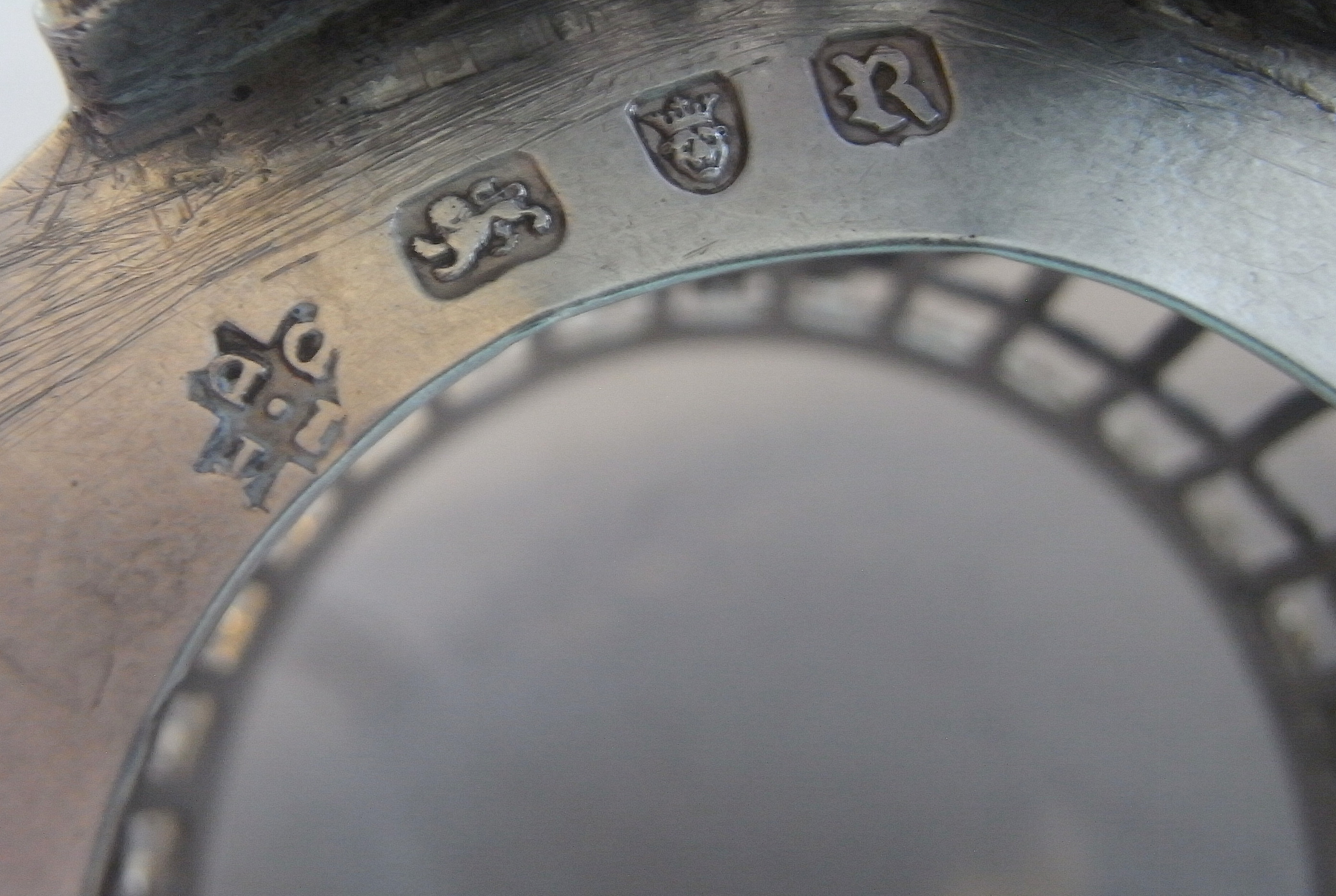
This beautiful Cruet stands on four cast and pierced feet, with scroll ends, decorated with applied laurel garlands. The two “Drum” bottle cages display a bold beaded rim and base and are pierced with vertical pails. The cages are also decorated with Classical laurel swags interspersed with oval floral rosettes. The cages are joined with two central pierced supports with an oval cartouche medallion on the top section engraved with a contemporary Crest. The rear scroll carrying handle is also decorated with a bold beaded band. The two original cut glass bottles, for oil and vinegar, display silver mounts decorated with beading, foliate swags and the hinged covers display laurel leaf borders and a single rosette thumb piece. The scroll handle is decorated with bold beading and the covers are engraved with the same contemporary Crest, as seen on the main body. All pieces are in excellent condition and the frame displays a full, crisp, set of hallmarks. The bottle mounts are marked with the Sterling mark in the decoration.
The Wheatsheaf Crest is that of the Trotman family of Cam, Gloucestershire, granted by Elizabeth I.
Jabez and Thomas Daniel were father and son silversmiths who worked together until 1774, when Thomas entered a mark alone. They had workshops in Carey Lane when this piece was made and specialised, amongst other things, in casters and cruet frames of fine quality.
This decorative design was first used by the Royal architect, Sir Wiliam Chambers, based on drawings carried out by Chambers' pupil, John Yenn (1750-1821), now in the Victoria & Albert Museum. The design was first used by Chambers in the 1760's after the 4th Duke of Marlborough employed the celebrated architect to undertake extensive alterations to Blenheim Palace, and Marlborough House in London. The Duke also ordered a silver dinner service from Parker & Wakelin in this design attributed to Chambers, as well as the Fitzwilliam Silver Tureens, also shown, and designed by Chambers. Stylistic similarities, as well as the use of heavy swags, can be seen in Chambers' model for a state coach for George III (also in the V & A). Similarly, the bluebell festoons and paterae relate to Chambers' work on the East Gate at Blenheim. Some pieces from the Marlborough Service still survive at Blenheim Palace and other known examples are a Tureen in the Leeds City Art Gallery
Height to the top of the bottles 8.5 inches, 21.25 cm.
Length: 6.45 inches, 16.13.
Width: 3 inches, 7.5 cm.
Weight: 15oz.
RELATED ITEMS






, now in the Victoria & Albert Museum. The design was first used by Chambers in the 1760's after the 4th Duke of Marlborough employed the celebrated architect to undertake extensive alterations to Blenheim Palace, and Marlborough House in London. The Duke also ordered a silver dinner service from Parker & Wakelin in this design attributed to Chambers, as well as the Fitzwilliam Silver Tureens, also shown, and designed by Chambers. Stylistic similarities, as well as the use of heavy swags, can be seen in Chambers' model for a state coach for George III (also in the V & A). Similarly, the bluebell festoons and paterae relate to Chambers' work on the East Gate at Blenheim. Some pieces from the Marlborough Service still survive at Blenheim Palace and other known examples are a Tureen in the Leeds City Art GalleryHeight to the top of the bottles 8.5 inches, 21.25 cm.Length: 6.45 inches, 16.13.Width: 3 inches, 7.5 cm.Weight: 15oz. )