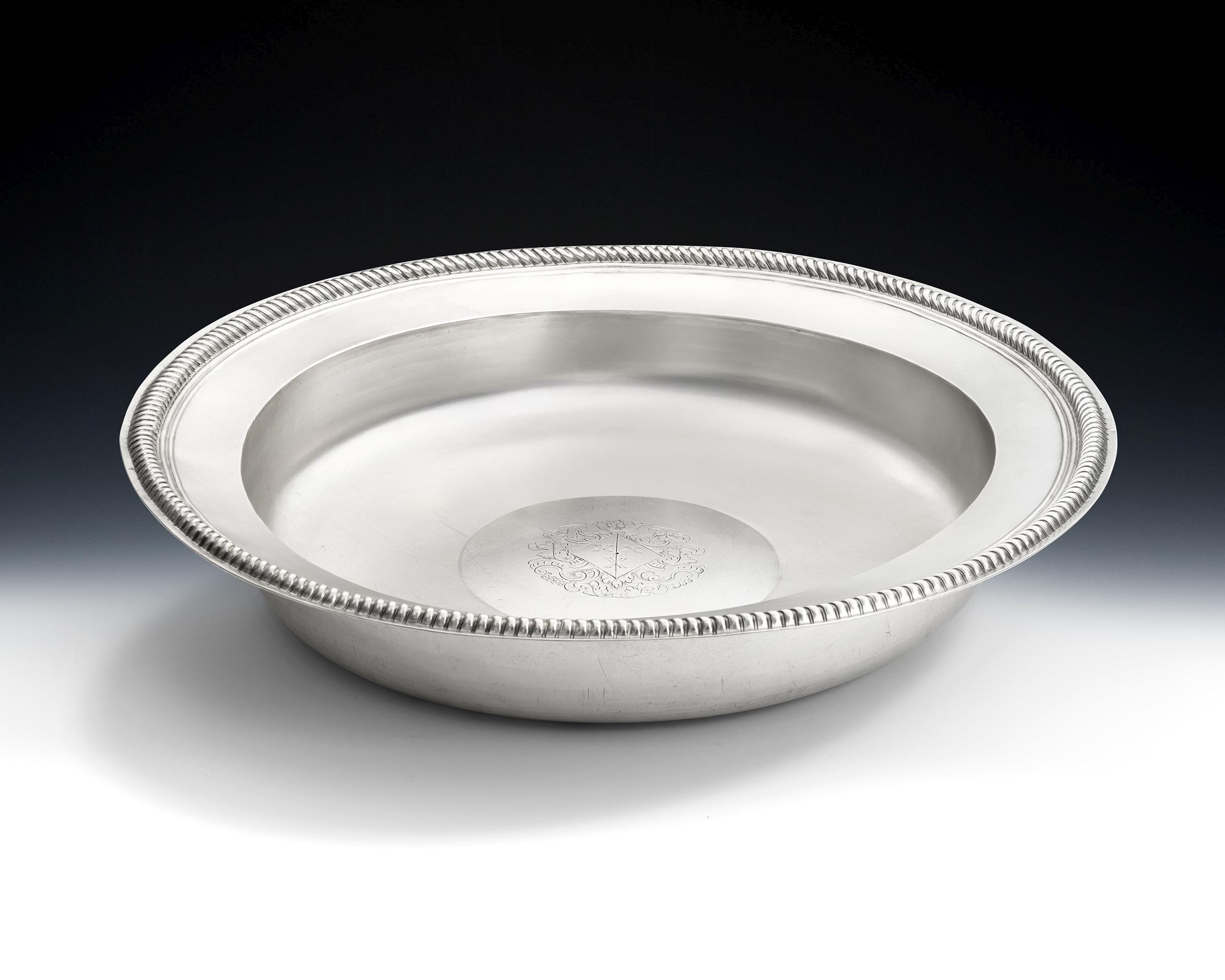
An important William III Britannia Standard Basin made in London in 1697 by Samuel Hood.
An important William III Britannia Standard Basin made in London in 1697 by Samuel Hood.
375727
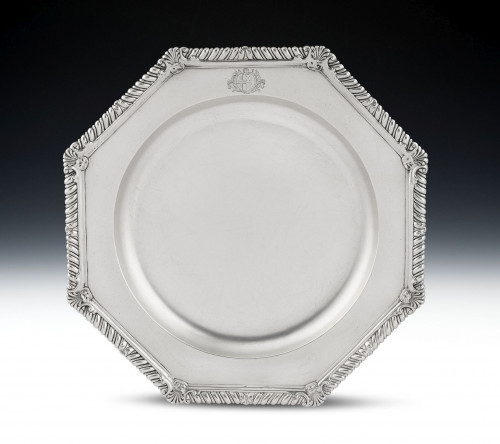
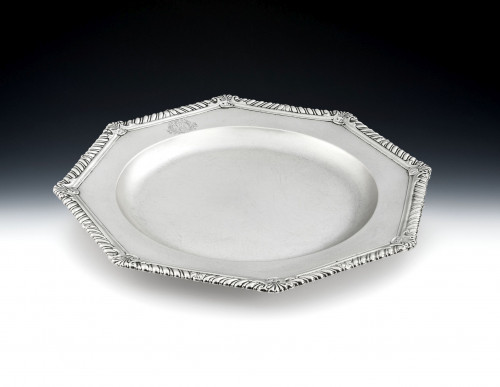
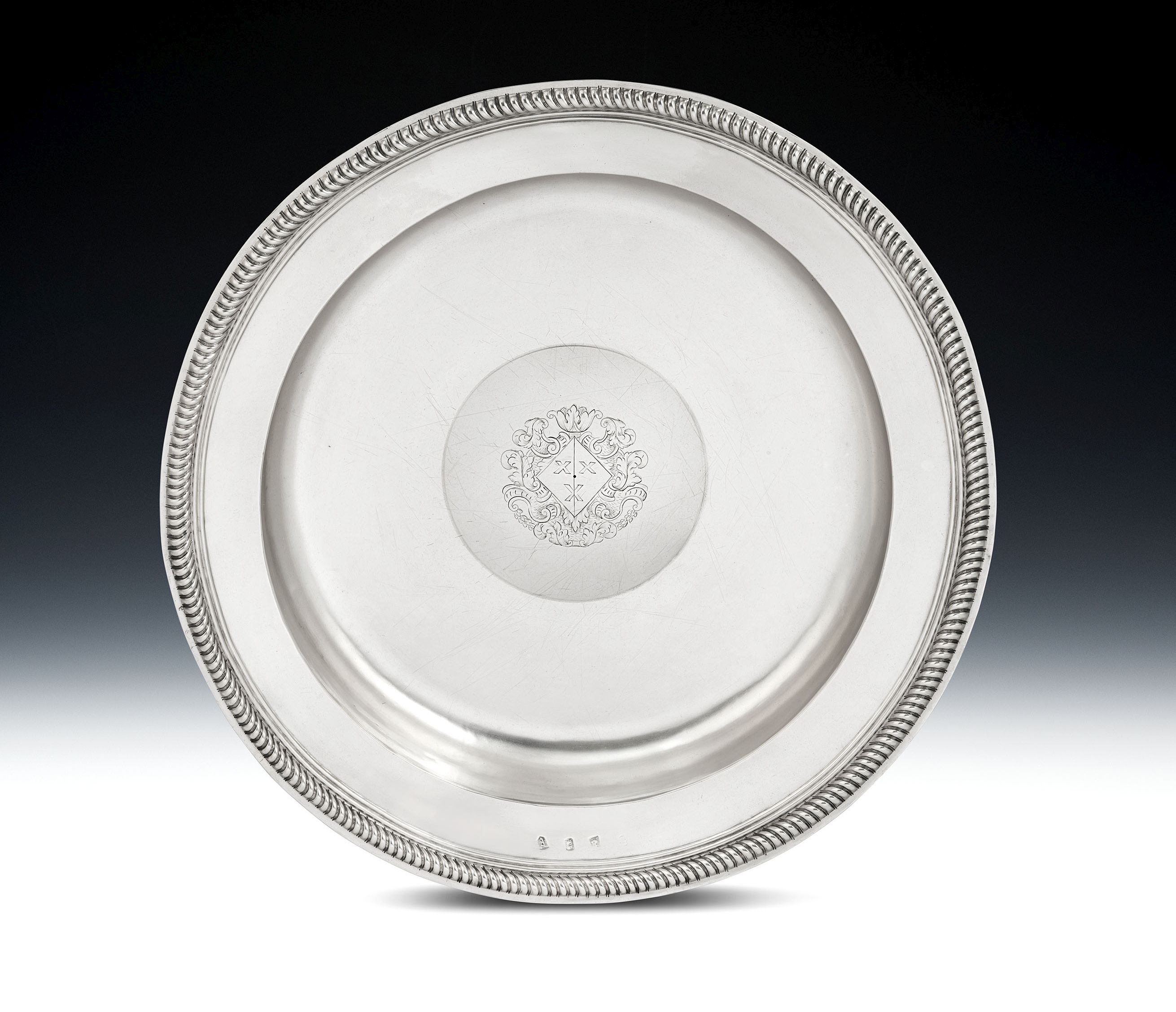
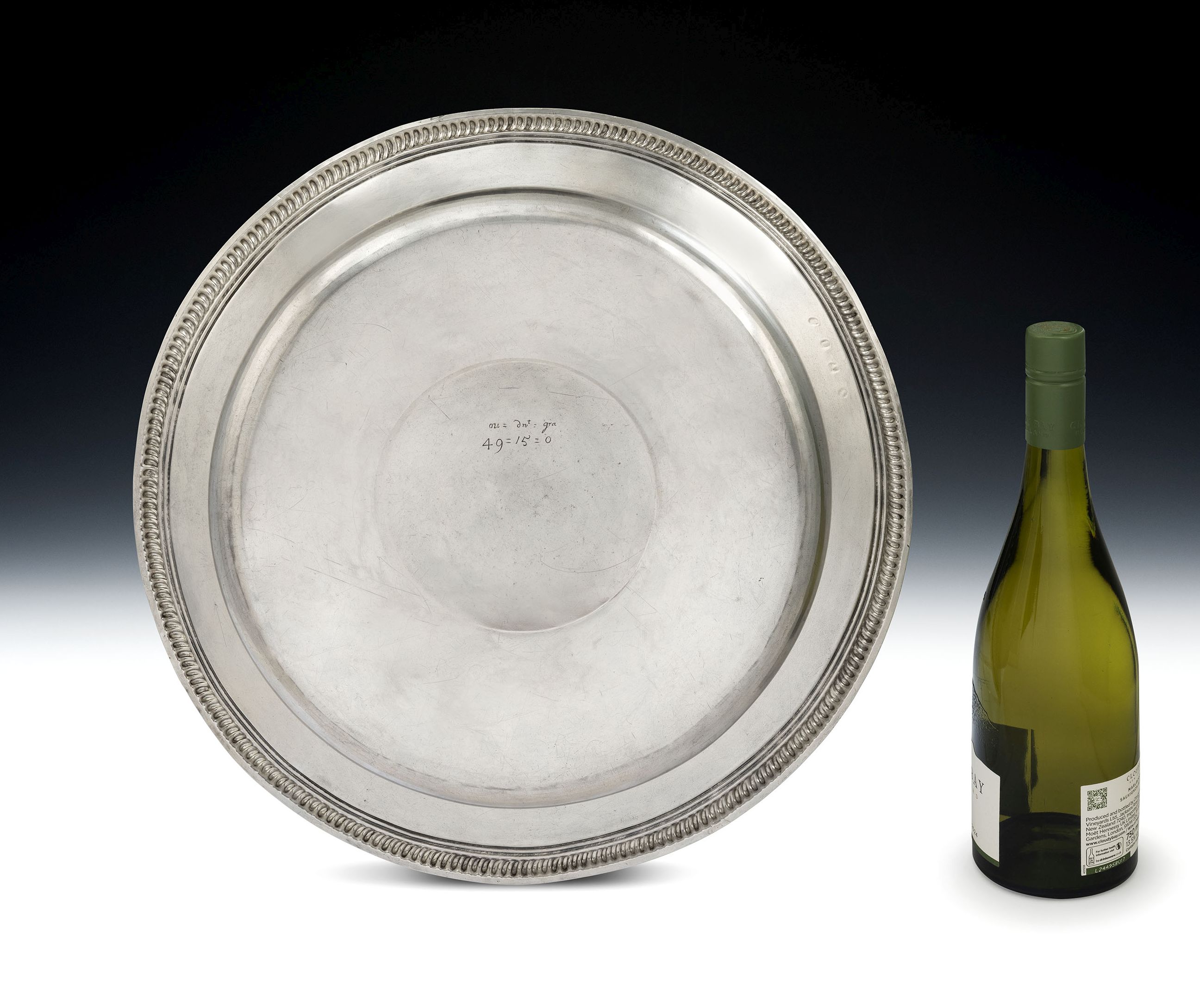
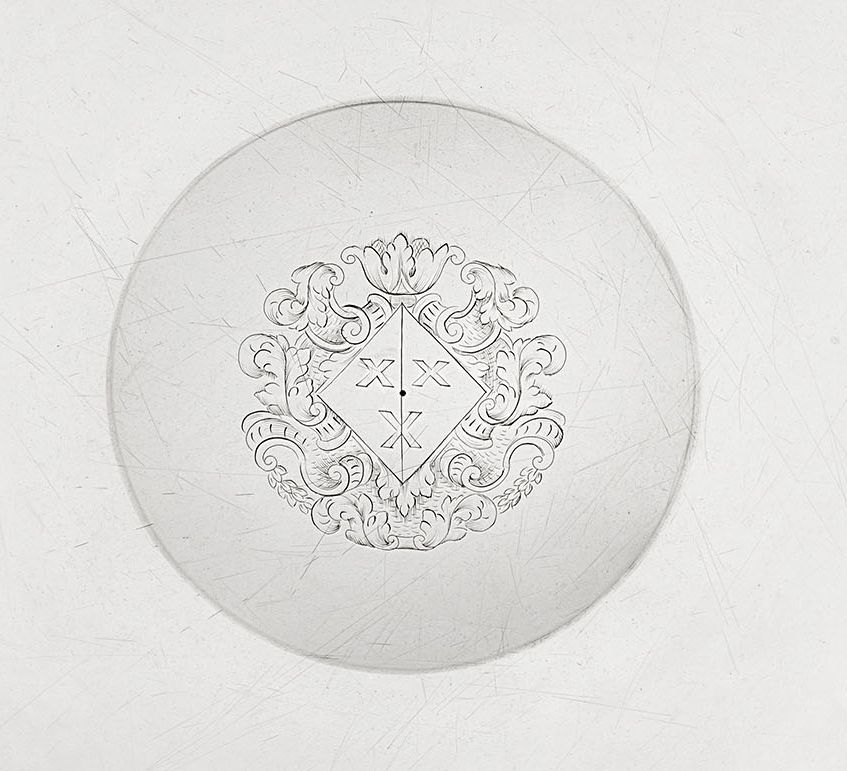
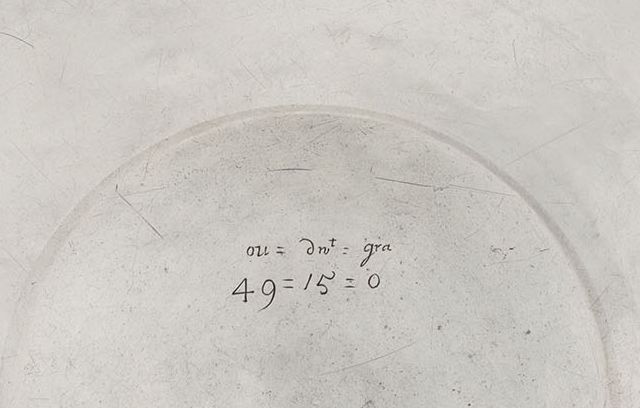
The Basin is of a substantial size and is circular in form, with a deep bowl and raised rim, displaying a simple ropework, domed, band. The centre of the base displays a central, slightly domed, section which is engraved with the Armorial of a Lady, surrounded by a cartouche of foliate strap work, harebells, scale work and a fruiting bud at the top. This is a typical design of cartouche for this period. The reverse is engraved with the scratch weight 49 = 15 = 0.
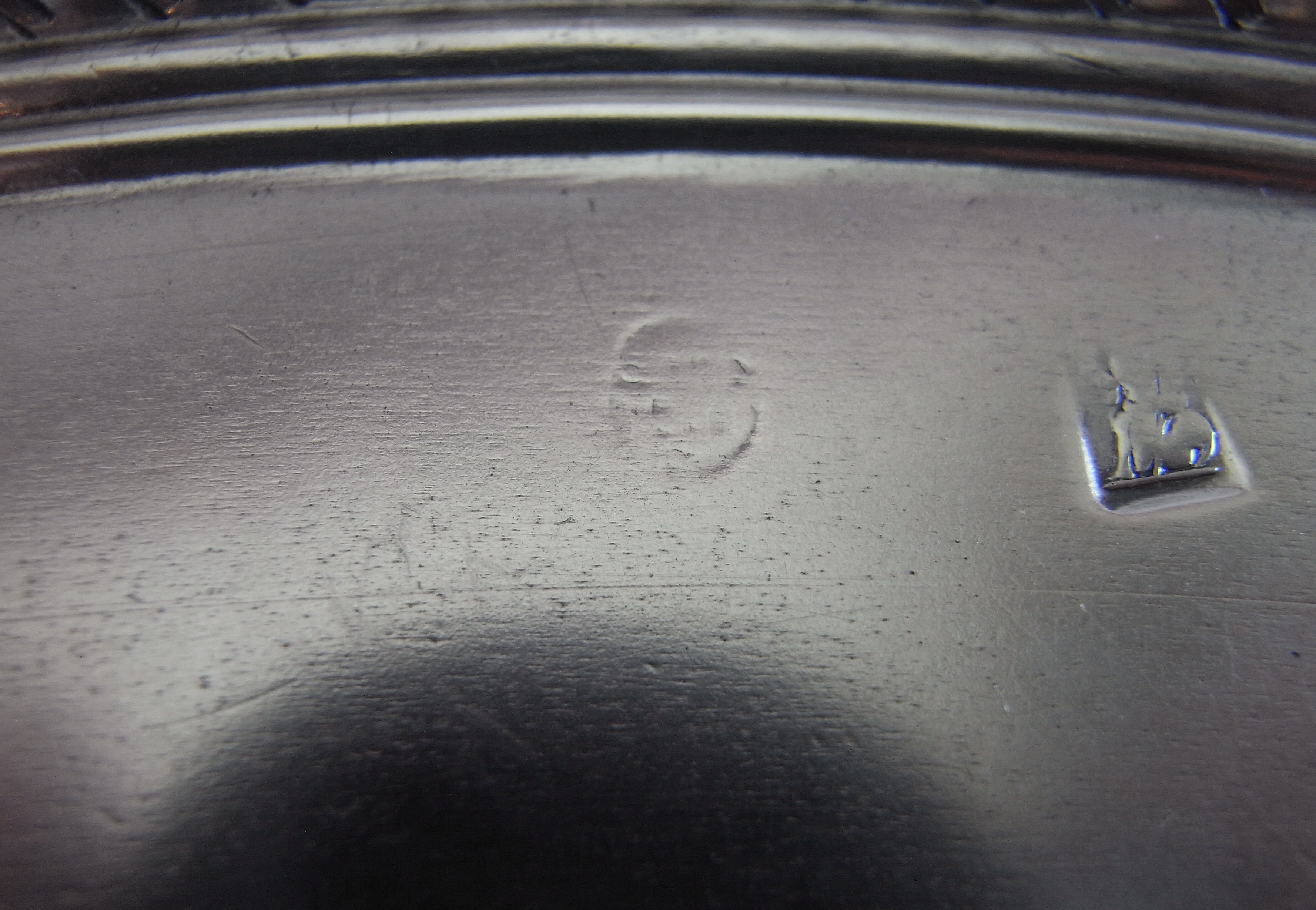
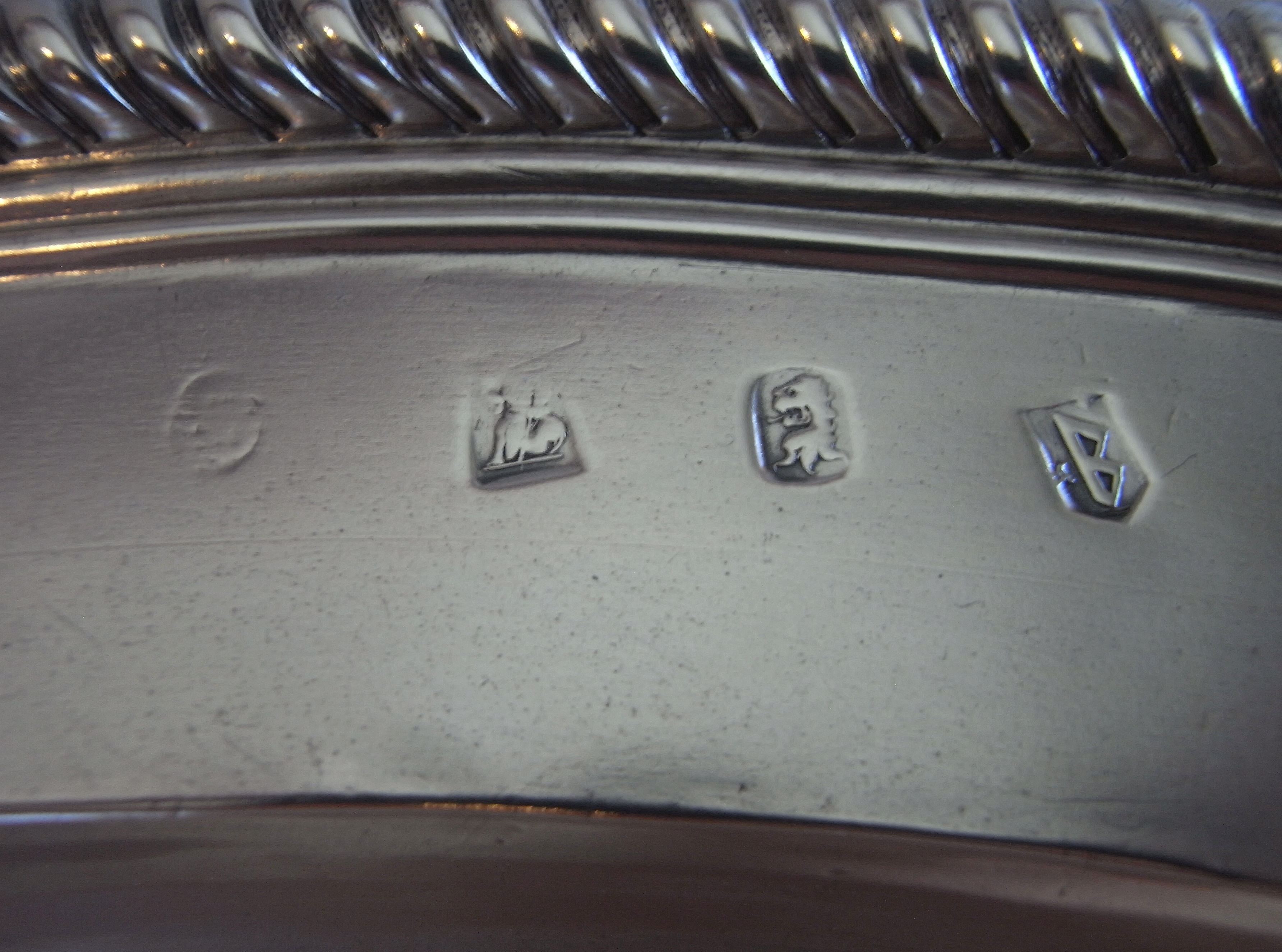
These pieces, when not in use, where put in places of prominence and used as symbols of rank and wealth. This basin has been used to serve food at banquets, so that it could be shown off, and bears serving scratches on the surface which is always a very nice, original, sign of use to see. The rim is also marked with a full set of hallmarks. The maker's mark is lightly struck, however the side of the H can be seen on the left and the outline of the "o" next to it. Samuel Hood's maker's mark was "Ho" in an oval punch which was entered in 1697, so it all fits to be correct. This is shown in A.G. Grimwade's "London Goldsmiths 1697-1837, Their Marks & Lives". Mark 1046.
Samuel Hood was apprenticed to Robert Cooper in 1685. Robert Cooper was without doubt one of the leading goldsmiths of late 17th and early 18th centuries and became Prime Warden of the Goldsmiths Company in 1717. One of his best-known pieces is a partly-fluted two-handled wine cistern of 1680, the property of the National Trust, Ickworth, Suffolk. With such an influential master it is not surprising that Samuel Hood also became a most competent goldsmith. Perhaps resenting the Huge not style, Hood continued to use the traditional 'English' form.
Another important basin, together with a ewer, by Samuel Hood was made in London in 1699 for Charles Lowndes of Chesham, Buckinghamshire who was the third son of William Lowndes, M.P. Secretary to the Treasury, by his fourth wife, Rebecca, daughter of John Shales. This ewer and basin would appear to have been commissioned by his father as a christening gift after the birth of his son in circa 1699.
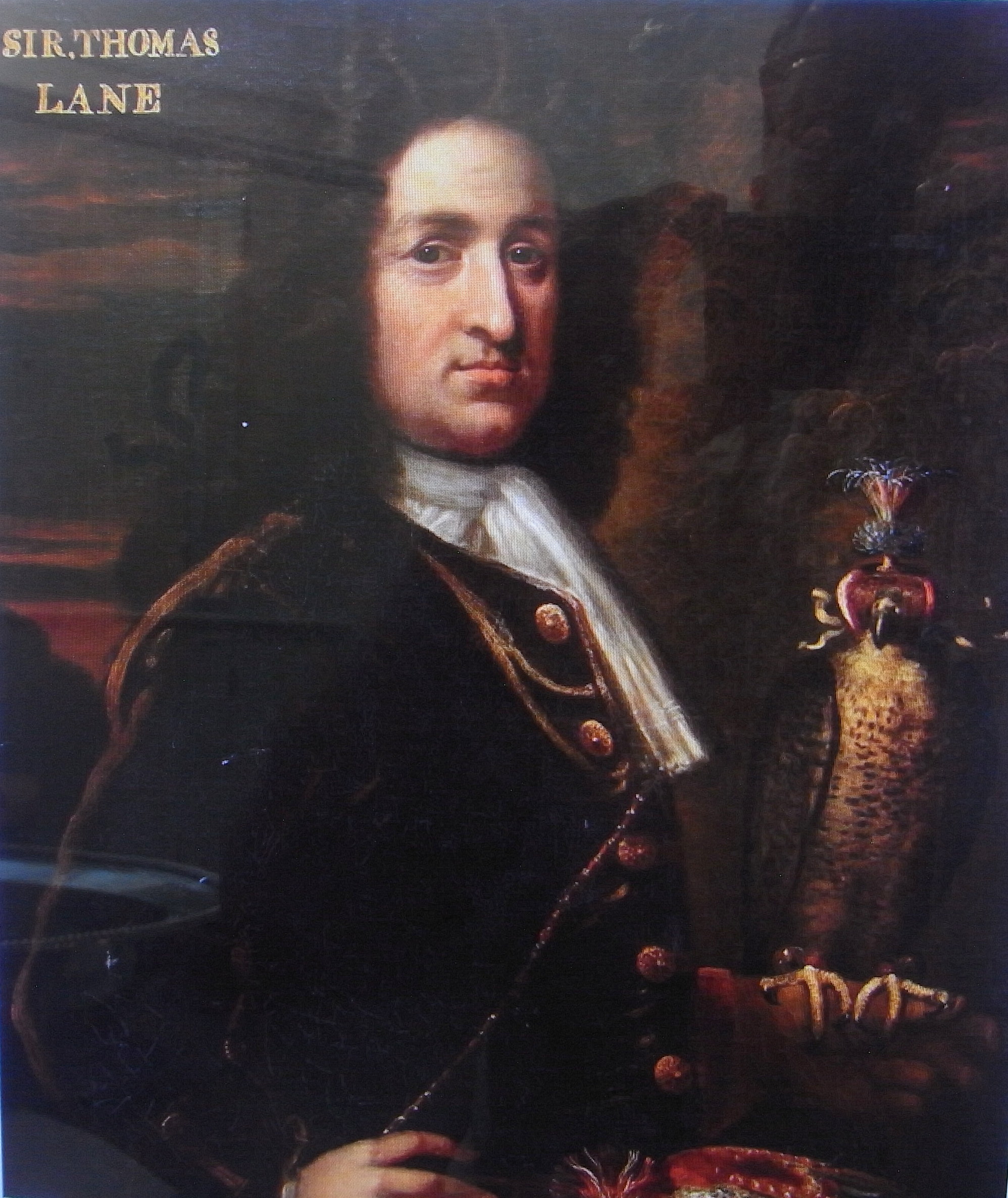
The Arms are those of a Lady in her own right, widow or spinster, as they appear in a diamond shaped lozenge. These Arms are those as used by the Lane family, of which there were a number of branches. The most influential branch of the Lane family at this date was that which included Sir Thomas Lane who served as the Lord Mayor of London from 1694 to 1695. He was a prominent member of the Worshipful Company of Clothworkers. He delivered his inaugural speech at Guildhall in September 1694 and oversaw strict civic regulations during his term. A painting of Sir Thomas, circa 1680, is shown in the image stream.
This piece is in very fine condition. It bears acceptable surface scratches and small dings, which we are always pleased to see on flat surfaces, as we can be sure it has not been polished and worked on our the years. Pieces from this period, and of this magnificent size, very seldom come onto the market, as so few were made in the first place. It looks outstanding placed on a stand on a side table, or in the centre of a dining table filled with fruit. It has real presence.
Diameter: 16.4 inches, 41 cm.
Height: 2.65 inches, 6.63 cm.
RELATED ITEMS