
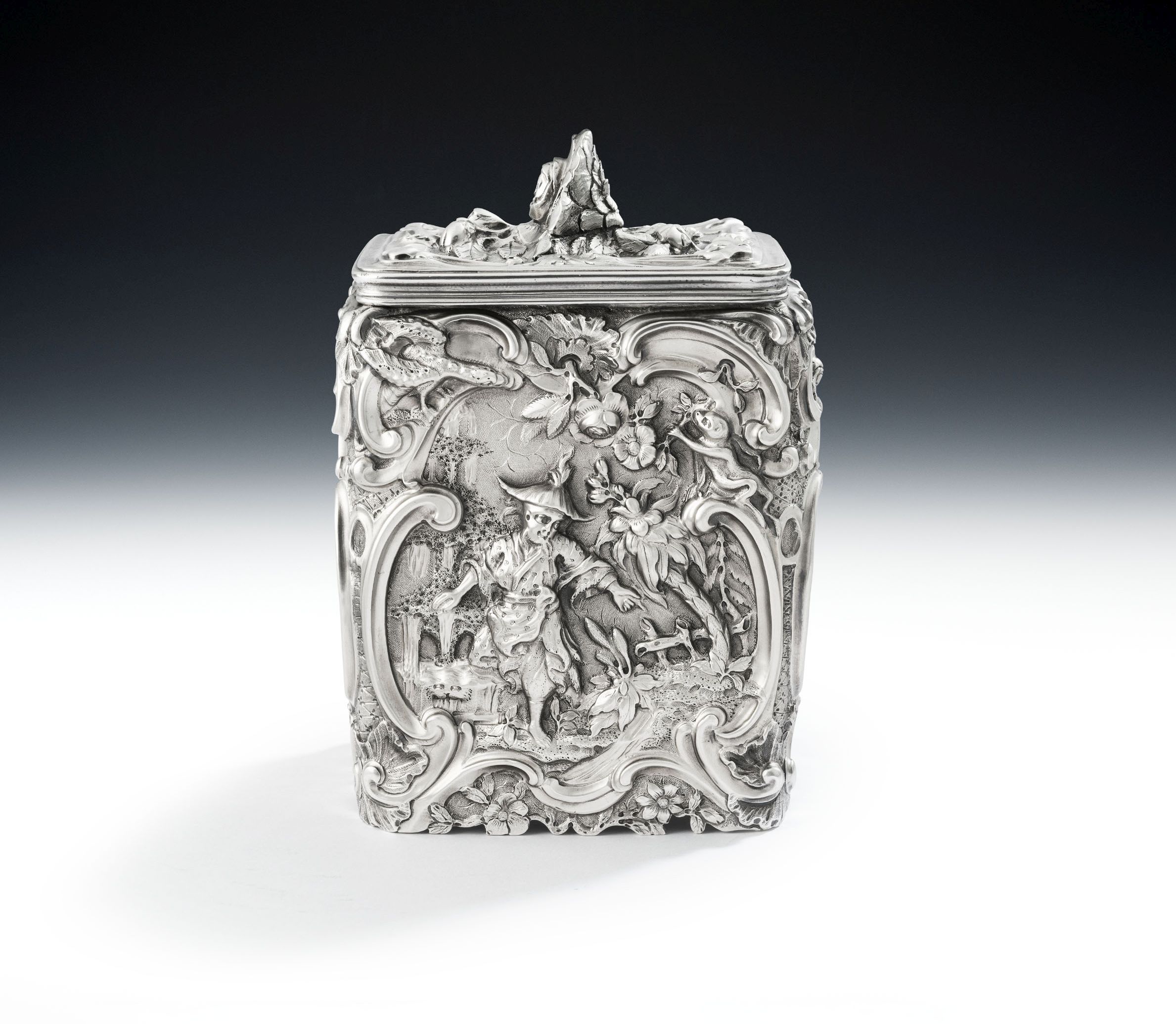
An exceptional George II Chinoiserie Tea Caddy made in London in 1758 by William Cripps.
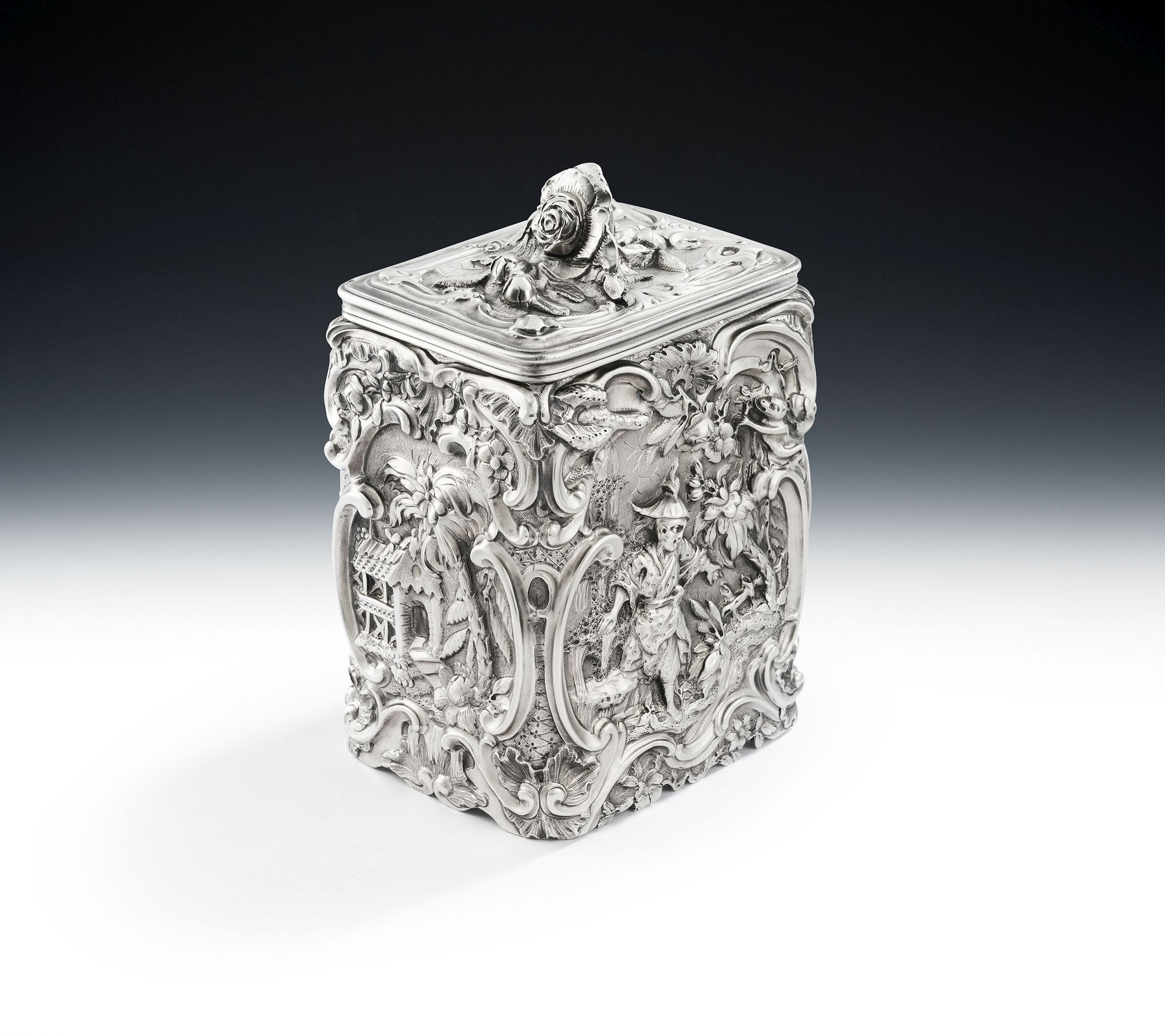
An exceptional George II Chinoiserie Tea Caddy made in London in 1758 by William Cripps.
375612
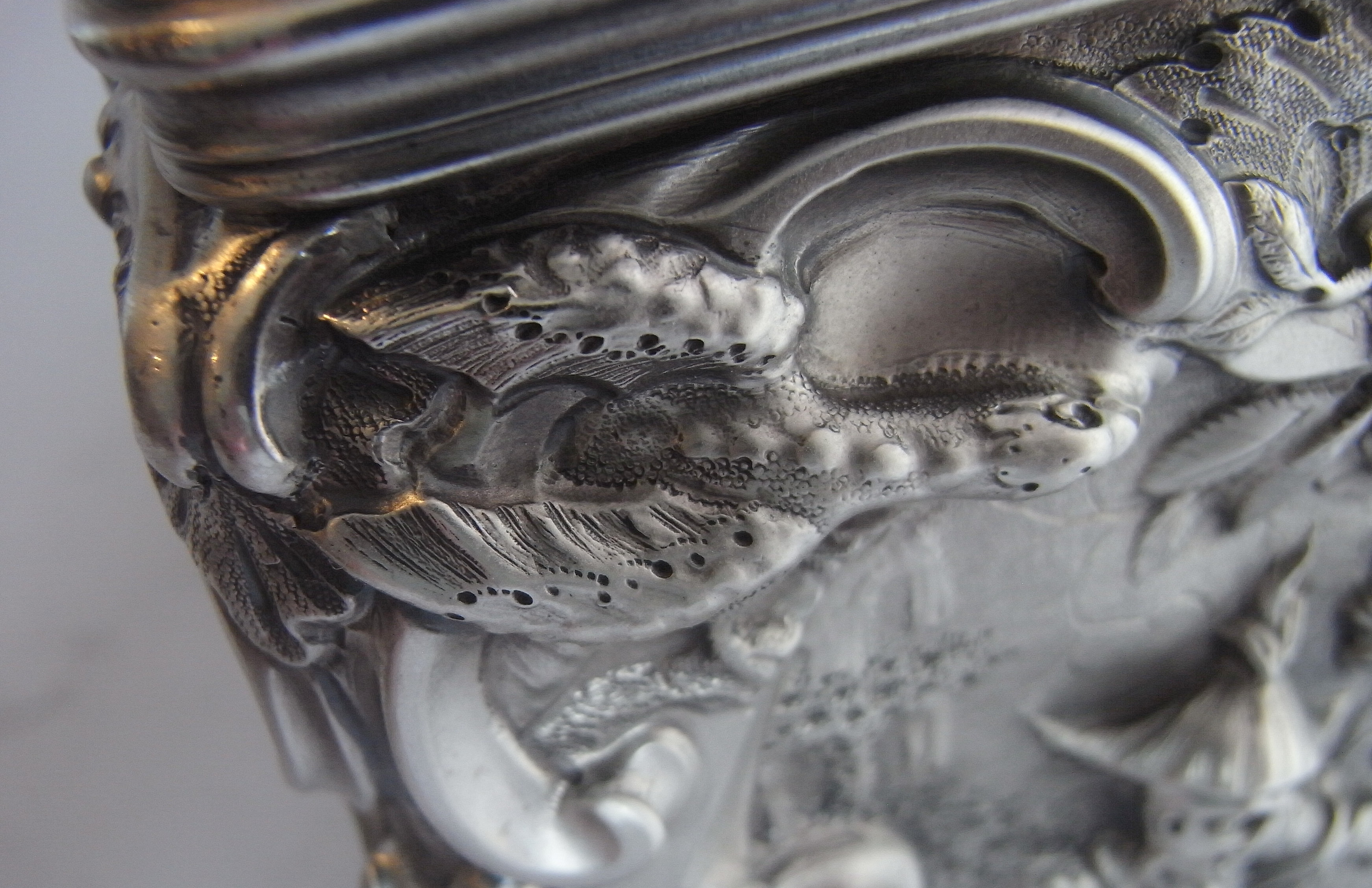
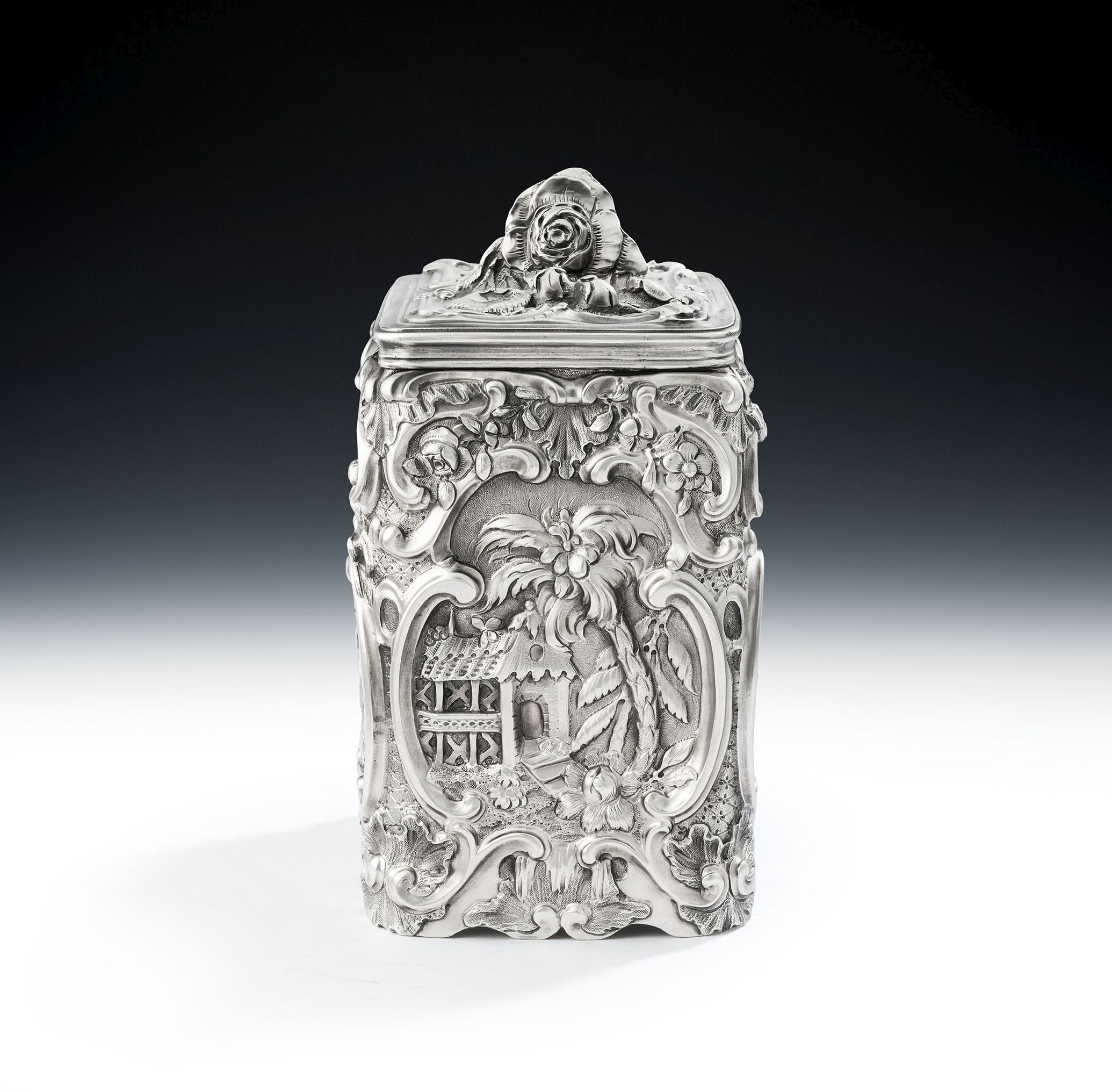
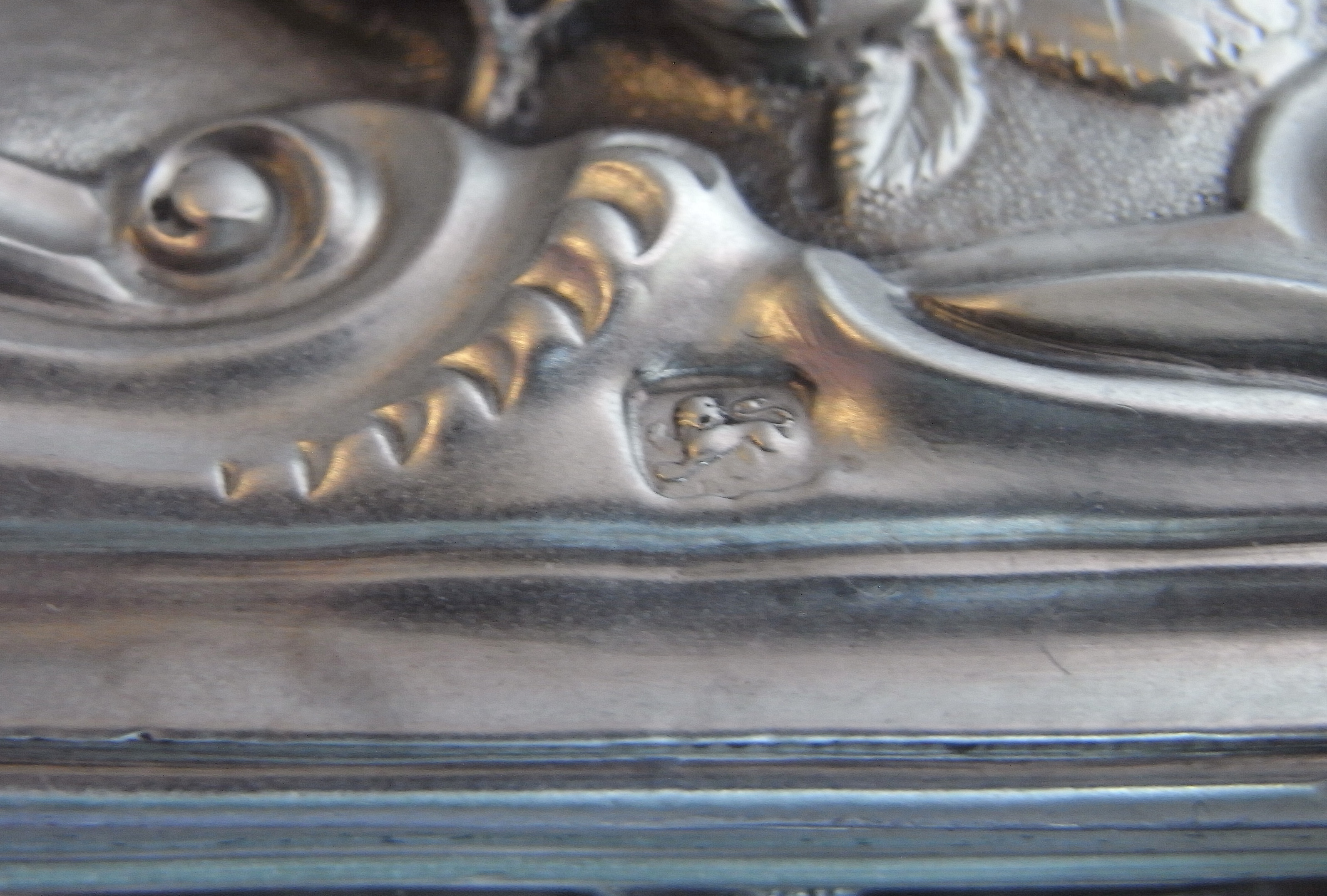
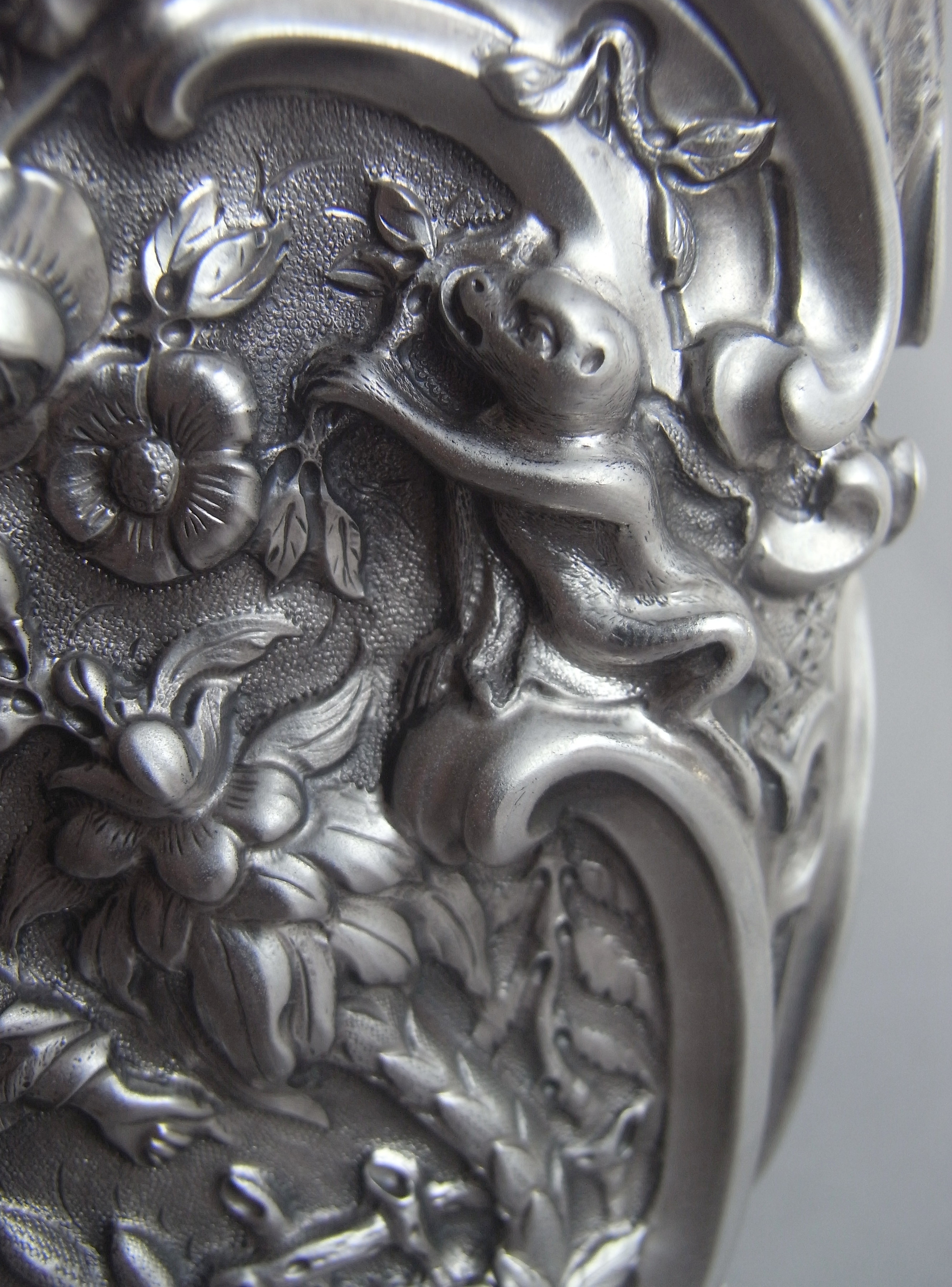
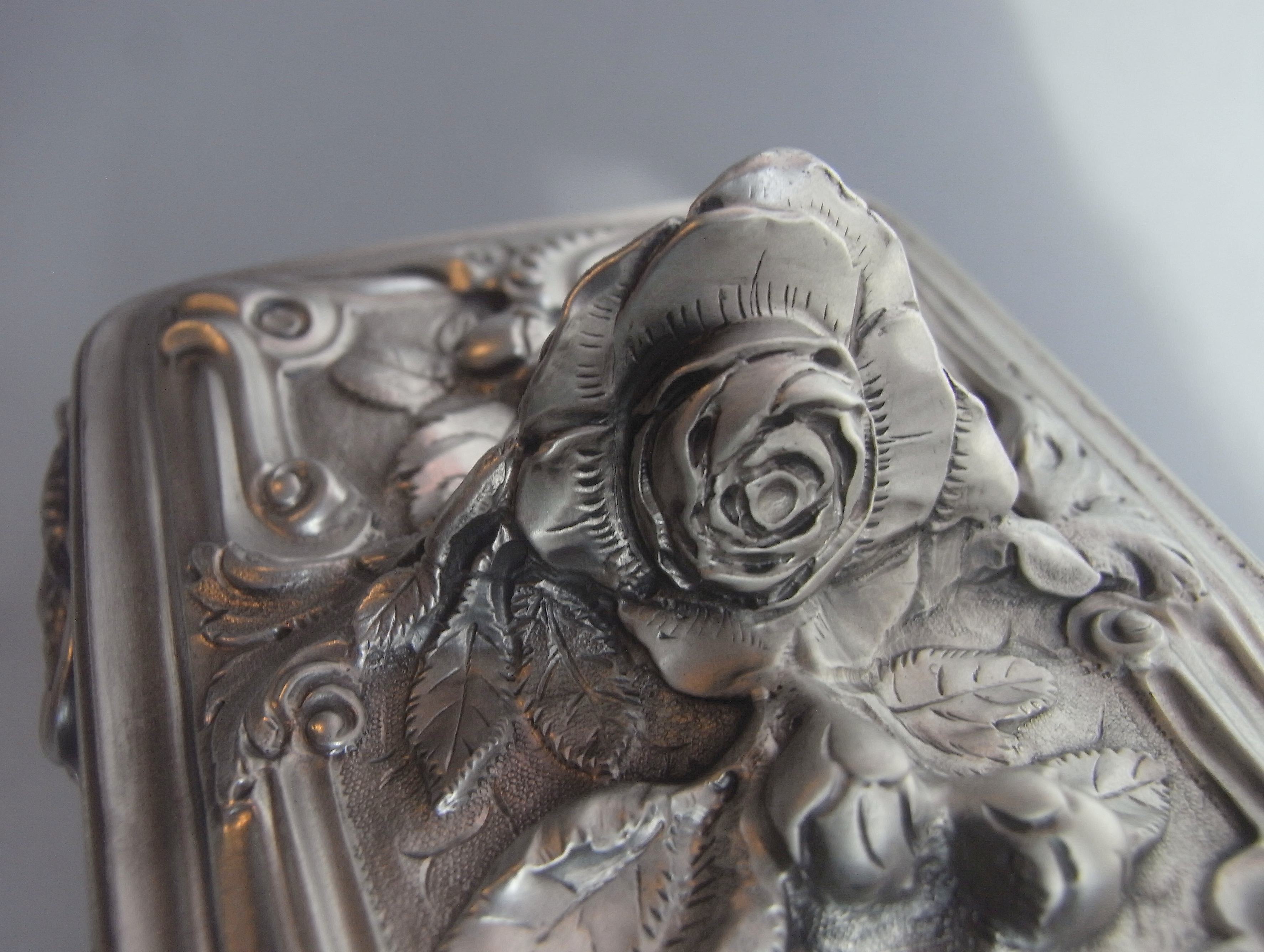
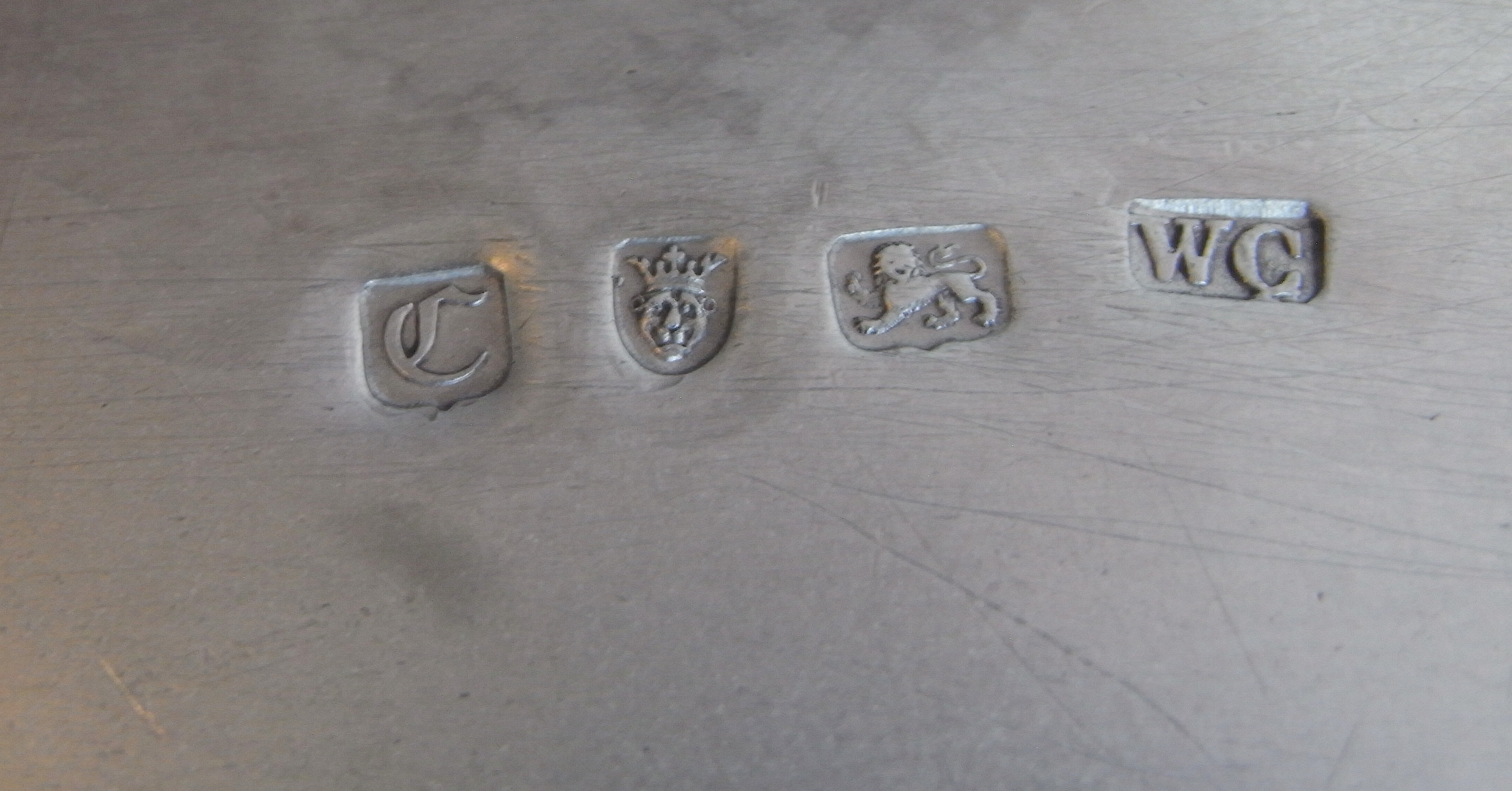
This rare George II Tea caddy is of large size and of upright rectangular form embossed and chased in high relief. The front and back display a Chinese male figure, pointing to the base of a coconut palm on the right side with further flowers, leaves and scrolls all on a matted ground. To the left a waterfall, the lowest part of which is chased with a lion's head with water pouring from its mouth and all flanked by two large ‘C’ scrolls, one capped by a monkey beneath two further‘C’ scrolls, the other with a dragon in flight amidst similar scrolls. The sides also with two large ‘C’ scrolls enclosing a building and a large coconut palm, all on a matted ground and with flowers, leaves, shells and scrolls all around, the lower part with water spilling over into a shell. The detachable lid with cast rose and leaf finial, surrounded by scrolls and floral and foliate sprays. The Caddy is in most exceptional condition and is fully marked on the base and with the Sterling mark on the cover.
Height: 6 inches, 15 cm.
Width: 4,1 inches, 10.25 cm.
Depth: 3.25 inches, 8.13 cm.
Weight: 14oz.
This caddy bears close resemblance to those made by Paul de Lamerie. This is not entirely coincidental as Christopher Hartop, in his admirable book entitled "The Huguenot Legacy: English Silver 1680-1760 from the Alan and Simone Hartman Collection", has investigated Cripps as being a member of the "Lamerie Group". This "Group" included Philips Garden and Henry Hayens, all of whose work bore close similarities to that by Lamerie. It is known that Cripps supplied work to Garden and Hartop suggests the possibility that Garden was not only a retailer (rather than a working silversmith) but also it might have been Cripps that purchased Lamerie's tools after the latter's death, rather than Garden. A remarkable rococo punch bowl and cover of 1752 by Cripps shows identical features to a cup and cover by Lamerie in the Sterling and Francine Clarke Art Institute dated 1742. A pair of tea caddies with the same scene were sold by Sothebys, 23rd May 1985, lot 91 and made by an unidentified silversmith F.C in 1764. The somewhat unusual initials were probably for Francis Crump.
With regard to the maker, William Cripps, (1715-1766), he was an exceptional manufacturing and retail silversmith who rose to prominence in London’s West End during the 1740s and 1750s. He was trained in the workshops of David Willaume (1658-1741), a highly successful goldsmith and banker, of Huguenot descent. Of the latter’s other apprentices the names of the following are familiar to collectors of 18th Century English silver: his son, the younger David Willaume (1693-1761); Lewis Mettayer (d. 1740), Paul Tanqueray, Charles Hatfield (c. 1739/40), Aymé Vedeau (c. 1780/81), William Kidney (1702?-1756), and Thomas Pitts (whose Air Street, Piccadilly, workshops were acquired by the young Paul Storr in 1793).
Cripps gains his freedom in 1738 and entered his first mark as a large worker on 31 August 1743 from his premises at the sign of the Crown and Golden Ball, Compton Street, Soho. His second mark was entered on 16 July 1746 upon moving to the Golden Ball, ‘on the terrace’ in St. James’s Street, where he continued the Willaume’s business until his death on 1 January 1766:
‘Yesterday Evening died at his House in St. James’s-Street of a Fit of Apoplexy, Mr Crips [sic] a Gold and Silver-Smith of great Business. He was suddenly seized after Supper on Tuesday Night, and continued in great Agonies til he expired.’ (The Public Advertiser, London, 2 January, 1766, p. 2c)
‘On Thursday last the Surgeons opened the Head of the late Mr. Cripps, Goldsmith and Jeweller of St. James’s-Street, who died on Wednesday Evening; and we hear his sudden death was occasioned by the bursting of a Vein in his Head.’ (The Public Advertiser, London, 4 January 1766, p. 2c)
It appears from his will, proved on 6 January 1766, that Cripps had neither wife nor children and that his business was continued by George Coyte (a friend of the artist Thomas Gainsborough), retail silversmith, to be succeeded by Mark Cripps, who seems to have been a near contemporary relation of William, perhaps a cousin. ‘As might be expected from his training under Willaume,’ writes Arthur Grimwade, Cripps ‘became an accomplished craftsman and a versatile exponent of the rococo style; to judge from his surviving pieces he enjoyed a considerable clientele.’
RELATED ITEMS






 but also it might have been Cripps that purchased Lamerie's tools after the latter's death, rather than Garden. A remarkable rococo punch bowl and cover of 1752 by Cripps shows identical features to a cup and cover by Lamerie in the Sterling and Francine Clarke Art Institute dated 1742. A pair of tea caddies with the same scene were sold by Sothebys, 23rd May 1985, lot 91 and made by an unidentified silversmith F.C in 1764. The somewhat unusual initials were probably for Francis Crump.With regard to the maker, William Cripps, (1715-1766), he was an exceptional manufacturing and retail silversmith who rose to prominence in London’s West End during the 1740s and 1750s. He was trained in the workshops of David Willaume (1658-1741), a highly successful goldsmith and banker, of Huguenot descent. Of the latter’s other apprentices the names of the following are familiar to collectors of 18th Century English silver: his son, the younger David Willaume (1693-1761); Lewis Mettayer (d. 1740), Paul Tanqueray, Charles Hatfield (c. 1739/40), Aymé Vedeau (c. 1780/81), William Kidney (1702?-1756), and Thomas Pitts (whose Air Street, Piccadilly, workshops were acquired by the young Paul Storr in 1793). Cripps gains his freedom in 1738 and entered his first mark as a large worker on 31 August 1743 from his premises at the sign of the Crown and Golden Ball, Compton Street, Soho. His second mark was entered on 16 July 1746 upon moving to the Golden Ball, ‘on the terrace’ in St. James’s Street, where he continued the Willaume’s business until his death on 1 January 1766:‘Yesterday Evening died at his House in St. James’s-Street of a Fit of Apoplexy, Mr Crips [sic] a Gold and Silver-Smith of great Business. He was suddenly seized after Supper on Tuesday Night, and continued in great Agonies til he expired.’ (The Public Advertiser, London, 2 January, 1766, p. 2c)‘On Thursday last the Surgeons opened the Head of the late Mr. Cripps, Goldsmith and Jeweller of St. James’s-Street, who died on Wednesday Evening; and we hear his sudden death was occasioned by the bursting of a Vein in his Head.’ (The Public Advertiser, London, 4 January 1766, p. 2c)It appears from his will, proved on 6 January 1766, that Cripps had neither wife nor children and that his business was continued by George Coyte (a friend of the artist Thomas Gainsborough), retail silversmith, to be succeeded by Mark Cripps, who seems to have been a near contemporary relation of William, perhaps a cousin. ‘As might be expected from his training under Willaume,’ writes Arthur Grimwade, Cripps ‘became an accomplished craftsman and a versatile exponent of the rococo style; to judge from his surviving pieces he enjoyed a considerable clientele.’)